
2026 F-22s and 4 JASDF F-15s Demonstrate Allied Air Power East of Okinawa
 Tanaka Takashi
2026 F-22s and JASDF F-15s Demonstrate Alliance Air Power East of Okinawa
On September 18, over the Pacific Ocean east of Okinawa, four F-15 fighter jets from the Japan Air Self-Defense Force (JASDF) and nine F-22 fighter jets from the U.S. military, along with one KC-135 aerial refueling aircraft, conducted tactical training. The number of participating aircraft announced by the Joint Staff Office on the following day, September 19, speaks to more than just a simple "Japan-U.S. joint training."
Significance of the Nine F-22s in Training
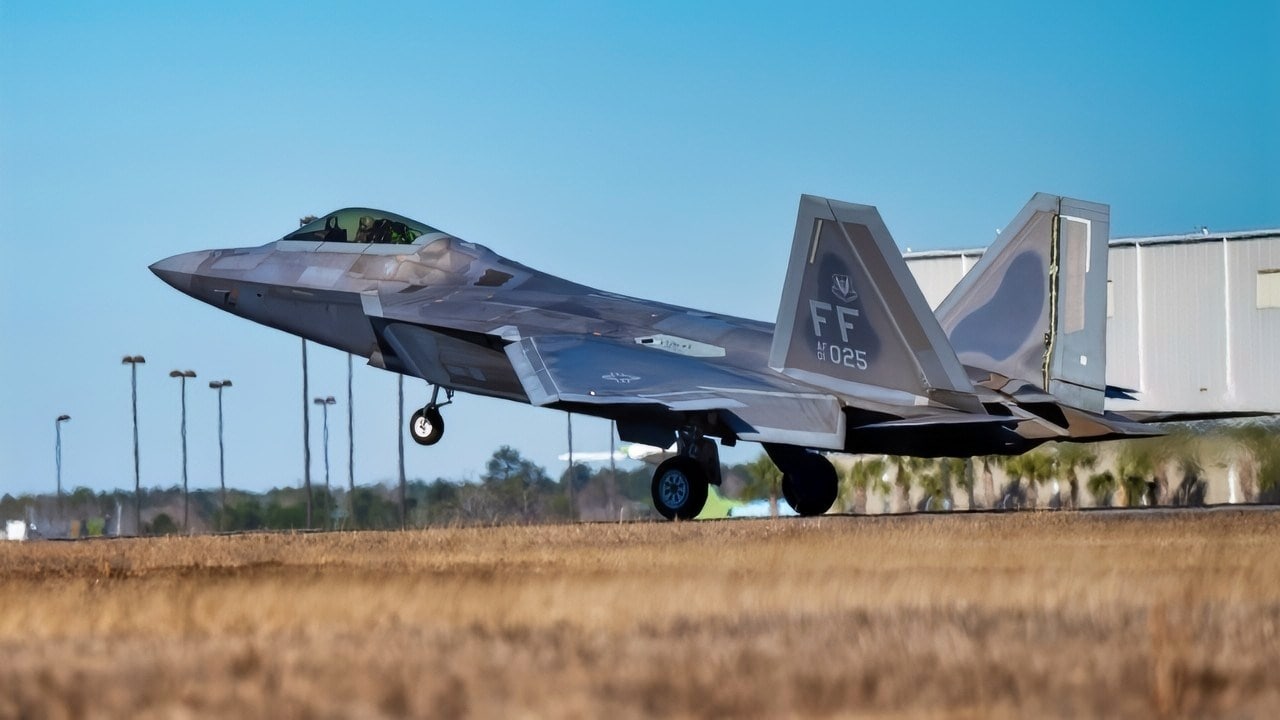
The F-22 is an air superiority fighter that emphasizes air-to-air combat and stealth capabilities, and the scale of nine aircraft is more indicative of tactical training based on multiple formations rather than a symbolic flyover. In contrast, the JASDF's F-15s have been responsible for air defense in the southwestern air region for many years. The value of operating both types in the same airspace lies not in demonstrating superiority of one type over the other, but in confirming whether detection, identification, command and control, and engagement decision-making can be executed using the same procedures.
The addition of one KC-135 should not be overlooked. When deploying fighter jets from around Okinawa to the Pacific, the distance to the training area itself becomes a constraint for both crew and aircraft. Aerial refueling extends the time in the air and serves as a logistical foundation to keep high-performance aircraft like the F-22 at necessary locations. In actual combat, this sustainability is more critical than the number of aircraft in determining the success of SLOC (Sea Lines of Communication) defense and air superiority.
Deterrence Message and Practical Limitations
The Joint Staff Office cited the intention to not allow unilateral changes to the status quo by force and the strengthening of deterrence and response capabilities of the Japan-U.S. alliance as the objectives of the training. According to the Ministry of Defense, during the same week, Defense Minister Koizumi and U.S. Secretary of Defense Hagel also held a phone call, sharing the urgency of advancing revisions to Japan's three strategic documents. The simultaneous announcements of on-site air training and political-level adjustments reflect the alliance's efforts to prepare not just statements but also immediate response procedures.
However, the airspace in question is the Pacific east of Okinawa, and it does not directly replicate operations in the Taiwan Strait or around the Senkaku Islands. It is premature to view the training as a complete form of response to a crisis. To connect the F-22's high performance to an actual air defense network, JASDF radar information, U.S. military data links, and base maintenance and supply must be synchronized to a single decision-making speed.
According to the Joint Staff Office announcement (September 19, 2026), the training was conducted on September 18, with participating aircraft including four JASDF F-15s, nine U.S. F-22s, and one KC-135.
Risks That Are Easily Overlooked
In the author's view, the focus this time is not on the number of F-22s themselves. The more challenging issue is how sustainably the U.S. military's air superiority can be integrated into Japan's air defense and base operations. Even if political joint statements are made quickly, if the standardization of refueling, munitions, maintenance, and communications is slow, the nine F-22s will remain a temporary signal. The next test for the Japan-U.S. alliance is not the ability to fly, but the mechanism to continue flying.
Sources
On September 18, 2026, the Japan Air Self-Defense Force and the U.S. Air Force conducted tactical training in the Pacific Ocean east of Okinawa, involving 9 F-22s, 4 F-15s, and 1 KC-135. The exercise aimed to strengthen deterrence and operational capabilities between the two nations, focusing on air superiority and logistical support.
- 9 F-22s and 4 F-15s participated in training exercises on September 18, 2026.
- The training aimed to enhance deterrence and operational readiness between Japan and the U.S.
- A KC-135 was included to extend the operational range of the fighters.
- The exercise took place in the Pacific Ocean, east of Okinawa.