
2026 Iran Drone Clash Makes the Hormuz Deal Look Fragile
 Alexandra Reeves
2026 Iran Drone Clash Makes the Hormuz Deal Look Fragile
The Strait of Hormuz does not care about diplomatic choreography. On June 12, while Washington talked about a possible US-Iran memorandum and markets briefly priced in relief, American forces were still shooting down Iranian attack drones near the same waterway that the proposed deal is supposed to reopen.
That is the problem. The political story is a peace framework. The military story is a live maritime fight in which both sides are still enforcing coercive rules at sea. Those two stories can coexist for a few days. They cannot coexist for long.
The incident that cut through the optimism
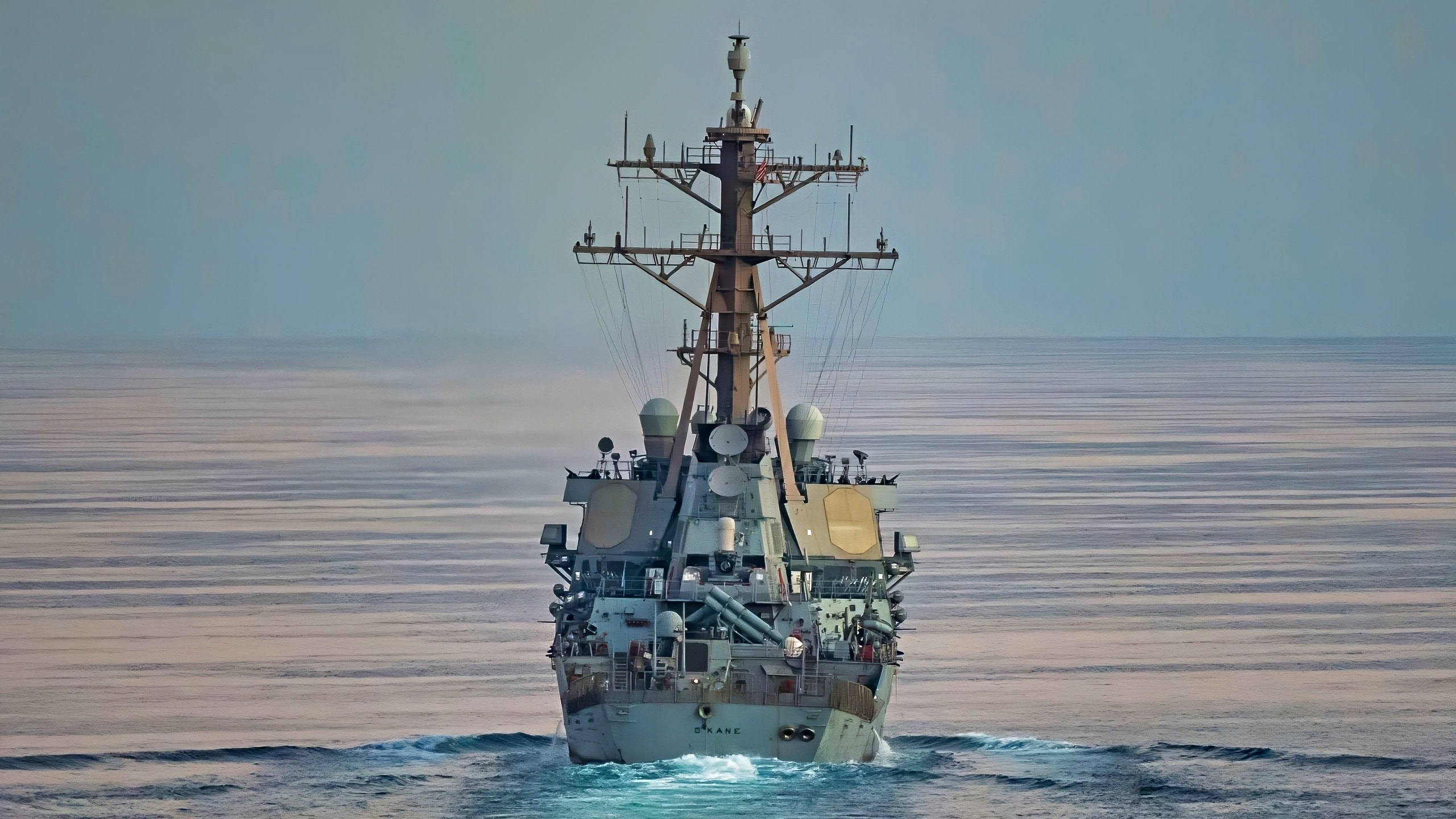
According to RFE/RL, citing a senior US defense official and Reuters reporting, the US military shot down two Iranian one-way attack drones near the Strait of Hormuz early on June 12 after Iranian forces reportedly tried to strike commercial vessels. Iranian state media, meanwhile, said Iranian forces had fired toward a tanker attempting to pass through the waterway without permission from Iranian authorities.
That detail matters more than the diplomatic noise. Tehran is not merely threatening closure in speeches. It is trying to impose a permission regime over commercial transit. Washington is not merely protecting abstract freedom of navigation. It is using force to keep enough traffic moving and to defend vessels that test or evade Iranian restrictions.
The result is an ugly hybrid: not a clean blockade, not a clean convoy operation, not a clean truce. It is maritime coercion managed hour by hour with drones, radar, armed aircraft, warships, tanker captains and political messaging all stacked on top of each other.
What the proposed deal claims to solve
The possible memorandum, as described by Iranian state-linked reporting and Western accounts cited by RFE/RL, would try to do several things at once: extend a ceasefire, bar Iran from obtaining a nuclear weapon, reopen Hormuz, address the US naval blockade and create a negotiating window for a broader nuclear settlement. Mehr, the Iranian state-affiliated outlet, claimed the draft included reopening the strait within 30 days. Axios, cited by RFE/RL, reported that the US version called for immediate reopening without tolls and a return to pre-war shipping volumes within 30 days.
That sounds tidy. It is not.
Before the war, roughly one fifth of global oil and gas flows passed through Hormuz, according to RFE/RL's summary of prewar traffic. You do not simply switch that back on by announcing a framework in Europe. Shipowners need insurance. Crews need assurance that Iranian small craft, drones or coastal systems will not make an example of them. Gulf governments need to know whether Washington will keep defending traffic. Iran needs to decide whether it is giving up leverage or merely pausing it.
The market reaction shows how much everyone wants to believe in the easy version. RFE/RL reported Brent crude settling at $90.38 on June 11 after falling 2.9 percent, then sliding toward the $88.40-$88.65 range on June 12. WTI also fell. But price relief is not operational proof. It is a bet that the waterway will become boring again.
Right now, it is not boring.
CENTCOM is still running a pressure campaign
The official US military record makes the diplomatic optimism look even thinner. CENTCOM said on June 11 that US forces disabled the Guinea-Bissau flagged M/T Jalveer in the Gulf of Oman after it attempted to transport Iranian oil, calling it the third commercial ship disabled by American forces that week. The same release said US forces had disabled nine non-compliant vessels, redirected 135 ships that complied, and allowed 42 humanitarian aid vessels through since the blockade began on April 13.
That is not a background enforcement action. That is a sustained maritime interdiction campaign.
CENTCOM's June 5 release adds the air and missile layer. US forces said they intercepted multiple Iranian ballistic missiles and drones launched toward the Strait of Hormuz and Gulf neighbors. The command said four one-way attack drones were launched toward the strait and posed an immediate threat to regional maritime traffic, after which US forces struck Iranian coastal surveillance radar sites at Goruk and Qeshm Island.
For equipment, the visible pattern is straightforward: Iran is using one-way attack drones, coastal surveillance, missiles and naval warnings to make transit politically conditional. The United States is using aircraft, warships, air defense, surveillance and precision weapons, including Hellfire strikes against ship engine rooms in blockade enforcement, to keep pressure on Iranian maritime behavior. This is not just diplomacy with a few explosions around the edges. It is a contest over who writes the traffic rules in one of the world's most important chokepoints.
Europe is watching from the wrong table
Here is where Alexandra's usual transatlantic question comes in: where is Europe?
The G7 summit in Evian from June 15 to 17 is supposed to address both Ukraine and the Middle East, according to the European Council's published agenda. That makes sense on paper. France wants unity. The EU wants relevance. Britain, Germany and Italy all have direct exposure to energy prices, shipping risk and regional escalation.
But the practical security architecture in Hormuz is still overwhelmingly American. Lloyd's List reported that the US is not running formal convoys, but that limited overwatch by drones and autonomous systems has resumed along the Omani coast. That is a small operational phrase with a large strategic meaning. If ships move because American sensors and American systems quietly make the transit less suicidal, then Washington owns the de-escalation mechanism as much as it owns the escalation risk.
European governments can issue statements at Evian. They can support a deal. They can urge restraint. But unless they bring credible maritime assets, air defense, mine countermeasure capacity and political willingness to absorb risk, they remain consumers of American security choices. That was tolerable when Hormuz was a chronic risk. It is much less tolerable when a US-Iran bargain could decide energy flows, sanctions enforcement and regional force posture without Europe shaping the hard parts.
The deal is not dead, but it is fragile
The mainstream assumption is that a signed memorandum would automatically lower the military temperature. I am not convinced. A signature could lower oil prices before it lowers risk. It could also create a dangerous transition period in which Iran tests the edges of the agreement, the United States tests enforcement language, and commercial shipping becomes the thing both sides use to prove they have not conceded too much.
The next indicators are concrete. Watch whether Iran stops firing on or warning tankers. Watch whether CENTCOM stops disabling vessels. Watch whether insurers treat Hormuz as a reopening waterway or just a slightly less expensive war zone. Watch whether G7 leaders offer anything operational, not just diplomatic phrasing.
The June 12 drone clash is the clue. If two Iranian attack drones can appear near Hormuz while both sides are supposedly approaching a deal, then the deal is not yet controlling the battlefield. The uncomfortable conclusion is simple: Hormuz may reopen on paper before it is actually safe at sea.
On June 12, 2026, U.S. military forces shot down two Iranian attack drones near the Strait of Hormuz as Iranian forces attempted to strike commercial vessels. This incident highlights the ongoing maritime conflict, with both the U.S. and Iran enforcing coercive rules at sea. The U.S. has been actively conducting maritime interdiction operations in the region, complicating diplomatic efforts for a ceasefire and reopening of the strait.
- U.S. military shot down two Iranian attack drones near the Strait of Hormuz on June 12, 2026.
- Iranian forces attempted to strike commercial vessels in the waterway.
- U.S. forces have been actively enforcing maritime interdiction in the region since April 13, 2026.
- Iran is using drones and missiles to impose restrictions on maritime traffic.
- The situation remains tense despite diplomatic efforts for a ceasefire.