
Saudi Arabia strengthens energy facility protection with a $22.3 million contract to counter drones in 2026
 Ahmed Al-Rashid
Saudi Arabia Enhances Energy Facility Protection with $22.3 Million Contract to Counter Drones in 2026
On October 30, 2026, just hours after Saudi authorities announced the end of the threat level in the Jazan region near the Yemeni border, specialized reports revealed a $22.3 million contract awarded to Powerus for deploying a drone detection and countermeasure system at energy facilities in the Middle East. As of the time of writing this analysis, there is insufficient public information linking the contract directly to the alert in Jazan, but the coincidence of the two events highlights an important military trend in the Gulf: the threat is no longer measured by the number of missiles a Patriot battery can intercept, but by the number of small drones that can approach a vital facility before being detected.
The Jazan Alert Reveals the Short-Distance Problem
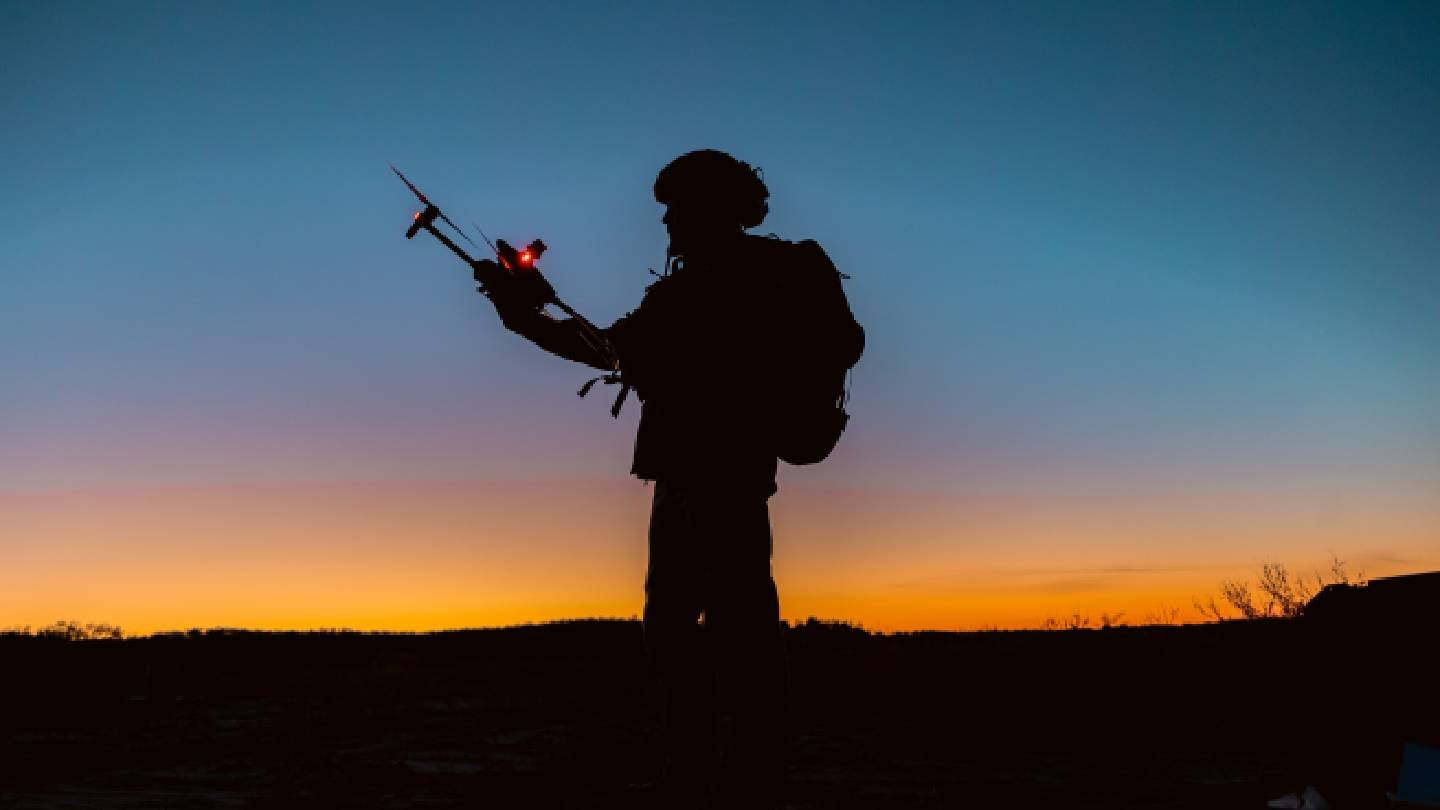
According to Anadolu Agency and Arab News, the Saudi Civil Defense announced the end of the threat following an alert in Jazan, without any public announcement of injuries or damages. Other reports indicated that Saudi Arabia shot down two drones suspected of being linked to the Houthis. This cautious wording is important; the alert is not an automatic indication of a facility being hit or a successful attack, but it confirms that the southern border remains a daily testing ground for early warning and command and control.
Practically, the low-cost drone differs from a ballistic missile in how it exerts pressure. A missile leaves a clear signature, high speed, and limited decision time, while a small drone can fly at low altitude, approach from multiple directions, and blend in with environmental and aerial noise. Therefore, the required defense network is not a single platform, but a chain that starts with radar and electro-optical sensors and electronic warfare, and ends with a relatively inexpensive interception means. Using an expensive missile to shoot down a modified commercial drone may achieve the tactical result, but it creates an unsustainable financial drain in a prolonged war.
What the $22.3 Million Powerus Contract Means
EnergyNow and Energies Media reported that Powerus won a $22.3 million contract to deploy a drone detection system at energy facilities in the Middle East. The published details do not publicly specify the number of sites, types of sensors, rules of engagement, or the beneficiary country, so the figure should not be interpreted as an announcement of a complete Saudi system. The true value of the contract lies in what it reveals about the nature of regional demand: protecting infrastructure from drones has become a standalone budget item, not a secondary function added to traditional air defense systems.
The operational system may include short-range radars, radio frequency receivers, thermal cameras, classification software, and jamming or guidance capabilities for interception units. However, detection alone does not equal protection. If sensor data does not reach a unified operations room within seconds, and if the operator cannot distinguish between a civilian aircraft and a hostile target, the facility will remain at risk despite purchasing the latest equipment. Here, the equation of triad capability often overlooked by Gulf states emerges: equipment multiplied by training multiplied by institution. A zero in any side makes the output zero.
From Air Defense to Facility Defense
Saudi Arabia has spent in recent years on fighter jets, long-range missiles, and warning networks, which are necessary capabilities against Iran or any major missile threat. However, protecting a power station, gas processing facility, or pipeline requires a different layer. What is needed is not just knowing that an object is approaching national airspace, but determining whether it is heading toward a fuel tank, control room, or residential area, and then choosing an interception that does not cause collateral damage greater than the target.
This shift puts pressure on the relationship between Riyadh and Washington. American systems provide radars, missiles, and advanced command capabilities, but they do not absolve Saudi Arabia from building a local operational network that operates around the clock. Relying on the ally for the overarching umbrella is militarily understandable, but relying on it for every small alert is institutional weakness. The Jazan alerts reveal that independence does not begin with producing a national missile, but with having a national aerial picture, engagement decision-making, and maintenance teams that can operate without waiting for a foreign team.
The Regional Impact and Real Test
If Houthi attacks continue or if navigation and oil facilities remain under pressure, the UAE, Qatar, Kuwait, and Bahrain will likely turn to purchasing counter-drone solutions, possibly linking them in a Gulf network for threat data sharing. However, political cooperation is not enough. The network needs a unified protocol for target classification, joint training, and a clear distribution of interception responsibility. Otherwise, the region will be filled with separate sensors that do not communicate with each other, which is a familiar problem in Gulf defense procurements.
In my opinion, the Powerus contract is only beneficial if treated as the beginning of building a sustainable capability, not as a quick purchase after every alert. The cheap drone changes the economics of war, forcing a state that has purchased F-15s, Patriots, and THAAD to invest in small radar, training programs, maintenance technicians, and unified procedures. This is the current Gulf paradox: states are capable of purchasing the most expensive systems, yet they are still required to prove their ability to operate daily defense layers at lower costs. As any military personnel who has served in the region knows, it is not the procurement list that protects the facility, but the crew that detects the threat and decides in a timely manner. The contradiction between purchasing security and building self-capacity will remain the vulnerability that no single contract addresses.
Sources
Saudi Arabia contracted Powerus for a $22.3 million deal to deploy a drone detection and countermeasure system at energy facilities, announced on October 30, 2026, following a warning in Jazan. This initiative reflects a shift in military focus towards countering drone threats, highlighting the importance of a comprehensive defense network. The Saudi Civil Defense confirmed the end of a threat alert in Jazan after intercepting two drones linked to Houthi forces.
- Saudi Arabia signed a $22.3 million contract with Powerus for drone detection systems.
- The contract aims to enhance protection of energy facilities against drone threats.
- The announcement followed a warning in Jazan regarding potential threats from drones.
- Saudi Arabia has previously intercepted drones suspected to be linked to Houthi forces.
- The report emphasizes the need for a comprehensive defense network against low-cost drone threats.