

Throughout the Cold War, Beijing and Moscow considered North Korea a valuable political and military client. Joseph Stalin’s Soviet regime encouraged North Korea’s Kim Il Sung to launch his invasion of South Korea in June 1950. Troops from the new People’s Republic of China (PRC) rescued Kim’s beleaguered troops after U.S.-led forces had driven them back to the border between Korea and China later that year. The communist Kim family dynasty (including current ruling strongman Kim Jong Un) has worked to maintain close ties with its two major patrons.
However, the environment has become increasingly complex and competitive over the past two decades. The Democratic People’s Republic of Korea (DPRK) has taken actions that have antagonized one or both of its powerful partners. However, recent signs suggest Pyongyang may have maneuvered Moscow and Beijing into a geopolitical bidding war for North Korea’s support on specific policy objectives.
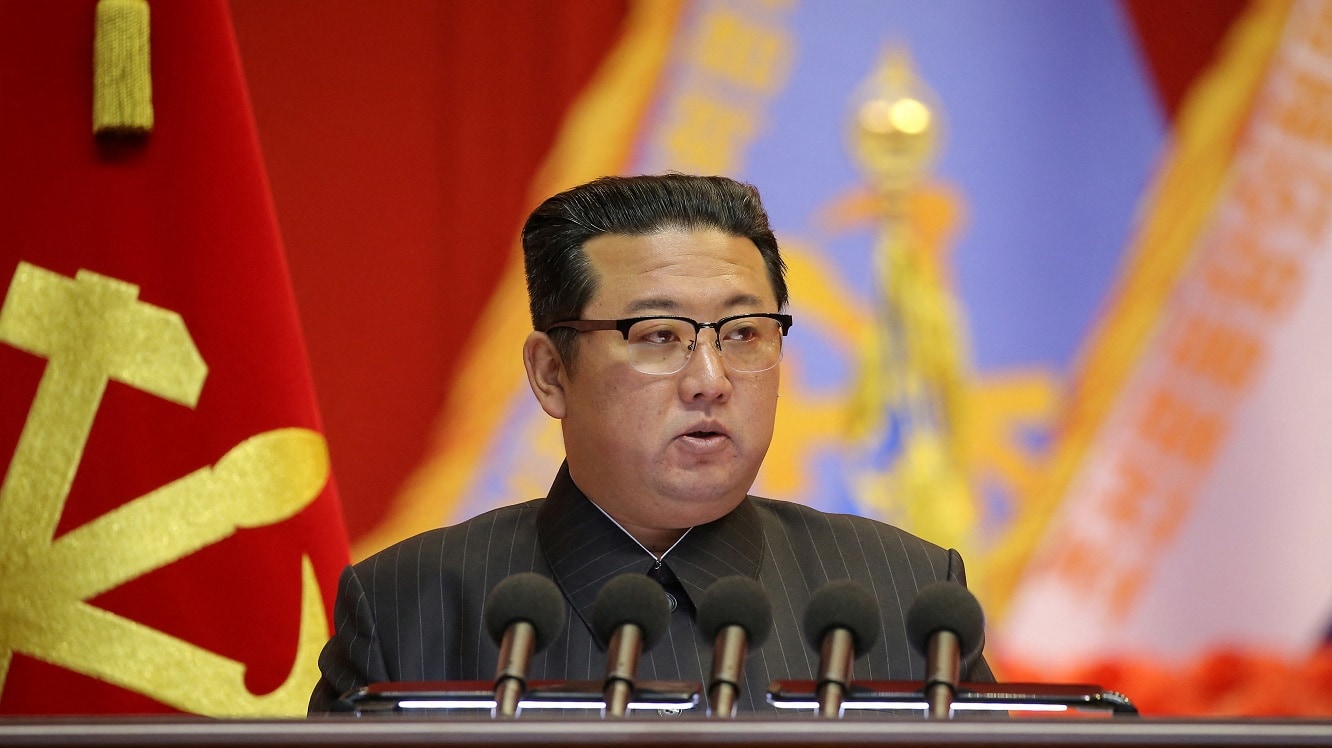
North Korean Leader Kim Jong Un. Image Credit: KCNA.
For more than 7 decades, leaders of the PRC and the DPRK have emphasized an exceptionally close political, economic, and security relationship. During the Korean War, Mao Zedong even said the bilateral relationship was “as close as lips and teeth.” Numerous PRC officials have repeated that phrase over the years. The summit meeting between PRC President Xi Jinping and Kim held in mid-June 2026 sought to reemphasize both the continuing importance and the compatibility of PRC-DPRK ties.
The current connection is more nuanced, ambiguous, and even contentious than the lips-and-teeth cliché suggests. Beijing’s ambivalence about its small, more radical client has especially been building since Pyongyang began pursuing a nuclear weapons program in the 1990s. PRC civilian and military officials believe that North Korea’s actions contribute to a worrisome level of political and military tensions plaguing Northeast Asia.
The level of irritation spiked when North Korea ignored its patron’s advice and withdrew from the Nuclear Nonproliferation Treaty in 2003. China’s annoyance increased yet another level when the DPRK conducted a series of underground nuclear tests over the next 14 years. Pyongyang’s pursuit of a larger, more sophisticated medium- and long-range ballistic missile capability also agitated Chinese leaders.
Nevertheless, despite Beijing’s sometimes caustic criticism, North Korea has managed to build a modest nuclear arsenal that Western analysts now estimate to number at least 50 warheads. PRC officials seem uneasy about the extent of Pyongyang’s nuclear ambitions.
Xi’s government also seems wary about some of the DPRK’s other freelancing geostrategic initiatives. Beijing’s concern includes Pyongyang’s growing cooperation with Russia.
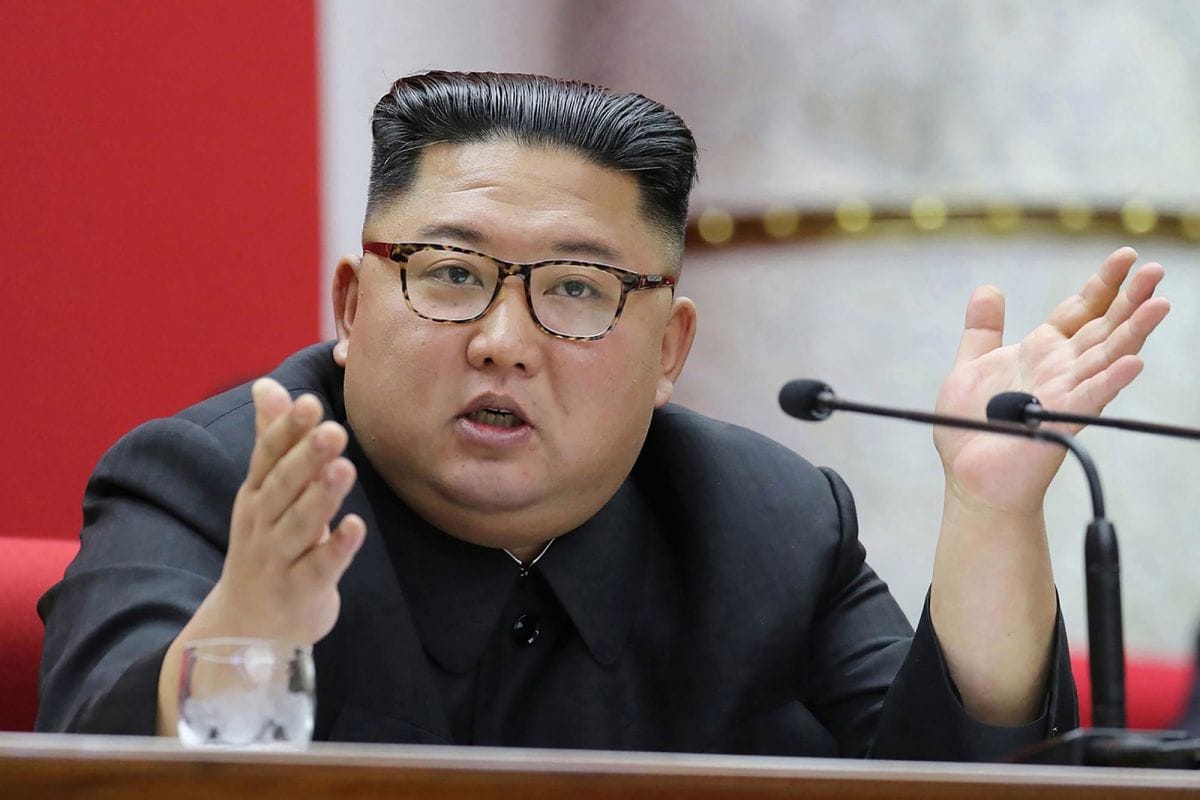
Image credit KCNA.
Developments in the past few years have produced a sharp reversal of Moscow’s stance regarding North Korea in the aftermath of the dissolution of the USSR at the end of 1991 and the emergence of Russia as the principal successor state. Russia’s new noncommunist rulers seemed to regard the DPRK as an embarrassing foreign policy leftover from the Soviet era.
However, Vladimir Putin’s June 2024 state visit to Pyongyang–and the signing of a “comprehensive strategic partnership” featuring mutual‑defense guarantees—revived the bilateral military relationship. The new alliance marked a major policy shift for Moscow, especially after the Kremlin made it clear that it would no longer support UN sanctions on North Korea.
Pyongyang has likewise deepened its support for Russia, supplying ammunition, missiles, and special operations troops to assist Putin’s government wage its war in Ukraine. Indeed, North Korean troops have become direct participants in that conflict. Already in 2024, North Korea sent 14,000-15,000 soldiers to Russia’s Kursk region, according to Ukrainian and South Korean estimates, helping Moscow’s forces repel a Ukrainian ground incursion.
In August 2026, according to an intelligence official in Kiev, the DPRK deployed a missile unit to western Russia to support Russia’s war effort, marking Pyongyang’s most significant involvement in any war since the 1950s. The unit could be equipped with up to 120 ballistic missiles and six launchers. There was widespread speculation throughout the Western news media in the fall of 2026 that Kim also was preparing to send another wave of ground troops to bolster his Russian ally.
Xi’s government seems to regard the restored Russia-DPRK military relationship with wariness but not open hostility. Mel Gurtov, Professor Emeritus of Political Science at Portland State University, Oregon, and Senior Editor of Asian Perspective, correctly observes that “for Beijing, the challenge is managing this growing Russia-North Korea alignment.”
Pyongyang’s direct combat role in Ukraine undoubtedly complicates Beijing’s multifaceted efforts to facilitate an end to the Russia-Ukraine conflict and gain plaudits around the world for being a peacemaker. However, Beijing also knows it competes with Moscow for the role of North Korea’s most influential patron. Objecting too strongly to Kim’s assistance to Putin could put China at a disadvantage in that larger contest.
Meanwhile, Kim’s regime seeks to remain on good terms with both of its important patrons. Kim himself made a surprise trip across the border to China, traveling across a new bridge that links the two countries and symbolizes their warming ties. The Wall Street Journal noted that “not long ago, Beijing-Pyongyang ties were on shakier ground, with Kim’s nuclear advances putting China in an uncomfortable spot. But North Korea’s tighter bonds with Russia have given China extra motivation to maintain its influence with the Kim regime. North Korea and China have resumed passenger train service connecting their two capitals and grew trade back to pre-pandemic levels.”
Competition between Moscow and Beijing may limit the extent of strategic collusion among the three authoritarian regimes. But all of them want to further weaken what remains of Washington’s global hegemonic role. Washington’s response has been decidedly suboptimal. U.S. leaders have done a tolerable job of managing tensions with China, but their performance with respect to North Korea and Russia has been nothing short of dreadful. With the exception of brief hints of policy flexibility toward Pyongyang during Donald Trump’s first term, Washington has pursued the absurd chimera of total DPRK nuclear disarmament for decades.
U.S. policy toward Russia has been even worse. After creating a needless crisis with Moscow because of NATO’s expansion to Russia’s border, U.S. leaders have entangled their country in a murky European-led anti-Russia proxy war with no end in sight.
Washington’s blunders constitute the principal adhesive holding the fragile authoritarian strategic triangle together. U.S. leaders must create incentives for one or more members to defect from that coalition.
About the Author: Dr. Ted Carpenter
Ted Galen Carpenter is a senior fellow at the Randolph Bourne Institute and a contributing editor at The National Security Journal and The American Conservative. He has authored 13 books and more than 1,500 articles on national security, international affairs, and civil liberties. His latest book is Unreliable Watchdog: The News Media and U.S. Foreign Policy (2022).