
2026 PLA Liaoning Fleet Enters the Western Pacific: What Signals Are Released by 15 Military Aircraft and 10 Warships?
 Li Minghui
2026 PLA Navy Liaoning Carrier Group Enters Western Pacific: What Signals Are Released by 15 Military Aircraft and 10 Warships?
On October 15, Taiwan's defense department confirmed that it is monitoring the PLA Navy aircraft carrier group entering the Western Pacific. The Xinhua News Agency reported the day before, citing naval sources, that the Liaoning carrier group is conducting training in the Western Pacific as part of its annual routine training, aimed at testing combat readiness and mission capability, and is not directed against any specific country or target. The official statement is quite restrained, but the area chosen by the carrier group is not ordinary.
How Far Has the Liaoning Carrier Group Gone This Time?
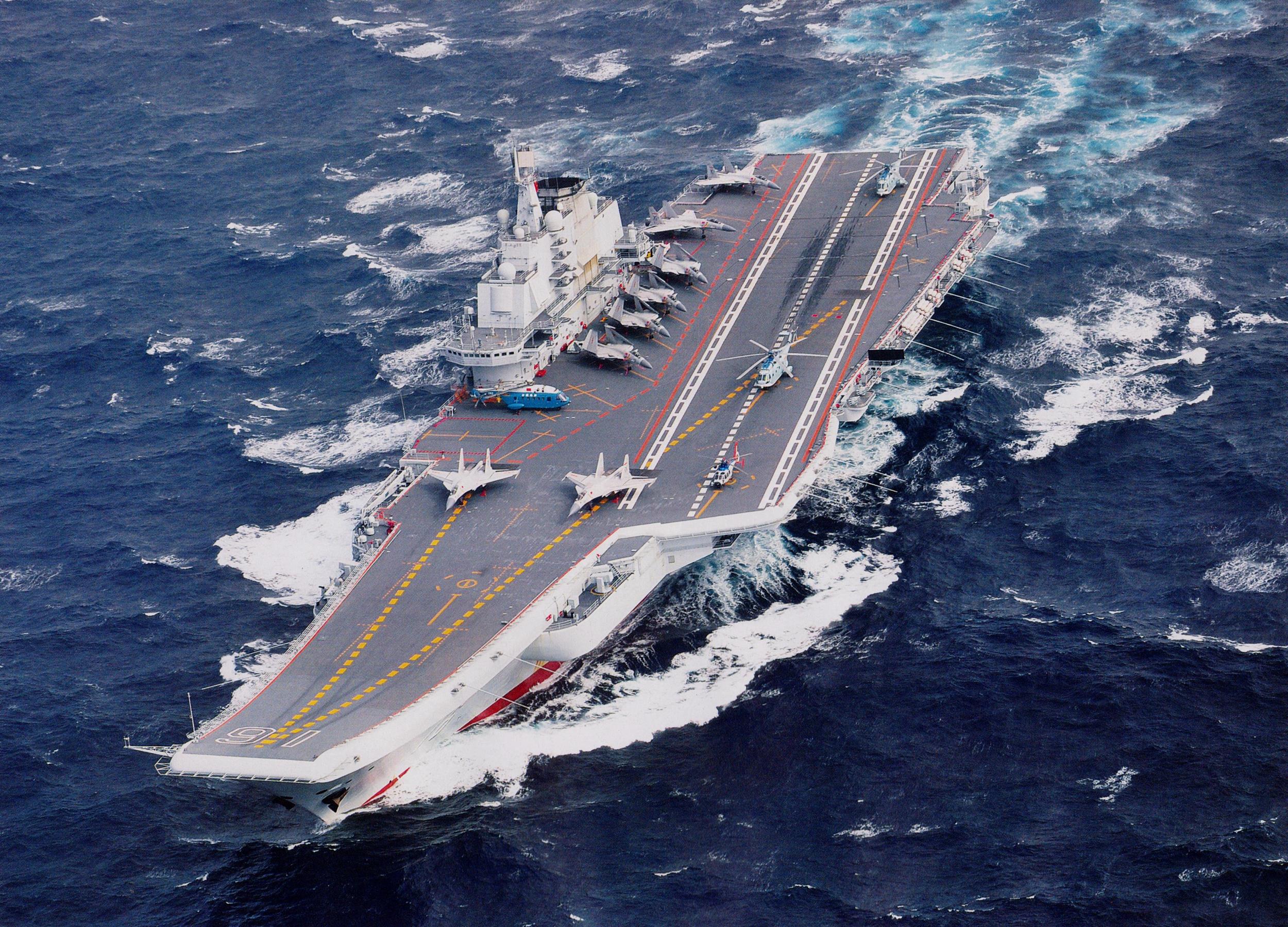
The Taiwanese side has not disclosed the complete list of vessels and the track of the group, only confirming its entry into the Western Pacific; the US Naval Institute News reported that the Liaoning carrier strike group was active in the Philippine Sea on the 14th. When looking at these two pieces of information together, the focus is not on the fact that "the Liaoning has gone to sea again," but rather that it has pushed the training space from the near seas to beyond the first island chain.
The Liaoning is the first aircraft carrier of the Chinese Navy, using a ski-jump takeoff method, primarily responsible for training the J-15 series carrier-based aircraft, fleet coordination, and long-range support verification. Its aircraft sortie efficiency and early warning and air defense coordination capabilities are not as good as those of electromagnetic catapult carriers, but because of this, the Liaoning is more like a mobile training school: it can take pilots, deck coordinators, and escort vessels to the open sea to repeatedly refine processes.
Pressure in the Taiwan Strait Behind the Numbers
On the same day, Taiwan's defense department stated that from 6 PM the previous night to 6 AM that day, 15 PLA military aircraft, 10 warships, and 7 civilian vessels were detected operating around the Taiwan Strait, with 13 military aircraft crossing the median line of the strait and entering Taiwan's northern, central, southwestern, and eastern air defense identification zones. It cannot be simply concluded that all these platforms are part of the Liaoning carrier group, but they collectively pose a problem: Taiwan is facing not a single-direction aircraft carrier deterrence, but simultaneous advancements in maritime and aerial activities, gray zone enforcement, and long-range training.
The value of this for the PLA lies in "layered pressure." The Liaoning is training in the Philippine Sea, which can force Taiwan and the US-Japan alliance to allocate more reconnaissance resources to the east; military aircraft and warships maintaining pressure around Taiwan compress Taiwan's response time. In simple terms, it broadens Taiwan's surveillance and decision-making burden, rather than just pursuing a one-time large-scale exercise.
The Carrier Group Still Has a Weakness
However, the presence in the open sea does not equate to a mature long-range combat capability. The ski-jump deck of the Liaoning limits the takeoff weight and sortie efficiency of its carrier-based aircraft; whether the group can continuously obtain air early warning, anti-submarine cover, and supply support is a hard indicator of training quality. Current public information does not specify the duration of this group’s deployment, the number of sorties by carrier-based aircraft, nor is there evidence that it conducted high-intensity combat-oriented exercises. Interpreting a single voyage directly as a "blockade of Taiwan exercise" lacks sufficient evidence.
It is also worth noting that Taiwan has stated that Beijing conducts large-scale exercises around Taiwan every year and accuses related activities of being amplified by propaganda as tools of cognitive warfare. The Liaoning's entry into the Western Pacific is both naval training and a visible strategic communication: it tells the outside world that the PLA is normalizing and directionalizing its aircraft carrier activities. However, the key to normalization is not whether the carrier occasionally sails out of the near seas, but whether it can establish a stable rhythm of carrier-based aircraft sorties, long-range resupply, and multi-carrier coordination.
The Real Issue is Sustainability
The presence of 15 military aircraft, 10 warships, and the Liaoning's long-range training around the Taiwan Strait indicates that the PLA is connecting its near-seas denial system with its long-range presence. For Taiwan, the early warning system cannot only focus on the median line of the strait; for the US and Japan, the aircraft carrier activities in the Philippine Sea also mean that more underwater and aerial surveillance is needed behind the first island chain.
However, whether this action is an annual routine training or a new step towards more frequent long-range deployments by the Liaoning carrier group will depend on the supply, sortie numbers of carrier-based aircraft, and return paths in the coming weeks. The real question is not whether the Liaoning can enter the Western Pacific, but whether the PLA can stably transform this long-range training into a sustainable combat rhythm.
Sources
- Taipei Times, “Chinese naval carrier group enters western Pacific,” October 15, 2026.
- USNI News, “Chinese Carrier Strike Group Drills in the Philippine Sea,” October 14, 2026.
- Xinhua News Agency report on the Liaoning carrier group's annual routine training in the Western Pacific (as cited by the Taipei Times).
The Chinese aircraft carrier Liaoning conducted training exercises in the western Pacific on October 15, 2026, involving 15 military aircraft and 10 naval vessels. This operation is part of a broader strategy to increase military presence and pressure on Taiwan, with activities reported in the Philippine Sea and Taiwan Strait. Taiwan's defense department confirmed monitoring of these movements.
- The Chinese aircraft carrier Liaoning entered the western Pacific for routine training.
- 15 Chinese military aircraft and 10 naval vessels were detected around Taiwan.
- The training is part of a strategy to exert pressure on Taiwan and the U.S.
- The carrier group is seen as a move to normalize operations beyond the first island chain.
- Taiwan's defense department is monitoring the situation closely.