
2026 PLA Submarine-Launched Missiles Travel Approximately 7,000 Kilometers, Exposing Deterrence Costs in the Controversial Nuclear-Free Zone of the South Pacific
 Li Minghui
2026 PLA Submarine-Launched Missile Travels Approximately 7,000 Kilometers, Exposing Deterrence Costs in the South Pacific Nuclear-Free Zone Controversy
On July 6, the submarine-launched strategic missile's technical highlights were already clear: a strategic nuclear submarine, a training simulation warhead, and a long-range launch into a designated area of the Pacific high seas. The Ministry of Defense publicly stated that the launch occurred at 12:01 PM, with prior notification to relevant countries, and it was not aimed at any specific country or target. What is truly interesting is the direction of external reactions the following day. Defense News reported on July 7 that New Zealand and Australia focused on the South Pacific nuclear-free zone rather than simply discussing the missile's range. This indicates that China's public verification of its sea-based nuclear deterrence is no longer just a military technology issue but has begun to enter the political narrative of South Pacific island nations.
Impact Point More Sensitive Than Model
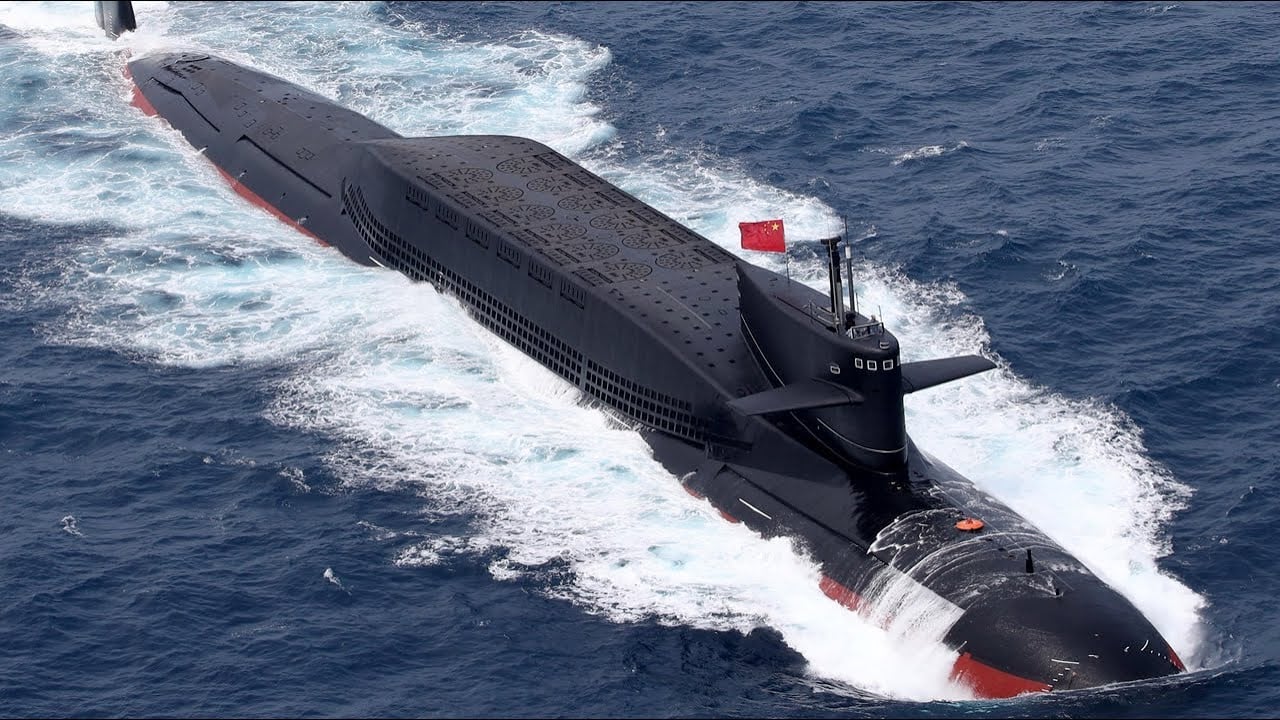
According to trajectory maps released by Taiwan's security department as cited by Defense News, the missile flew southeast for about 7,000 kilometers after being launched from China's coastal waters, landing near the waters close to Nauru and Tuvalu. Both Nauru and Tuvalu are within the framework of the South Pacific nuclear-free zone established by the 1986 Rarotonga Treaty. The Chinese side emphasized that the warhead was a training simulation warhead, which is crucial because, according to the treaty text, the test launch of a non-nuclear warhead ballistic missile may not necessarily constitute a nuclear test in the strict sense.
However, military actions are often understood not by legal texts but by the security perceptions of regional countries. The New Zealand Foreign Minister believes the test launch contradicts the goals and intentions of the treaty, and Australia has also publicly expressed concerns. In plain terms, Beijing can prove that this is not a nuclear explosion, not a deployment, and not a threat to any island; but South Pacific nations see that an intercontinental ballistic flight corridor is crossing their long-maintained nuclear-free identity.
This Is Not Just Simple Propaganda
I believe the most easily misinterpreted aspect of this incident is viewing it as a high-profile display of military might. While the test launch of a submarine-launched ballistic missile certainly has signaling components, for the navy, it resembles a complex system acceptance test. The strategic nuclear submarine must complete covert standby, receive authentication commands, determine launch positions, conduct underwater missile ejection, surface ignition, long-range measurement and control, and impact area management. Any problem in any link could turn political gains into political risks.
If the launch platform is the Type 094 strategic nuclear submarine, as commonly speculated by outsiders, then the focus of this demonstration is not just the submarine itself. The Type 094 has a displacement of about 10,000 tons and is generally believed to carry 12 JL-series submarine-launched ballistic missiles. Public information generally holds that the JL-3 has a range exceeding 10,000 kilometers, meaning that the Chinese navy theoretically does not need to push its strategic nuclear submarines beyond the second island chain to deter distant targets. This is good news for China: fortress waters, air defense and anti-submarine cover, land-based air forces, and surface vessels can provide more protection for strategic nuclear submarines.
But the problem lies here. The longer the range, the more likely the launch and impact area will touch upon the political sensitivities of more countries. In the past, land-based missile test launches were more about target range and high seas impact area management; sea-based intercontinental test launches tie together naval training, diplomatic notifications, the South Pacific nuclear-free mechanism, and great power nuclear narratives. This is like adding a public display window to a set of precision equipment; the more complete the technical actions, the more specific the external doubts.
South Pacific Reactions Will Affect Training Rhythm
This controversy has another background: the AUKUS nuclear submarine cooperation between Australia, the UK, and the US has been criticized by China as undermining the South Pacific nuclear-free zone. Now, China's own submarine-launched missile impact point is being discussed by regional countries in the context of the nuclear-free zone spirit, making Beijing's discourse more passive. Defense News quoted experts from the Open Nuclear Network, stating that nuclear-armed countries are pushing nuclear-free zones towards merely meeting the minimum legal requirements. This assessment may not be entirely fair, but it highlights a reality: the tolerance of South Pacific nations for great power nuclear activities is declining.
From the perspective of PLA training, there will likely be three types of adjustments:
- The scope of prior notifications may expand, especially in terms of diplomatic explanations at the level of South Pacific island nations and regional organizations.
- Impact area selection will be more cautious, aiming to avoid waters that are most likely to trigger nuclear-free zone controversies.
- Public statements will continue to emphasize simulation warheads, annual training, and international law, while downplaying the nuclear deterrence display aspect.
These three points will not weaken China's direction in developing sea-based nuclear deterrence. On the contrary, the more it is necessary to establish credible cruising and launch capabilities for the Type 094, future Type 096, and JL-series missiles, the more real-range training verification will be needed. However, this training cost will no longer only be reflected in fuel, measurement and control vessels, and missile body consumption, but also in the diplomatic accounts of the South Pacific.
The Real Shortcomings Remain in Quietness and Routine Cruising
It is easy for outsiders to interpret a missile flying approximately 7,000 kilometers as a sign that China's sea-based nuclear capabilities have matured. I believe this judgment is premature. The core of sea-based nuclear deterrence is not whether it can launch once, but whether a sufficient number of strategic nuclear submarines can continuously cruise in a sufficiently covert state. The noise level of the Type 094, its experience in long-range replenishment, its anti-submarine cover system, and the reliability of underwater communications are all limited in publicly available information. A successful test launch can prove that the link is established, but it cannot prove that routine combat readiness cruising is without shortcomings.
Therefore, this South Pacific controversy instead reminds us: the PLA's sea-based nuclear capabilities are transitioning from the engineering verification stage to the politically visible stage. The farther the missile flies, the more South Pacific nations, Australia, New Zealand, Japan, and the United States will incorporate it into their respective security narratives. The next unanswered question is whether Beijing will choose to continue publicly conducting such intercontinental sea-based test launches or, after the diplomatic costs rise, return more verification to a less transparent training system?
Main sources: Ministry of National Defense of the People's Republic of China announcement on July 6; Defense News report on July 7; Defense News citing trajectory maps from Taiwan's security department and public statements from New Zealand and Australia regarding the South Pacific nuclear-free zone.
On July 6, 2026, the People's Liberation Army Navy conducted a test launch of a submarine-launched ballistic missile from a strategic nuclear submarine, traveling approximately 7000 kilometers towards the Pacific Ocean, landing near Nauru and Tuvalu. This event raised concerns from New Zealand and Australia regarding its implications for the South Pacific nuclear-free zone, despite China's assertion that the missile was a training simulation.
- The missile was launched from a strategic nuclear submarine and traveled approximately 7000 kilometers.
- The launch site was near China's coastal waters, targeting the Pacific Ocean.
- The missile's landing area was close to Nauru and Tuvalu, within the South Pacific nuclear-free zone.
- New Zealand and Australia expressed concerns regarding the implications of the missile launch on the nuclear-free zone.
- China emphasized that the missile was a training simulation and not a nuclear threat.