
2026 PLA's 49 Military Aircraft Appear in the Taiwan Strait, High-Intensity Air Operations Normalize Pressure
 Li Minghui
49 PLA Aircraft Appear in the Taiwan Strait in 2026, High-Intensity Air Operations Push Pressure Towards Normalization
On November 3, Taiwan's defense department released an unusual set of numbers: from Monday to Tuesday morning, Taiwan detected 49 PLA military aircraft, 6 naval vessels, and 6 civilian ships around Taiwan, with 31 aircraft operating closer to the main island of Taiwan. This marks the highest single-day number of military aircraft recorded by Taiwan since 2026, and it is the second-highest annual figure for aircraft close to the main island. The numbers themselves cannot be equated to a complete exercise, but they are sufficient to indicate that peaks in air activity in the Taiwan Strait are becoming more frequent.
49 Aircraft is Not a Simple Deployment Number
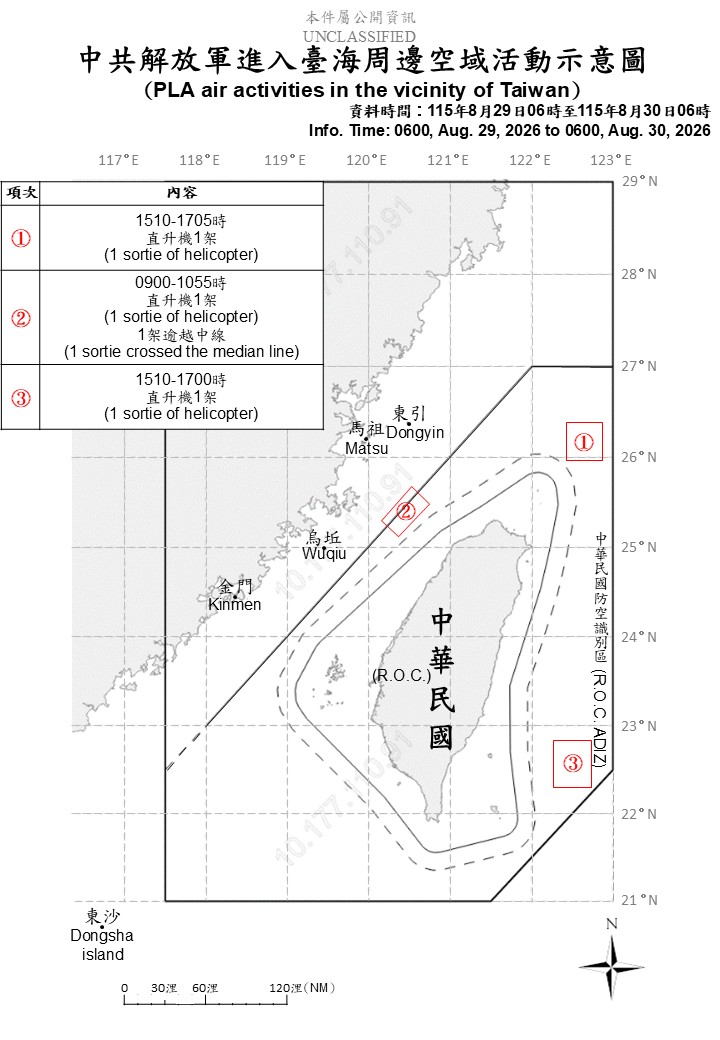
First, it is important to distinguish between "sorties" and "number of aircraft." Taiwan's defense department reports the number of sorties based on detection periods, and the publicly available information does not specify which models these 49 aircraft belong to, nor can it be determined that they all executed the same mission. The 31 aircraft that entered the area closer to the main island of Taiwan are more worthy of analysis than the total number: this indicates that the focus of operations is not just on distant sea patrols, but also on advancing reconnaissance, fighter escort, or support activities into the airspace surrounding Taiwan.
According to Taiwan Plus, citing Taiwanese sources, 49 aircraft is the highest single-day record for 2026. There is a technical issue that is easily overlooked: the real test of the peak is not whether the aircraft can reach a certain location, but whether the PLA can continuously provide air warning, electronic warfare, refueling, command communication, and ground support. Without these elements, a high number of sorties in a single day is merely a demonstration; if these elements can be repeated, it indicates a change in the training system.
Air Pressure and Maritime Operations Begin to Overlap
During the same period, 6 PLA naval vessels and 6 civilian ships were also detected. They may not constitute a unified command "blockade exercise," but the simultaneous increase in air and maritime activities will significantly increase Taiwan's burden of identification, tracking, and troop deployment. In other words, the PLA does not need to conduct large-scale military exercises every time; it can also force its opponent to maintain a high level of alert through continuous activities from different directions and platforms.
This aligns with the observations made by Defense News on October 23 regarding the Liaoning aircraft carrier's distant sea deployment. The report suggests that the Liaoning's repeated distant sea voyages are forming a relatively fixed training rhythm, with the old ship tasked with verifying carrier-based aircraft, sensors, and fleet coordination. The two are not the same event, but they point to a common trend: the PLA is transforming "occasional displays" into repeatable training processes. The Air Force and Navy do not necessarily need to appear with large-scale exercises every time, but can refine their systems through high-frequency, dispersed operations.
Who Bears the Cost of Normalization in the Taiwan Strait
For Taiwan, the impact of 49 aircraft is not only about how many sorties need to be launched that day, but also includes radar duty, ground air defense, intelligence interpretation, and personnel fatigue. The Taiwanese military can establish continuous monitoring through shore-based radar, early warning aircraft, and maritime platforms, but these systems require maintenance, and interceptors also have engine life and flight hour limitations. If activities are sustained at a high level for a long time, what will truly be consumed is the availability of the defense system, not just fuel.
For the PLA, pressure also exists. High-frequency operations require stable pilot training cycles, spare parts supply, airport support, and inter-service communication. The author believes that the more reasonable judgment at present is not that "the PLA is already practicing a blockade," but that it is testing a set of low-threshold, sustainable regional pressure models. Public information is still insufficient to prove which units the 49 aircraft belong to or whether new grouping methods were used, so it is inappropriate to directly interpret the single-day record as a leap in combat capability.
The Next Signal is Not in the Peak but in the Duration
If high levels of military aircraft activity can still be observed in the coming weeks, and the proportion of 31 aircraft close to the main island recurs, then the air alert line in the Taiwan Strait may shift from an occasional crisis to a daily management issue. Conversely, if activities quickly decline, this operation is more likely a short-term response to political and military nodes.
What is truly worth tracking is not whether there will be 50 aircraft next time, but whether the PLA can maintain coordinated air, maritime, and civilian ship activities for several consecutive days without announcing large-scale military exercises. The strategic pressure in the Taiwan Strait ultimately depends on who can sustain high-intensity operations at a lower cost.
Source: Taiwan Plus "Chinese Military Sorties Around Taiwan Hit Single-Day High for 2026"; Taiwan defense department public dynamics; Defense News "China’s first aircraft carrier forms 'evolving pattern' of voyages in disputed Asian seas".
On November 3, 2026, 49 PLA aircraft were detected in the Taiwan Strait, marking the highest single-day record for the year. Among these, 31 aircraft operated closer to Taiwan, indicating a shift in focus towards the island. Concurrently, 6 naval vessels and 6 government ships were also active in the area, increasing operational pressure on Taiwan's defense systems. This pattern suggests a move towards more frequent military operations rather than isolated exercises.
- 49 PLA aircraft detected in the Taiwan Strait on November 3, 2026.
- 31 aircraft were closer to Taiwan than usual, indicating a shift in operational focus.
- This is the highest single-day record of PLA aircraft activity in 2026.
- Simultaneous naval and government ship activity increases pressure on Taiwan.
- The PLA is testing a sustainable regional pressure model rather than conducting large-scale exercises.