
The Japan Maritime Self-Defense Force Demonstrates the Practical Implementation of Japan-U.S.-Australia-India Maritime Cooperation at Malabar 2026
 Tanaka Takashi
Marabar 2026 Demonstrates the Realization of Japan-U.S.-Australia-India Maritime Cooperation by the Japan Maritime Self-Defense Force
From November 5 to 12, Malabar 2026 will be conducted in the southern Kanto region. According to the U.S. Naval Institute (USNI News), this year's exercise, involving the navies of the United States, Japan, India, and Australia, is characterized by its proximity to the Japanese archipelago. This is not merely a goodwill voyage. Amid the normalization of the Chinese Navy's long-range activities, it is an opportunity for the four countries to test how they can jointly monitor sea lines of communication (SLOC).
Maritime Operations Tested in Southern Kanto
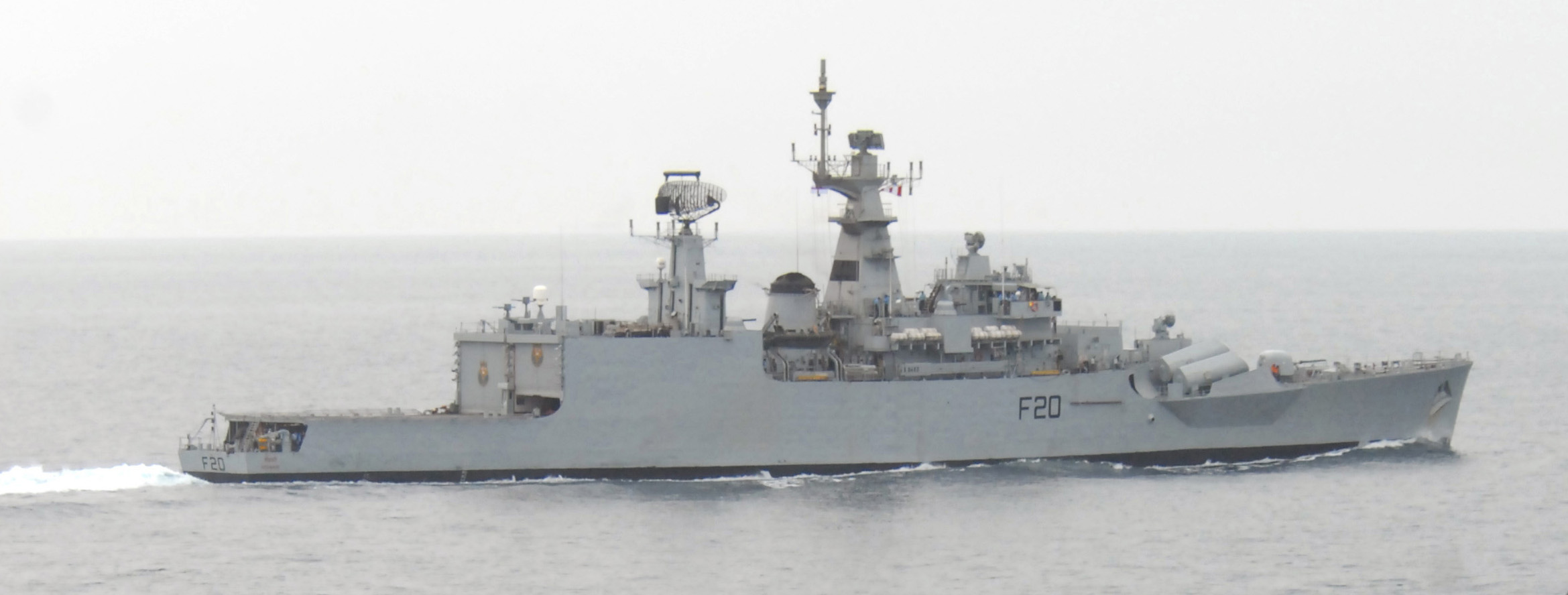
According to the Japan Maritime Self-Defense Force's announcement, Malabar has trained with a combination of surface ships, aircraft, and submarines, focusing on anti-surface warfare, anti-submarine warfare, air defense, and underway replenishment. Particularly, the southern Kanto region is a crucial junction for maritime traffic connecting the southwestern islands and the Pacific coast of Honshu, making it practically significant as a training area. For Japan, what is important is not the number of participating vessels, but how quickly sensor information from each country can be shared and how a common target picture can be created under different rules of engagement.
India and Australia Joining the Japan-U.S. Alliance
The Japan Maritime Self-Defense Force has focused on interoperability with the U.S. Navy, but in Malabar, the Indian Navy's long-range deployment capabilities and the Australian Navy's experience in the South Pacific and Indian Ocean will be added. Since the four countries do not have a formal collective defense treaty, it does not imply automatic participation like NATO. Nevertheless, building up communication procedures, underway replenishment, and joint anti-submarine search from peacetime will reduce friction during initial responses in times of crisis.
In my view, the focus this time is not on intimidation explicitly naming China, but on the ability to connect dispersed vessels and aircraft into a single maritime situational picture. Even without large symbols like an aircraft carrier strike group, if P-1 patrol aircraft, escort ships, submarines, and the information and supply networks of each country are interconnected, the density of SLOC protection will increase.
Overlooked Constraints
However, the success of the exercise should not be directly equated with cooperation in times of crisis. India prioritizes the situation along its border with China and in the Indian Ocean, while Australia has logistics challenges across vast maritime areas. Japan also faces constraints regarding the operational rates of its vessels and personnel. Furthermore, there is a difference between the range of information that can be shared during exercises and the classified information required in actual combat.
Therefore, the true achievement of Malabar 2026 will not be flashy launch exercises, but rather the connection of supply ships, alternative procedures during communication disruptions, and the transfer of submarine contact information. The role that the Japan Maritime Self-Defense Force should play is not limited to being a supporting force for the United States, but to become a core node that continues maritime surveillance in the Indo-Pacific.
Main Sources
The Japan Maritime Self-Defense Force, alongside the U.S. Navy, Indian Navy, and Royal Australian Navy, will conduct the Malabar 2026 maritime exercises from November 5 to 12 in the Kanto South Sea Area. This exercise aims to enhance interoperability and operational coordination among the four navies, focusing on joint maritime operations and logistics. The exercise is significant due to its proximity to Japan and the ongoing maritime activities of the Chinese Navy.
- The Malabar 2026 exercise will take place from November 5 to 12 in the Kanto South Sea Area.
- Four navies (U.S., Japan, India, Australia) are participating in the exercise.
- The exercise aims to enhance interoperability and joint operational capabilities.
- The focus is on sharing sensor information and operational coordination.
- The exercise is not a formal collective defense treaty but aims to reduce friction in joint operations.