
2026 Shenzhen Trilateral Summit Approaches: How the PLA Fujian Ship and 055 Destroyers Support Taiwan Strait Negotiation Leverage
 Li Minghui
2026 Shenzhen Trilateral Summit Approaches: How the PLA Fujian Aircraft Carrier and 055 Destroyers Support Taiwan Strait Negotiation Leverage
On November 19, the trilateral meeting between China, Russia, and the United States in Shenzhen enters its final preparation stage. The Chinese Ministry of Foreign Affairs confirmed on November 16 that the talks will discuss issues such as world peace, while media outlets like Reuters have listed Taiwan, nuclear arms control, and the Iran war as potential security topics. The Taiwan Strait will not disappear from the agenda due to the summit arrangements; rather, it will serve as a litmus test for observing whether Beijing's "negotiation language" and "military language" are synchronized.
Naval and Air Power Beneath the Summit Table
There is an easily overlooked detail: the PLA does not need to announce new military exercises during the summit to make its opponents factor in its existing readiness levels. In early November, Taiwan disclosed that over 100 Chinese vessels were present in the Western Pacific, with a single-day record of 22 military aircraft and 12 ships. These figures cannot simply be equated with "blockade drills," but they indicate that the PLA has already organized activities of the Coast Guard, Navy, and Air Force into a sustained regional pressure, rather than a one-time display around Taiwan.
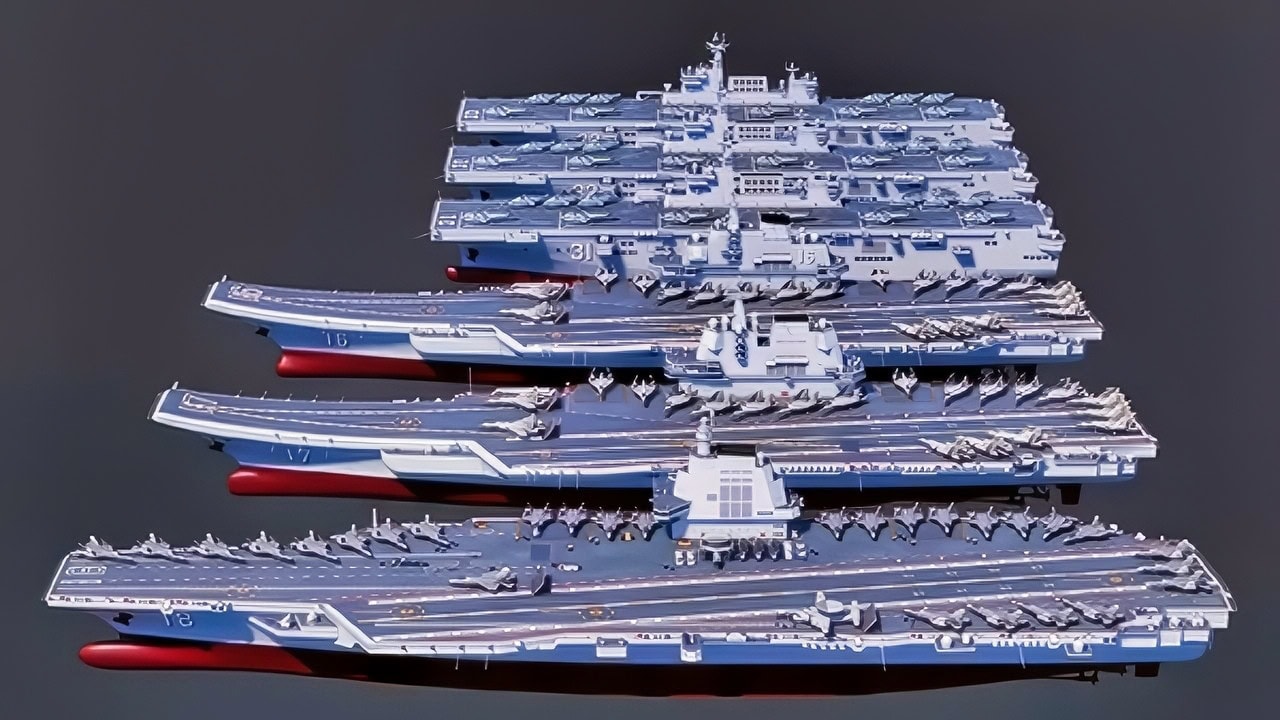
The Fujian aircraft carrier is the most symbolic node in this pressure system. Public information shows that this aircraft carrier, with a displacement of over 80,000 tons, uses electromagnetic catapults, with the design goal of allowing higher frequency sorties for carrier-based aircraft such as the J-35 stealth fighter and KJ-600 early warning aircraft. It should be noted that the complete combat capability, the scale of the carrier-based aircraft group, and the ability for sustained deployment in distant seas of the Fujian have not been sufficiently proven by public data. Writing "launched" directly as "achieving mature combat capability" is a propaganda statement, not an engineering assessment.
The 055 destroyer, on the other hand, is closer to a quantifiable reality. This ship has a displacement of about 12,000 tons, equipped with a large phased array radar and a 112-cell vertical launch system, capable of undertaking area air defense for carrier strike groups and providing land attack and anti-ship strike options for distant sea formations. In simple terms, the Fujian determines the upper limit of air coverage, while the 055 destroyer determines whether the formation can withstand high-intensity environments.
What Beijing Really Wants to Convey
From Beijing's perspective, the use of military power is not solely for "fighting," but also for shaping the opponent's expectations of risk. The most effective signal before the summit is often not the announcement of a new weapon, but rather making Washington, Moscow, and Taipei all realize that the Taiwan issue has been embedded in the daily readiness cycle of China's naval and air forces. This way, any statements regarding Taiwan must confront a real constraint: if a crisis escalates, how many aircraft carriers, tankers, long-range munitions, and allied bases does the U.S. need to deploy to convert political commitments into executable military plans.
However, this does not mean that the PLA has the capability to "land at any time." Carrier operations in distant seas require support from pilot training, ammunition resupply, maintenance, and underwater escort; operations in the Taiwan Strait also face Taiwan's shore-based anti-ship missiles, drones, mines, and complex weather conditions. The author believes that the most credible judgment at present is not that "the Fujian will immediately change the balance of power in the Taiwan Strait," but rather that China is systematically filling in the key elements required for blockade, isolation, and distant sea denial.
What to Watch After the Summit
After November 19, what is truly worth tracking is not whether the three leaders issue stronger rhetoric, but rather three observable indicators: whether the PLA aircraft carrier group continues to push westward into the Pacific, whether the 055 destroyers and large supply ships maintain systematic accompaniment, and whether air activities in the Taiwan Strait shift from short-term peaks to a normalized rhythm. If these indicators remain high, it indicates that military pressure will continue to serve as a backdrop for negotiations; if activities significantly decline, it may represent Beijing's willingness to leave space for diplomatic openings after the summit.
Whether the Fujian and J-35 make public appearances before and after this summit will certainly attract attention; but the more critical question is whether the PLA can translate the performance of a single ship into a systematic presence sustained over weeks and across multiple directions. This answer will determine whether the Taiwan Strait issue is merely a talking point at the summit or a genuine exchange of power beneath the table.
References
- Chinese Ministry of Foreign Affairs, public statement regarding the Shenzhen meeting on November 16, 2026.
- Reuters, BBC, and U.S. media, reports on the agenda of the China-Russia-U.S. trilateral meeting from November 15 to 16, 2026.
- Taiwan's defense department and SCMP, public information on Chinese naval and air activities in early November 2026.
- U.S. Department of Defense's "China Military and Security Development Report" and public vessel data.
Chinese military forces are organizing sustained regional pressure in the Western Pacific, with over 100 ships and 22 aircraft reported in early November. The Fujian aircraft carrier and 055 destroyers are central to this strategy, enhancing China's military posture in the Taiwan Strait ahead of the upcoming trilateral summit in Shenzhen. Observations post-summit will focus on the ongoing deployment of naval forces and air activities in the region.
- The Fujian aircraft carrier is designed for high-frequency operations of J-35 stealth fighters and KJ-600 early warning aircraft.
- Over 100 Chinese vessels and 22 aircraft were reported in the Western Pacific in early November.
- The 055 destroyer is equipped with advanced radar and vertical launch systems for air defense and strike capabilities.
- Military activities in the Taiwan Strait are part of China's routine operational readiness.
- Post-summit indicators will include the continued deployment of naval forces and air activities in the region.