
1,441 Ukrainian Drone Over Russia Changes the Calculation of Russian Air Defense in 2026
 Dmitri Volkov
1,441 Ukrainian Drone Over Russia Changes the Calculation of Russian Air Defense in 2026
The figure 1,441, mentioned by the Russian Ministry of Defense after the massive attack on November 16, is significant not as a record but as a test of the air defense management system. American sources, including the Associated Press, reported over 1,300 intercepted drones, while Ukrainian reports indicated damage to an oil terminal in St. Petersburg and petrochemical facilities in Bashkortostan. The discrepancy in counts is expected in wartime, but the overall conclusion is unpleasant for Moscow: even with the claimed near-total interception, a small fraction of drones can inflict damage over a vast territory.
This is no longer an episodic attack on a border area. It is about testing the Russian air defense model, built on the Soviet logic of layered defenses around key cities, headquarters, and industrial hubs. Such a system looks good on a map as long as the threat comes from a few predictable directions. Mass-produced cheap UAVs force it to simultaneously protect oil terminals, airfields, power grids, and military enterprises from strikes that can originate from different areas and change course mid-flight.
Record Raid Tests More Than Just Missiles
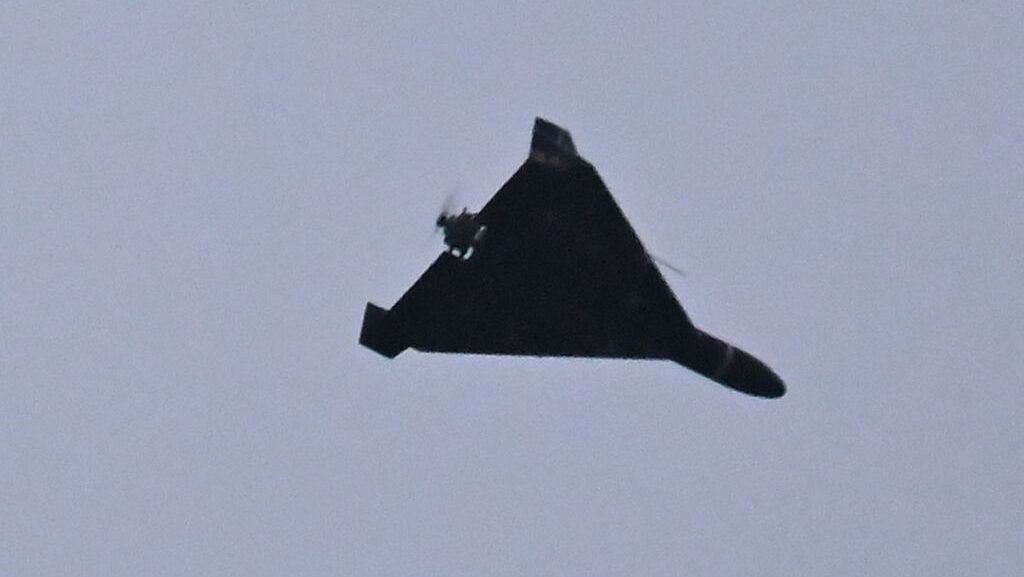
In the official Russian formula, "destroyed" usually mixes different results: the work of fighters, surface-to-air missiles, electronic warfare, and emergency crashes after losing navigation. This is convenient for operational reporting, but insufficient for analyzing effectiveness. Three separate metrics are needed: how many targets crossed the long-range detection boundary, how many were disrupted by electronic warfare, and how many reached the target area. While Moscow only reports the total number of interceptions, it conceals the main indicator—the cost of defending a single target.
This is where the structural problem manifests. A medium or long-range surface-to-air missile costs orders of magnitude more than the engine and warhead of a strike drone. If part of the raid has to be countered with small-caliber weapons, mobile fire groups, and electronic warfare, the demands for communication, personnel readiness, and target allocation increase. The Russian army can withstand one such spike. But a daily campaign turns an exception into a budget item and quickly wears out not only the ammunition but also the personnel who must continuously identify hundreds of false and real targets.
From "Geran" to Rocket Threat
Additional pressure comes from the shift to faster drone variants. The Ukrainian Prime Minister stated that in November, Russia could deploy up to 6,500 rocket-powered "Shahed" drones. Even if this estimate turns out to be exaggerated, the trend itself changes the tactical equation. A slow piston-powered drone allows more time for detection and targeting; a rocket target reduces the reaction window, increases demands on the radar field, and makes previous gaps between defense layers dangerous.
The Russian response is currently centered around scaling the existing architecture: more "Pantsirs," more mobile groups, more jamming, and a denser surveillance network. This is rational in the short term but does not solve the saturation issue. The Soviet air defense school assumed that an expensive system protects a limited number of objects from a limited number of carriers. The war of 2026 forces the need to protect everything at once. As a result, the command faces not so much a shortage of individual missiles but a prioritization problem: what to protect first—the capital region, oil refining, military factories, or frontline airfields.
Oil and Logistics Become Military Targets
Strikes on the terminal in St. Petersburg and petrochemical facilities in Bashkortostan illustrate the logic of the Ukrainian campaign. The goal is not a symbolic flight over Russian territory but increasing the cost of war deep in the rear. Oil infrastructure is simultaneously linked to export revenue, army supply, and internal stability. Even a brief shutdown of a single facility rarely paralyzes the country, but a series of repairs, disruptions, and redirection of flows creates a cumulative effect.
Moscow will likely respond by expanding strikes on Ukrainian bridges and energy infrastructure. Reports of strikes on bridges in Kyiv on November 17 indicate an attempt to link the drone campaign against the Russian rear with pressure on the Ukrainian transport system. This mutual depletion has an important distinction from a classic missile campaign: the sides compete not only in accuracy but also in their ability to produce, distribute, and repair cheap carriers faster than the opponent can intercept them.
What This Means for Russian Military Doctrine
The main lesson for Russia is not that air defense "does not work." It works well enough to prevent catastrophe but not cheaply and uniformly enough to cover a vast territory. In Soviet doctrine, security was ensured by the density of the state—garrisons, radars, centralized management. Today, that same centralization becomes a vulnerability: a failure in target classification or a delay in data transmission at one level can open a window for a drone that costs less than any element of the interception system.
The official figures of 1,441 and over 1,300 interceptions do not contradict each other, but both formulations are insufficient without data on damaged objects and ammunition expenditure. Russia is not losing the air war due to a single raid. However, it is entering a competition where the advantage of heavy industry is gradually diluted by the advantage of mass production and adaptation. In this sense, the Ukrainian attack has become not a record but a rehearsal for the future.
Russian air defense will retain the ability to protect the most important nodes if Moscow agrees to a strict and unpopular prioritization system. But this would mean acknowledging that it is impossible to protect "the whole country" using previous methods. If the Kremlin continues to present any interception as a complete victory, the gap between statistics and actual damage will grow—until one day it is noticed not by an analyst but by the insurance market and industrial charts.
Sources
- Reuters, November 16, 2026 — data on the largest Ukrainian drone attack on Russia.
- Associated Press, November 16, 2026 — Russian statements about intercepting over 1,300 drones.
- ABC News, November 16–17, 2026 — strikes on Russian oil infrastructure.
- DW, November 17, 2026 — reports of strikes on bridges in Kyiv.
- The Kyiv Independent, November 16, 2026 — assessment of the potential use of rocket "Shaheds."
On November 16, 2026, Ukrainian Armed Forces launched a massive drone attack involving 1,441 drones targeting Russian territory, including oil infrastructure in Saint Petersburg and Bashkortostan. Russian air defense reportedly intercepted over 1,300 drones, revealing vulnerabilities in their air defense systems. This incident marks a significant shift in the tactical landscape, as the use of mass drones challenges traditional defense strategies.
- 1,441 Ukrainian drones were reported in a massive attack on Russia.
- Russian air defense intercepted over 1,300 drones according to various sources.
- The attack targeted oil infrastructure in Saint Petersburg and Bashkortostan.
- The report indicates a shift in the tactical landscape due to the use of mass drones.
- Russia's air defense system is under strain from the increasing number of drone threats.