
2026 Southern Theater Command Huangyan Island Combat Readiness Patrol Showcases High-tech-6 PLA South China Sea Anti-submarine Chain Becomes Routine
 Li Minghui
2026 Southern Theater Command Huangyan Island Combat Readiness Patrol Showcases High-end-6, PLA South China Sea Anti-Submarine Chain Becomes Routine
On July 2, Global Network cited a video released by China Central Radio and Television's Voice of China, highlighting a detail that is more noteworthy than the phrase "Huangyan Island Combat Readiness Patrol": this time, the Southern Theater Command did not simply send vessels to circle around, but instead deployed H-6K bombers, J-16 fighters, KJ-500 early warning aircraft, High-end-6 anti-submarine patrol aircraft, as well as 054A and 056A frigates into the same maritime and aerial space. In other words, this is not just a display of individual equipment, but a demonstration of a maritime and aerial anti-submarine and anti-surface strike chain that can operate routinely.
The Real Highlight is Not the H-6K
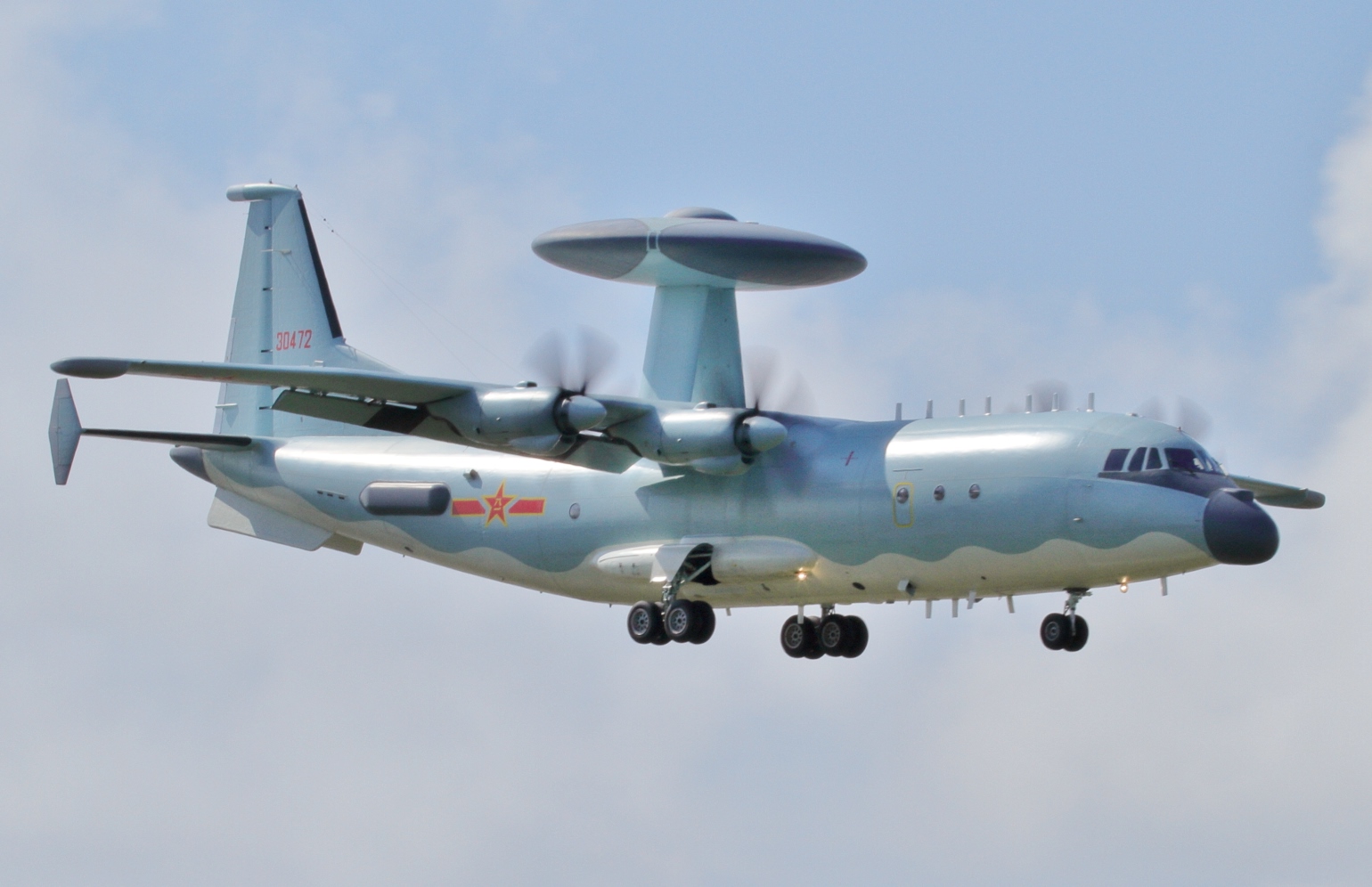
The public footage features the H-6K and J-16, which certainly carries a deterrent meaning. However, from a technical perspective, the High-end-6 anti-submarine patrol aircraft and KJ-500 are more critical. The former is responsible for incorporating underwater targets into the search chain, while the latter is responsible for air situation integration and command relay, with the 054A and 056A serving as the maritime execution platforms. In the Global Network report, retired frigate captain Li Yaqiang specifically mentioned that the anti-submarine aircraft displayed an internal command to "maintain tracking of the target situation," followed by a video cut to the anti-submarine capable 054A and 056A, indicating that this editing was not done randomly.
The Philippines itself does not have submarines, so the appearance of the High-end-6 around Huangyan Island is not aimed at the existing underwater forces of the Manila Navy, but rather at more complex external intervention scenarios. The submarine activities of the United States, Japan, and Australia are the real variables that the South China Sea anti-submarine system must consider. I believe this is also the most informative part of the video: the PLA is not only conducting surface law enforcement around the reefs but is also incorporating underwater threats into routine combat readiness duties.
Data Links are More Important than Platforms
This report also emphasizes that information is not simply transmitted through voice communication, but rather through data links that convey images, radar, and electro-optical signals. This statement is very official, but its meaning is quite specific: the platform that detects a target is not necessarily the platform that strikes it; the airborne anti-submarine aircraft, early warning aircraft, and maritime frigates must complete target numbering, trajectory stabilization, friend-or-foe identification, and fire control pre-positioning. If any link is delayed, so-called joint operations will turn into several military branches operating "out of sync" in the same maritime area.
From the equipment composition, this combination is not the strongest lineup of the PLA. There are no Type 055 destroyers, no aircraft carrier formations, and no publicly disclosed submarine forces. The 054A and 056A are routine service vessels, the J-16 and H-6K are mature models, and the High-end-6 is not new equipment. However, precisely because they are all mature platforms, their ability to coordinate stably is even more indicative of the combat readiness level in the South China Sea. The debut of new equipment attracts attention, but the high-frequency coordination of older equipment determines real combat effectiveness.
South China Sea Airports Changed the Radius Issue
Li Yaqiang stated in the report that with the improvement of shore-based aviation capabilities, the Chinese Air Force can now cover the entire South China Sea area. This judgment can be broken down: the operational radius of the J-16 is generally considered to be around 1500 kilometers, while the H-6K has an even greater range, and the airports on the Spratly Islands provide forward takeoff, landing, and support nodes. Huangyan Island is not in the Spratlys, but the existence of the South China Sea airport system effectively shifts some of the pressure that previously needed to be borne solely by the distant sea fleet to shore-based aviation and the reef support network.
However, a bit of cold water should be thrown on this. Coverage does not equal sustained control; being able to fly does not mean being able to stay airborne for long periods, and anti-submarine searches especially consume time, sonar buoys, and data processing capabilities. If the High-end-6 is to establish stable efficiency in the South China Sea, it requires a sufficient number of crews, maintenance parts, sonar buoy stockpiles, and mission planning capabilities. Public information is insufficient to assess how robust these stockpiles are, but this is precisely the part that is more worth tracking than a single video.
Small Masks Indicate Damage Control Standards are Rising
Another easily overlooked detail in the report is that crew members are wearing flame-retardant masks. This may seem inconspicuous, but it indicates that the naval forces are pushing damage control protection into a routine combat readiness state. Most modern naval combat positions are in enclosed compartments, and once hit and ignited, smoke and asphyxiation risks often claim lives faster than shrapnel. The presence of flame-retardant masks, flame-retardant clothing, and closed-loop firefighting equipment in routine footage indicates that the Southern Theater Command is not only training to "strike out," but also training to "continue fighting after being hit."
Source: Global Network cited China Central Radio and Television's Voice of China, July 2 report on the Southern Theater Command organizing maritime and aerial forces to conduct combat readiness patrols in the territorial sea and airspace around Huangyan Island.
Therefore, the focus of this Huangyan Island patrol is not on how many aircraft and ships were deployed, but on how it integrates anti-submarine, early warning, anti-surface strike, vessel damage control, and data link coordination into the same narrative. The next question is whether similar footage will feature more drones, surface unmanned vessels, or fixed-wing anti-submarine platforms in coordination. If so, then the South China Sea combat readiness patrol will not only become routine but will also upgrade towards a denser unmanned perception network.
The Southern Theater Command of the People's Liberation Army conducted maritime and aerial patrols around Huangyan Island on July 2, 2026, showcasing a coordinated operation involving H-6K bombers, J-16 fighters, KJ-500 early warning aircraft, and various frigates. This operation emphasizes the integration of anti-submarine capabilities and data link systems, indicating a shift towards regular military readiness in the South China Sea.
- The Southern Theater Command conducted patrols around Huangyan Island.
- Multiple aircraft and naval vessels were deployed in a coordinated operation.
- The operation included anti-submarine capabilities and data link integration.
- The presence of the High-tech-6 anti-submarine patrol aircraft was highlighted.
- The operation reflects a shift towards regularized military readiness in the South China Sea.