
2026 Ukraine Patriot Shortage Becomes NATO Hard Math
 Alexandra Reeves
2026 Ukraine Patriot Shortage Becomes NATO Hard Math
Volodymyr Zelenskyy did not go to Sweden only to talk about Gripens. The fighter jet headline was easier to photograph. The harder story was his warning that Ukraine is running short of the one Western munition that matters most when Russia fires ballistic missiles at cities.
According to Reuters, Zelenskyy sent a letter to President Donald Trump and the U.S. Congress asking for more Patriot systems and interceptor missiles after the latest Russian mass strike. Ukraine said Russia used 30 ballistic missiles in that attack and that only 11 were intercepted. That number should make every NATO planner sit up. It is not a Ukrainian procurement problem. It is the alliance discovering that its most advanced air defence architecture still rests on a very small pile of American missiles.
The Bottleneck Is Not Technology
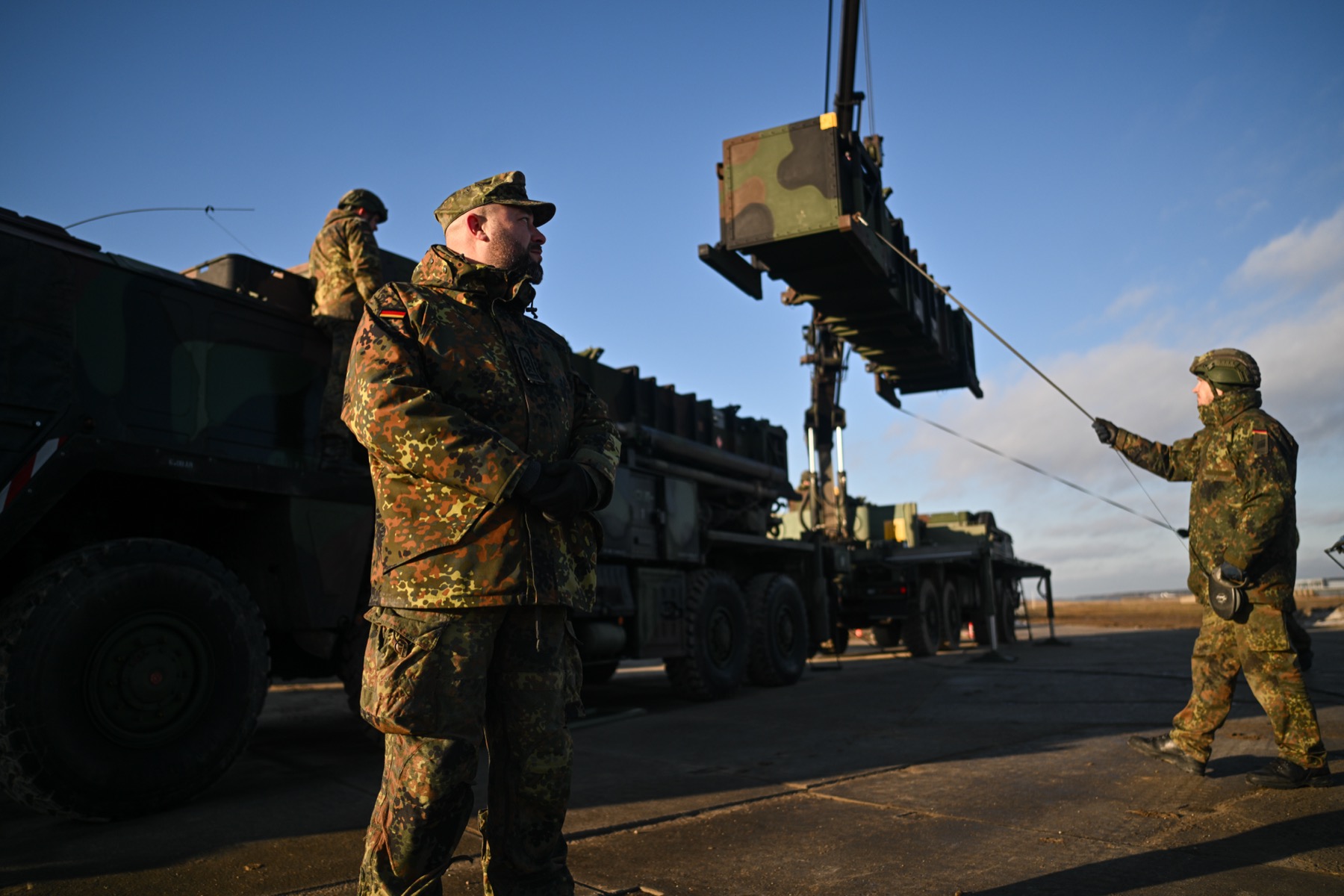
The Patriot system is not new, fashionable, or cheap. That is precisely why it matters. A Patriot battery typically combines AN/MPQ-65 or newer radar, engagement control stations, launchers, power units, and PAC-2 or PAC-3 interceptor missiles. Against aircraft and some cruise missiles, Ukraine can use a layered mix of NASAMS, IRIS-T, SAMP/T, Gepard guns, electronic warfare, mobile teams, and Soviet legacy systems. Against Russian ballistic missiles, the field narrows brutally.
Reuters reported that U.S.-made Patriot interceptors remain the only Ukrainian means of reliably shooting down Russian ballistic missiles. CBS News, which obtained the Ukrainian letter, reported the same core argument: Patriot is the most effective defence Ukraine has against that category of threat. Kyiv can improvise against drones. It can trade range, sensors, and mobility against cruise missiles. It cannot improvise an exo-atmospheric or terminal ballistic missile interceptor out of courage and welding shops.
This is where the usual Western comfort story breaks down. The popular assumption is that Russia has quantity and NATO has quality. That is true, but incomplete. Quality still has to be present in the launcher when the inbound track appears. Zelenskyy reportedly warned that there is little more painful than Patriot batteries without missiles loaded. That line lands because it describes the alliance problem in miniature: exquisite equipment without enough shots.
PURL Was Useful Until It Became Too Small
NATO already knows the mechanism that keeps U.S. weapons moving. The Prioritised Ukraine Requirements List, or PURL, lets European allies finance American-made equipment for Ukraine. NATO said in February that PURL had supplied around 75 percent of Ukraine Patriot missiles and 90 percent of missiles used in other air defence systems since the previous summer. That is an impressive statistic, but also an uncomfortable confession. Ukraine is not merely dependent on the United States. It is dependent on a U.S. production base funded unevenly by European political will.
That may work during a period of manageable Russian strike tempo. It looks less convincing after a night involving 600 drones, dozens of missiles, and two reported Oreshnik launches, as Reuters described the Sunday attack package. If Russia can repeatedly mix cheap one-way drones with cruise missiles, ballistic missiles, and occasional theatre-range systems, the defender is forced into the worst possible trade: saving expensive interceptors for the targets that cannot be allowed through, while accepting damage elsewhere.
Everyone in Washington likes burden-sharing when it means European allies writing cheques. Here is the less convenient point. Europe can fund PURL, but it cannot quickly manufacture PAC-3 Missile Segment Enhancement interceptors at the scale Ukraine needs. Nor can it assume that U.S. stockpiles are waiting in a warehouse untouched. The Associated Press reported that Zelenskyy warned deliveries are falling short as the Iran war diverts and depletes U.S. stocks. That is not a footnote. It is the strategic collision everyone pretended was theoretical: Ukraine, the Gulf, and Indo-Pacific planning all competing for high-end American air defence capacity.
Russia Is Attacking The Calendar
Moscow does not need to defeat Patriot in a clean technical duel. It needs to force more launches than Western industry and politics can replace on time. That is a different kind of campaign. Ballistic missiles compress decision time. Drone swarms stretch radar operators, mobile teams, and ammunition stocks. Public warnings about future strikes, including Moscow advice for foreign diplomats to leave Kyiv, add psychological pressure before the first launch.
Zelenskyy is trying to reverse that pressure. His argument is that better ballistic missile defence would make diplomacy more plausible because Russia would lose what he called its last major battlefield advantage. There is a hard truth in that. If the Kremlin believes it can punish Kyiv at will while waiting out Western supply disputes, negotiations become theatre. If Ukraine can blunt the most coercive part of the Russian strike campaign, the political equation changes.
But this is also where Kyiv is asking Washington for something larger than another aid tranche. It is asking the United States to decide whether European air defence remains a wartime rationing exercise. Patriot missiles sent to Ukraine are missiles not held for another theatre. Missiles held back for another theatre are political risk transferred to Kyiv, Dnipro, Odesa, and Kharkiv. There is no painless version of this decision.
The Alliance Needs An Interceptor Plan
The immediate answer is simple enough: send more Patriot interceptors through PURL, accelerate production, and push more European money into guaranteed orders. The longer answer is less comfortable. NATO needs a standing interceptor allocation plan for concurrent crises, not a scramble every time Russia conducts another saturation strike. It also needs European air defence production that can cover more than short-range drone and cruise missile layers. Europe has useful systems, but the ballistic missile defence bottleneck is still American.
That is the lesson of the May 27 and 28 appeals. Ukraine is not asking for a wonder weapon. It is asking for enough rounds for the weapon NATO already knows works. The distinction matters. Wonder weapons create expectations. Interceptors buy time. Right now time is exactly what Ukraine lacks, and what Russia is trying to destroy.
The next thing to watch is not another declaration of support. It is whether PURL moves from boutique financing to a predictable air defence pipeline, and whether Washington is willing to treat Patriot production as a shared NATO war requirement rather than an American inventory problem. If not, the alliance will keep discovering the same ugly fact after every Russian barrage: deterrence is not measured in launchers. It is measured in loaded missiles.
Sources: Reuters via Investing.com on Zelenskyy letter and Russian strike data; Associated Press on Zelenskyy remarks in Sweden and U.S. stockpile pressure; CBS News on the five-page letter; NATO on PURL contributions to Ukraine air defence missile supply.
Ukraine is facing a critical shortage of Patriot missile systems as it requests more interceptors from the U.S. after Russia launched 30 ballistic missiles, intercepting only 11. President Zelenskyy highlighted the urgent need for additional support to maintain effective air defense against ongoing Russian strikes. The reliance on U.S. production and funding from European allies complicates the situation, as NATO must address the imbalance in missile availability.
- Ukraine is running short of Patriot systems and interceptor missiles.
- Russia launched 30 ballistic missiles, with only 11 intercepted by Ukraine.
- Zelenskyy warned of the consequences of having Patriot batteries without missiles.
- PURL has supplied 75% of Ukraine's Patriot missiles since last summer.
- The U.S. production base is under pressure due to multiple global commitments.