
2026 U.S. Tomahawk Missile Delay Shakes Japan's Maritime Self-Defense Force Counterattack Capability Plan
 Tanaka Takashi
Delay of 400 Tomahawk Missiles in 2026 Shakes Japan's Maritime Self-Defense Force Counterattack Capability Plan
The announcement at the end of March that the Japan Maritime Self-Defense Force's destroyer "Choukai" had completed modifications for Tomahawk launch capability should have been received as a smooth step towards the development of counterattack capabilities. However, a report on May 24 indicated that the U.S. Secretary of Defense informed Defense Minister Koizumi about delays in the delivery of Tomahawks. While the ships equipped with the systems are starting to come into view, the arrival time of the crucial ammunition has become uncertain.
Two-Year Shadow Over the Procurement of 400 Missiles
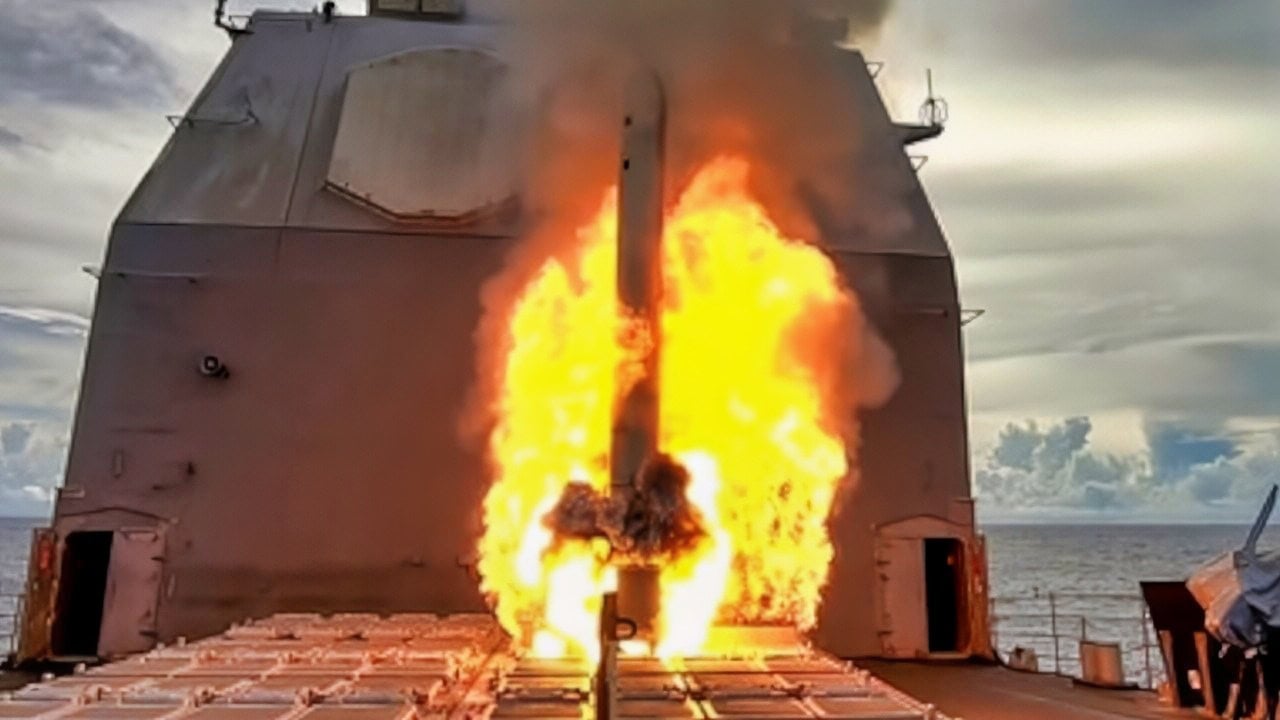
In January 2024, the Japanese government signed a Letter of Offer and Acceptance (LOA) with the U.S. government for the acquisition of Tomahawks and related equipment through Foreign Military Sales (FMS). The Ministry of Defense has explained that the acquisition period is from fiscal year 2025 to fiscal year 2027, specifically from 2025 to 2027. According to the DSCA notification, the breakdown includes a maximum of 200 Block IV missiles, a maximum of 200 Block V missiles, and 14 tactical Tomahawk weapon control systems, with a total cost of $2.35 billion.
What is noteworthy in this report is that it is not merely a matter of a few months of delivery adjustments, but that there could be delays of up to two years. The U.S. military has consumed a large number of cruise missiles in operations against Iran, and CSIS estimates that over 1,000 of the estimated pre-war stockpile of 3,100 Tomahawks had been used as of April. The issues with the production line are no longer just a matter of support for Europe.
The Significance of the "Choukai" Modification Remains
However, the author does not view this delay as rendering Japan's counterattack capability plan void. According to USNI News, the "Choukai" will undergo modifications and crew training with the support of the U.S. Navy starting in October 2025, with live-fire tests scheduled for this summer. For the JMSDF, what is important is not just loading munitions into the vertical launch system, but gaining experience in operating mission planning, target information, launch authority, and communication procedures between Japan and the U.S. as a single operational cycle.
However, if the number of munitions is limited, while the quality of training may improve, the quantity will be insufficient. During the Cold War, the JMSDF built up its own patrol lines and destroyer operations while relying on the capabilities of the U.S. Navy in anti-submarine warfare. In this case of long-range strikes, the order will be reversed. The system will be established based on U.S.-made missiles first, with domestic improved Type 12 surface-to-ship guided missiles and hypersonic glide missiles adding depth later.
Deterrence of the First Island Chain is Also Influenced by Delivery Schedules
China's capabilities will not wait. The activities of vessels and aircraft moving from the East China Sea to the Western Pacific are increasing in quantity, frequency, and simultaneity, and Japan's reason for possessing counterattack capabilities lies in deterring missile launches from the adversary and preventing invasion forces from landing on remote islands. The Ministry of Defense itself describes stand-off defense capabilities as the ability to "early and at a distance" prevent invasion forces.
What is often overlooked here is that the Tomahawk is not only a symbol of the Japan-U.S. alliance but also a weapon constrained by the very practical limitation of U.S. ammunition stockpiles. Even if Japan purchases 400 missiles, there is no guarantee of additional procurement in times of crisis. Rather, this delay indicates that the more allied nations concentrate on the same type of munitions, the more political issues regarding supply priorities will arise.
Role Sharing with Domestic Missiles
Therefore, the focus going forward should not be on hastening the alternatives to Tomahawk, but rather on clarifying the role sharing with domestic stand-off firepower. The Tomahawk excels in range and performance, but since it will be mounted on JMSDF Aegis destroyers, it will always be subject to mission allocation with BMD tasks, air defense, and anti-submarine surveillance. The improved Type 12 and hypersonic glide missiles have the potential for dispersed operations from land in the defense of the southwestern islands.
The essence of counterattack capability is not just "how far it can reach." It is about which units can convert political decisions into operational orders within a certain timeframe based on what information. The true challenge posed by the delay in Tomahawk deliveries is not only the U.S. production capacity but also whether Japan can design SLOC (Sea Lines of Communication) defense and deterrence against a Taiwan contingency based on a limited number of munitions.
References
- Nippon.com/Jiji Press, May 24, 2026, U.S. Informs Japan of Tomahawk Missile Delivery Delays: FT
- Japan Ministry of Defense, January 18, 2024, Regarding the Progress of the Projects of Stand-off Defense Capability
- Defense Security Cooperation Agency, Japan - Tomahawk Weapon System, Transmittal No. 23-69
- USNI News, March 27, 2026, Japanese Aegis Destroyer Completes Modifications to Operate U.S.-made Tomahawk Missiles
- CSIS, April 2026, Last Rounds? Status of Key Munitions at the Iran War Ceasefire
The U.S. informed Japan of a delay in the delivery of 400 Tomahawk missiles, potentially impacting Japan's defense capabilities. The Japan Maritime Self-Defense Force's destroyer 'Chokai' has completed modifications to launch these missiles, but the uncertainty surrounding ammunition delivery raises concerns about Japan's counter-strike capabilities. This delay is significant as it affects Japan's ability to deter threats in the region.
- Japan's acquisition of 400 Tomahawk missiles is delayed by up to two years.
- The U.S. informed Japan about the delay in missile delivery.
- The Japanese destroyer 'Chokai' has completed modifications to launch Tomahawk missiles.
- The delay affects Japan's counter-strike capabilities against potential threats.
- Japan's defense strategy relies on timely delivery of U.S. military equipment.