
229 drones in one night reveal the limits of the Russian doctrine of exhausting Ukraine
 Dmitri Volkov
229 Drones in One Night Show the Limits of the Russian Doctrine of Exhausting Ukraine
The figure 229 looks impressive only until it is placed next to another figure — 212. This is how many Russian drones, according to the Ukrainian Air Force, were shot down or suppressed by electronic warfare means on the night of May 30 to 31. The remaining hits — 14 strike UAVs in 11 locations — still mean destruction and human losses, but from a military point of view, this statistic shows not so much the power of the Russian strike as its current economy: Moscow is increasingly purchasing the effect of saturation not through the quality of hits, but through the mass of cheap and medium-priced targets.
Mass Instead of Precision
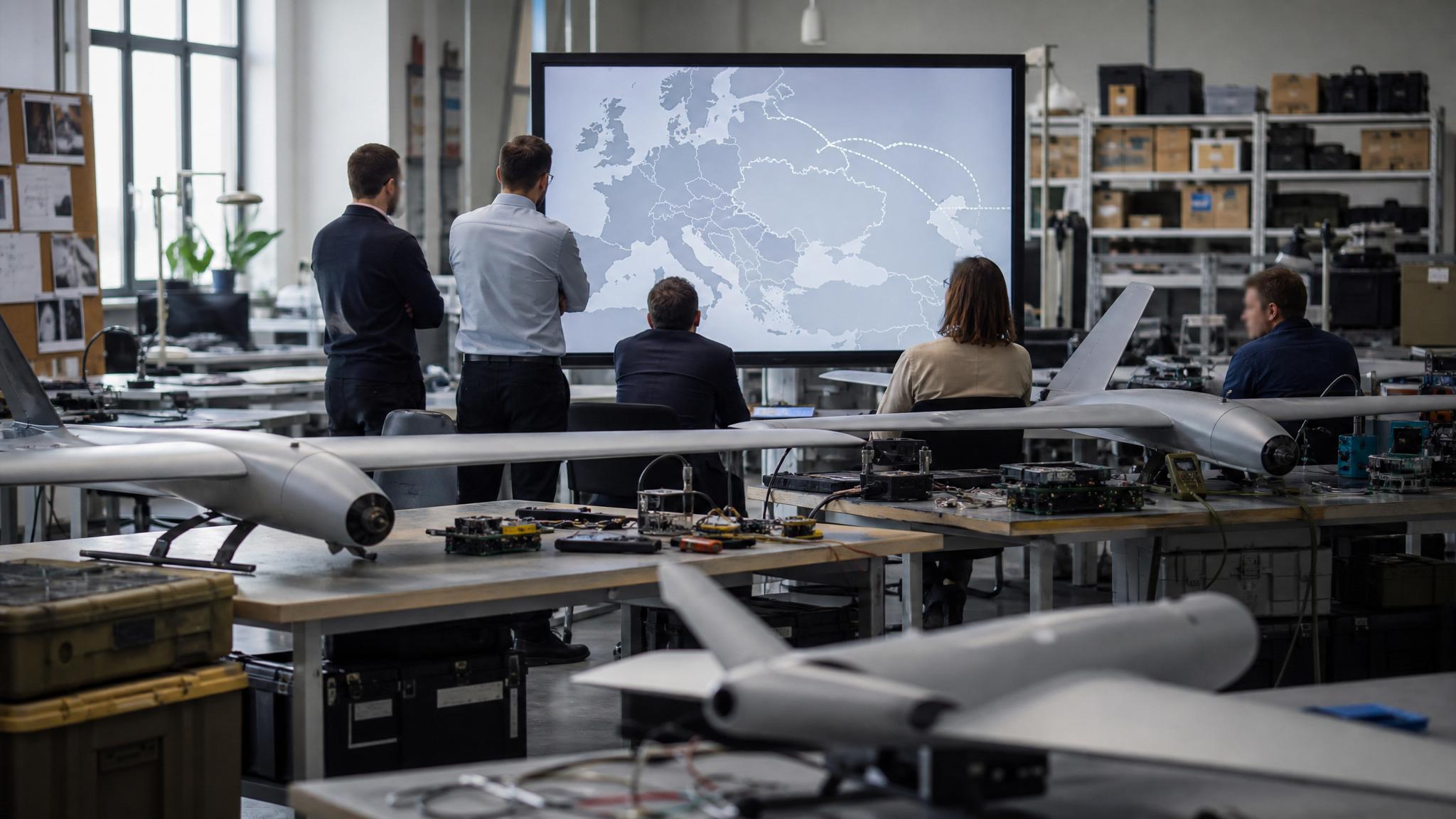
According to Ukrainian sources, the Russian attack began on the evening of May 30 and included Shahed drones, including jet variants, "Gerbera," "Italmas," and imitation drones "Parody." The launch directions are also important: Oryol, Kursk, Bryansk, Millerovo, Shatalovo, Primorsko-Akhtarsk, and Gvardeyskoye in occupied Crimea. This is not a single "salvo," but a distributed pressure scheme, where the task is to stretch Ukrainian air defense across the north, east, south, and Crimea simultaneously. In Soviet textbooks, such a structure would be called creating a multi-vector threat; in modern Russian practice, it is more of an industrial-logistical attempt to compensate for the shortage of precision weapons with the number of carriers.
The day before, according to ISW citing Ukrainian data, Russia had already launched one ballistic missile, five cruise missiles, and 290 drones. A week earlier, on May 24, the Associated Press reported a much heavier strike: 600 strike drones and 90 missiles, including, according to Ukrainian claims, the use of "Oreshnik." If these episodes are viewed not as separate nights but as a series, we see a new norm in the Russian air campaign: missiles are becoming a tool for political and psychological emphasis, while drones are the workhorse of daily exhaustion.
The Economics of the Salvo
Classic Russian military thought loves the word "scale." In the Soviet tradition, scale meant the ability of the state to mobilize industry, transport, and human reserves for a front-level operation. In 2026, scale is increasingly measured not by tank armies but by the number of disposable devices that can be launched into the air overnight. This is not a trifle. UAVs like Shahed/Geran remain cheaper than cruise missiles, require less scarce electronics, can be produced in series, and allow the use of decoys. But this logic has its limits: if out of 229 targets, 212 are destroyed or suppressed, then Moscow is forced to constantly increase the density of the strike to maintain the previous probability of breakthrough.
In other words, Russia is waging not just a drone war, but a war of coefficients. Its calculation looks something like this: part of the drones will be shot down by a mobile fire group, part will be suppressed by electronic warfare, part will take false routes, but several devices will still break through to a warehouse, substation, or residential area. The problem for the General Staff is that the Ukrainian defense system is no longer just anti-aircraft missile defense. The reflection of the night attack involved aviation, air defense systems, electronic warfare, drone system units, and mobile fire groups. This is a hybrid defense against a hybrid strike. In such a system, each new hundred Russian drones increases not only the pressure on Ukraine but also the demands on Russian production, routing, operators, launch sites, and reconnaissance of results.
It is worth noting an unpleasant detail for Moscow. The Russian air campaign has become more regular and massive just as Ukraine has expanded its own long-range strikes on Russian oil infrastructure. On May 30, AP reported fires at facilities in Taganrog and Armavir; Volodymyr Zelensky specifically emphasized that Armavir is located about 500 kilometers from the Ukrainian border. This creates a new type of symmetry: Russia strikes at Ukrainian energy and cities, while Ukraine strikes at Russian oil logistics and military facilities. But the symmetry is incomplete. Russia has more long-range munitions, while Ukraine's accuracy in selecting economically sensitive targets is increasing.
The Romanian Factor
The fall of the Russian Geran-2 in Romanian Galați on May 29 turns this campaign from a Ukrainian problem into a NATO problem. Le Monde reported that since the beginning of attacks on Danube ports in 2023, Romania has recorded 28 incursions of drones into its airspace, 15 of which occurred in 2026. This time, the device hit a residential building, injuring two people. The Romanian Ministry of Defense cautiously called this a consequence of the war, not an attack on Romania. Such wording is politically understandable: Bucharest does not want to automatically escalate the conflict to the level of Article 5. But the military reality does not disappear from the diplomatic formula.
For Russia, this risk is also ambiguous. On the one hand, the Kremlin may believe that NATO will avoid direct escalation and therefore tolerate "accidental" flights. On the other hand, each such incident forces the eastern flank of the alliance to build cheap anti-drone defenses, integrate low-altitude radars, deploy mobile groups, and change the rules of engagement. Moscow may not instill fear in NATO but rather accelerate NATO's adaptation. In Soviet times, this would have been called an unfavorable side effect of the operation. In today's bureaucratic Moscow, it will likely be framed as a report on "provocations by the Kyiv regime."
Why This Is Not a Winning Formula
The Russian doctrine of exhaustion works when the opponent cannot restore defenses faster than the pressure increases. So far, the picture is more complicated. Ukraine is suffering damage, but its defense is learning to distribute functions between expensive missiles, cheap mobile means, electronic warfare, and its own interceptors. The Russian salvo is becoming more numerous but increasingly heterogeneous: alongside strike Shaheds fly "Gerberas," "Italmases," and imitators. This is rational in terms of saturating air defense, but it also shows that Moscow is forced to economize on real precision.
ISW separately notes that Russian authorities are looking for new ways to protect the deep rear from Ukrainian strikes, including the creation of regional air defense coordination structures. This symptom is more important than the statement. The centralized military machine, which has been accustomed to striking foreign infrastructure, is now forced to explain to governors why oil depots, airfields, and factories need local air defense. Russia is expanding the air war, but at the same time stretching its own defense hundreds of kilometers deep. This does not look like a pure strategic initiative, but rather a mutual entanglement of two systems in an expensive technological arms race.
The main conclusion from the night of May 31 is simple: 229 drones are not proof of Russian invulnerability. It is proof that to achieve a limited result, Russia now requires an increasingly larger and more complex salvo.
My forecast is cold and therefore unpleasant. In the summer of 2026, Russia will likely continue to increase the average size of night attacks, alternating mass drone waves with missile strikes for political effect. But the military return of this campaign will depend not on the absolute number of launched devices, but on whether Moscow can break Ukrainian adaptation faster than Ukrainian and European systems learn to make interception cheaper. So far, the data from May 30-31 suggests something else: the Russian machine knows how to apply pressure, but is increasingly failing to convert it into decisive operational results.
Russian forces launched 229 drones in a coordinated attack on the night of May 30-31, 2026, targeting Ukraine from multiple locations including Oryol and Crimea. Ukrainian air defense successfully intercepted 212 of these drones, indicating a significant engagement. This operation reflects a shift in Russian tactics towards mass drone deployment to exert pressure on Ukrainian defenses.
- 229 drones were launched by Russian forces in a single night.
- 212 drones were intercepted or suppressed by Ukrainian air defense.
- The attack involved multiple types of drones including Shahed and decoy drones.
- Locations of drone launches included several regions in occupied Crimea and Russia.
- The incident reflects a shift in Russian military strategy towards mass drone usage.