
24 New Pantsir Towers Around Moscow Show a New Geography of the Russian War
 Dmitri Volkov
24 new Pantsir towers around Moscow show a new geography of the Russian war
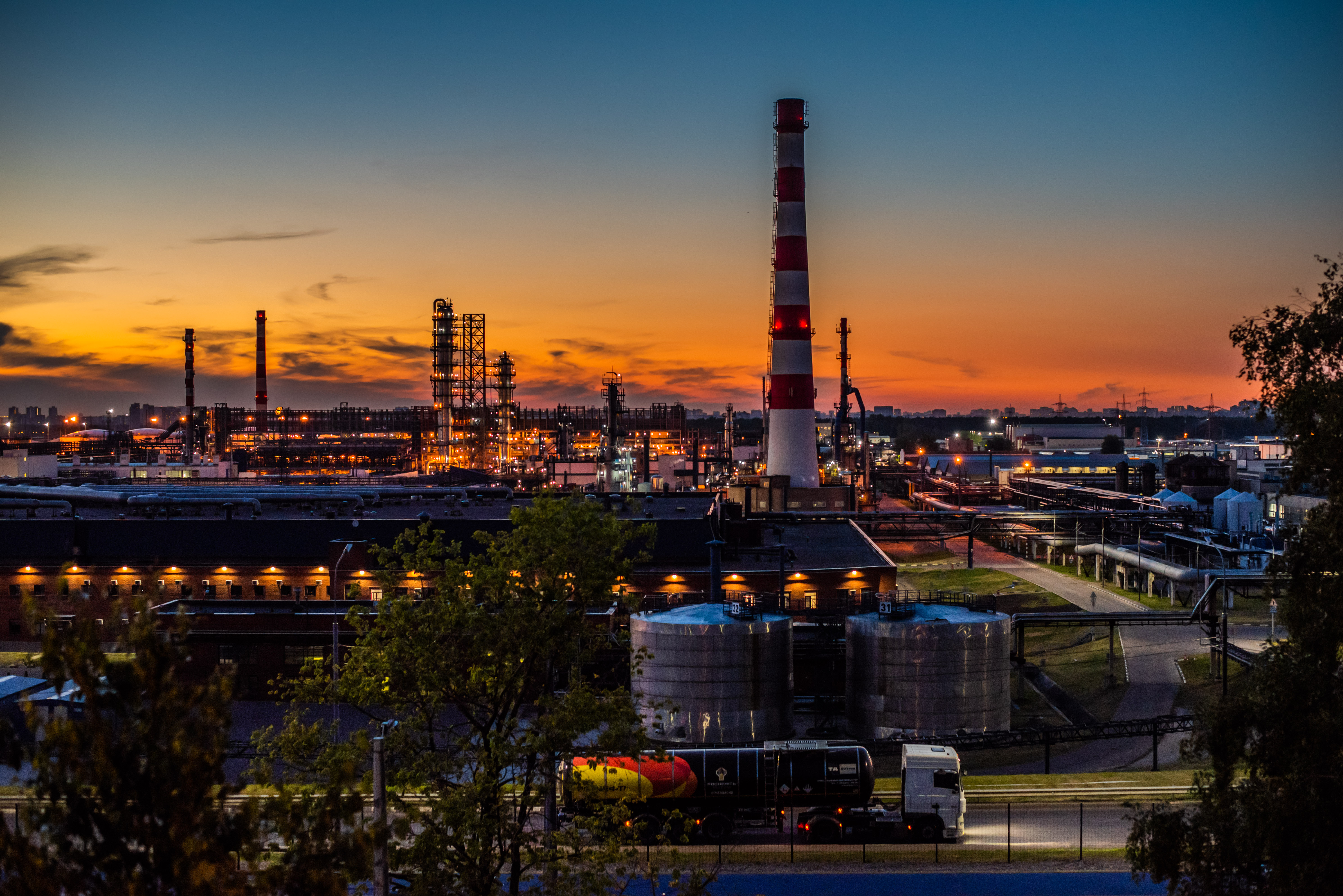
Twenty-four new air defense towers around Moscow in two months is not a technical detail, but a political-military diagnosis. According to ISW's assessment from July 27, Russian authorities have deployed about 24 new sites for Pantsir systems in and around Moscow, including the area of the Moscow oil refinery, the president's residence in Vnukovo, and Vnukovo airport; three to four Pantsir-SMD systems and two S-400 complexes are also mentioned. On the same day, Vladimir Putin signed a decree to increase the personnel of the Armed Forces to 2,426,130 people, including 1,535,000 military personnel, effective August 1 (ANews citing the government portal, July 27, 2026). These two pieces of news appear different only on the newspaper page. In military logic, they relate to one process — the war is gradually returning from the Ukrainian theater to Russian infrastructure.
Moscow as a new object of operational defense
The Soviet air defense school operated on a simple principle: the capital is protected not only because the government is there, but because the capital is a hub of management, industry, transport, and symbolic legitimacy. In the late USSR, an echeloned system was built around Moscow, primarily designed for an aviation-missile strike of a large war. The current towers for Pantsirs are a much more prosaic structure. They do not indicate preparation for a nuclear duel. They indicate that cheap and medium-range drones have forced the state to raise small air defense over urban development, oil refining, warehouses, and airports. This is almost a humiliating adaptation for a country that has sold the image of an impenetrable dome over the capital for decades.
Context is important. On the night of July 26-27, Ukrainian forces continued strikes on Russian infrastructure: the Ukrainian General Staff reported the destruction of an export terminal in Rostov-on-Don, Russian regional authorities acknowledged the strikes, and Zelensky confirmed attacks on oil facilities in the Yaroslavl region and Udmurtia — more than 1,300 kilometers from the Ukrainian border (ISW, July 27). On July 28, Kyiv Independent, citing monitoring channels and local authorities, reported a strike on an industrial facility in Chekhov, Moscow region, a fire at a warehouse in Koledino, and damage to a substation in occupied Feodosia. Some of these reports require caution, but the very frequency of episodes is already a fact of operational significance. The Russian depth has ceased to be a rear in the old sense of the word.
Why a Pantsir on a tower does not equal strategic protection
Pantsir-S1 and its new variants were created as a close-in defense line for important facilities and more expensive air defense systems. The complex typically carries 12 57E6 missiles or upgraded munitions depending on the version, has 30 mm caliber cannon armament, and is capable of engaging drones, cruise missiles, and low-flying targets. However, its effectiveness always depends not on catalog range, but on network density, quality of target designation, radar horizon, discipline of crews, and cost of interception. The tower solves one problem — a low target behind urban development is easier to see. But it creates others: the stationarity of the position, predictability of the sector, dependence on external intelligence, and the need for constant security.
Russian propaganda loves the word dome, but air defense is not a dome, but an accounting of probabilities. If the opponent can launch dozens of cheap drones on routes that change every night, the defender is forced to pay with missiles, crews, radars, fuel, repairs, and political attention. That is why the appearance of 24 towers around Moscow should be read not as a demonstration of strength, but as an acknowledgment of the new cost of war. Each Pantsir at the oil refinery is a Pantsir that is not at the ammunition depot in Rostov region, at the airfield in Voronezh region, or in the cover of troops at the front. The distribution of scarcity becomes a strategy.
Decree on personnel and the hidden problem of people
Putin's decree from July 27 is formally related to the creation of military construction units. Compared to the June decree, the personnel increases by 27,000 positions, of which 25,000 are military personnel. Against the backdrop of previous expansions, this is little: ISW reminds that after the start of the full-scale invasion, Russia increased its personnel by 137,000 in 2022, by 170,000 in 2023, and by 180,000 in 2024. Therefore, the July step cannot be called a new wave of mobilization. Rather, it is a bureaucratic acknowledgment that the war needs not only assault companies but also fortification builders, repairmen, facility security, air defense crews, signalers, engineers, and people who will restore infrastructure after strikes.
Here, the institutional weakness of the Russian model manifests itself. Personnel numbers are the paper capacity of the organization; combat strength is people with training, motivation, commanders, and equipment. Between these quantities, there has always been a wide gray area in Russia. The Ukrainian General Staff estimated Russian losses since February 24, 2022, at 1,442,140 people, including 1,560 in the last day. These figures cannot be used as accounting truth without reservations, but even if considered inflated, the direction of change is obvious: the war consumes people faster than the state can quietly and unobtrusively replenish quality personnel. Hence the constant attempt to retain the mobilized of 2022 with contracts, benefits, and moral pressure.
Old mobilization culture in a new war
In the Soviet tradition, there was a belief in mobilization depth: territory, industry, and population were supposed to absorb the first blow and then build up mass. But today’s Russia is waging war not as the industrial USSR of 1943, but as a raw material and semi-market economy with a limited number of qualified workers, drivers, engineers, electronic warfare operators, and junior commanders. When Ukrainian drones strike oil logistics, warehouses, and substations, the state has to simultaneously expand the front-line army and create internal defense infrastructure. These are different tasks competing for the same people.
There is also a political layer. The placement of air defense in Moscow is a signal to the elites: the state sees a threat and is doing something. But for a military analyst, the very fact of such a signal is more important than its propaganda shell. If the capital needs accelerated construction of air defense towers four years into the war, it means the previous Kremlin conception of safe depth has proven erroneous. The Russian strategy began with an attempt to push destruction outward — to Kharkiv, Mariupol, Bakhmut, Ukraine's energy facilities. Now part of the destructive geography is returning, albeit in a limited form.
Forecast
In the coming months, Russia will likely continue to increase object-based air defense around Moscow, oil refineries, ports, and warehouses, but this will not solve the problem, rather it will increase its cost. Ukraine is not obliged to break through the entire system; it is enough to force Moscow to disperse scarce complexes, crews, and managerial attention. The July personnel decree shows that the Kremlin understands the need for people for this new internal defense. But understanding the need does not yet mean the ability to create a quality force. The Russian army will become larger on paper and denser around the capital, however, the war will increasingly demand what cannot be produced by decree: prepared people, reliable industrial coordination, and an honest assessment of the threat.
Sources: ISW Russian Offensive Campaign Assessment from July 27, 2026; ANews citing the Russian government portal from July 27, 2026; Kyiv Independent from July 28, 2026; data from the Ukrainian General Staff from July 28, 2026.
Twenty-four new Pantsir air defense systems were deployed around Moscow in July 2026, indicating a shift in Russian military strategy towards domestic defense. This deployment coincided with an increase in military personnel to 2,426,130, as President Putin recognized the need for enhanced internal security. Ukrainian forces continued to target Russian infrastructure, highlighting the evolving nature of the conflict.
- 24 new Pantsir air defense systems deployed around Moscow
- Putin signed a decree increasing military personnel to 2,426,130
- Ukrainian forces targeted Russian infrastructure, including oil facilities
- The deployment indicates a shift in military strategy towards domestic defense
- Russian military faces challenges in maintaining troop quality and readiness