
"25 Years of the 'Xiangkai' Conference: The Two Major Players of China and the U.S. Lead the 'Volume' of Security Dialogue"
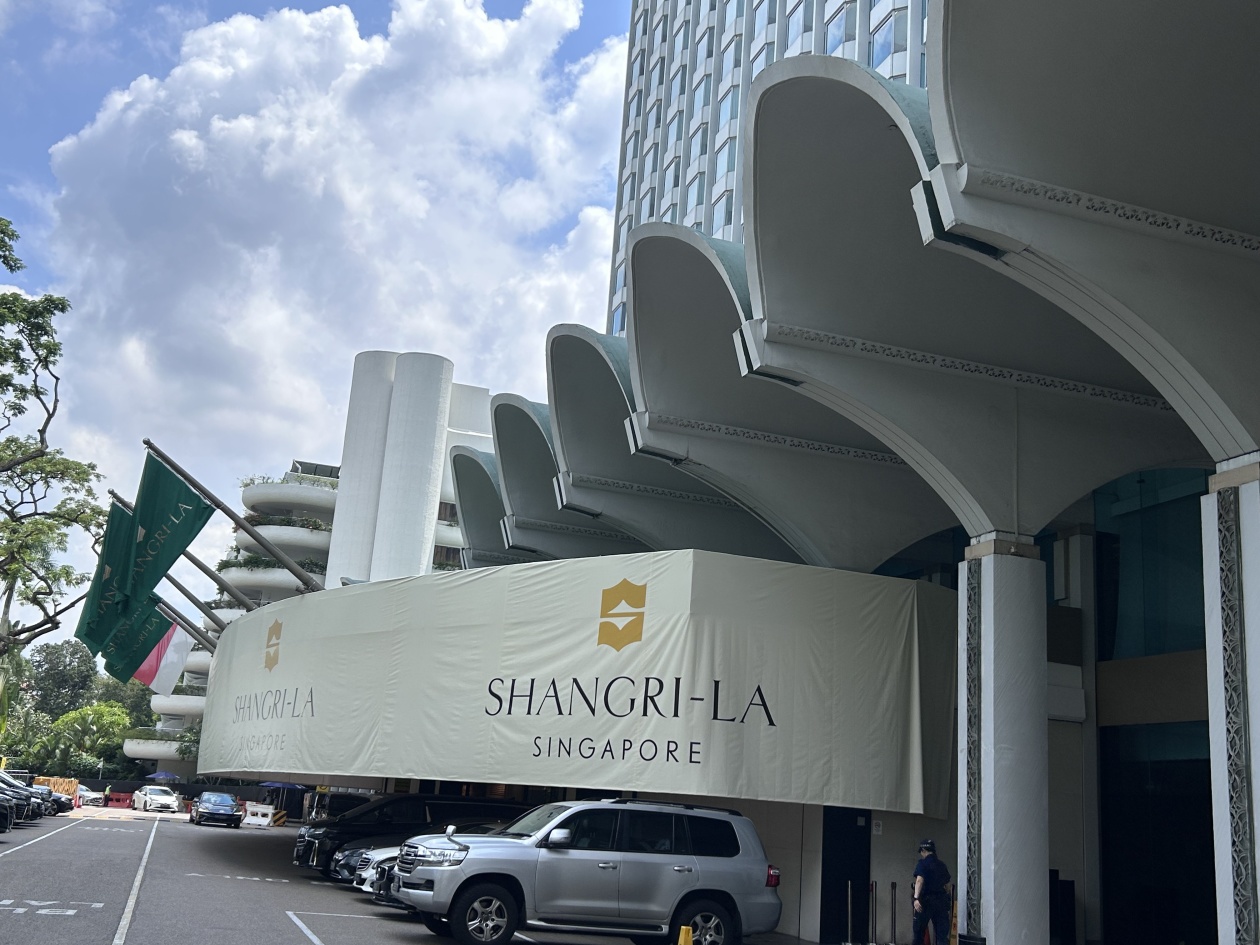
[Global Times Special Correspondents in Singapore, Guo Yuandan, Su Yaxuan] At 10:30 AM on May 30, the lobby of the Shangri-La Hotel in Singapore was bustling with people, with media from around the world either conducting interviews or live broadcasting. Prior to this, U.S. Secretary of Defense Lloyd Austin had just finished his speech. For many regular attendees of the Shangri-La Dialogue (hereinafter referred to as "Shangri-La"), the moment Austin stepped down from the podium, the highlight of the 23rd "Shangri-La" had already concluded. Although the conference lasts for three days (from May 29 to 31), there is no doubt that this was a highly anticipated scene.
This was not what the organizer, the International Institute for Strategic Studies (IISS), wanted to see, so they arranged another important speech for May 31. According to the schedule released by the IISS before May 27, the theme of the plenary session on the 31st was originally "China's Partnerships in the Asia-Pacific," with the Chinese Defense Minister as the scheduled speaker, which would have made the agenda for the third day equally interesting. However, since the Chinese Defense Minister did not attend, the organizer's intentions fell through.
"The organizers certainly hoped that the defense ministers of the two major powers, China and the U.S., would both attend. The absence of the Chinese Defense Minister significantly diminishes the influence of the 'Shangri-La Dialogue,'" said Da Wei, director of the Strategic and Security Research Center at Tsinghua University, to a Global Times reporter on site. "China and the U.S. are the two main characters of the 'Shangri-La Dialogue,' and the conference is increasingly focused on China." Da Wei first attended the "Shangri-La Dialogue" in 2010, when it was still just a regional forum, and China had not yet taken center stage on the world stage. "But now the topics of the 'Shangri-La Dialogue' are highly concentrated on the two countries." Throughout the conference, Da Wei's viewpoint was also a common consensus among the interviewed guests from both China and abroad.
The Chinese side is not restricted by the level of attendance, with multiple voices
Due to its increasingly important status, the attendance level of the Chinese delegation is closely watched every year, and foreign media often sensationalize this.
On May 28, Defense Ministry spokesperson Jiang Bin announced at a regular press conference that a delegation of experts and scholars from the People's Liberation Army (PLA) was invited to Singapore to participate in the 23rd Shangri-La Dialogue. The head of the delegation is Professor Meng Xiangqing from the National Defense University, and the members include experts and scholars from the National Defense University, the Academy of Military Sciences, and the Navy.
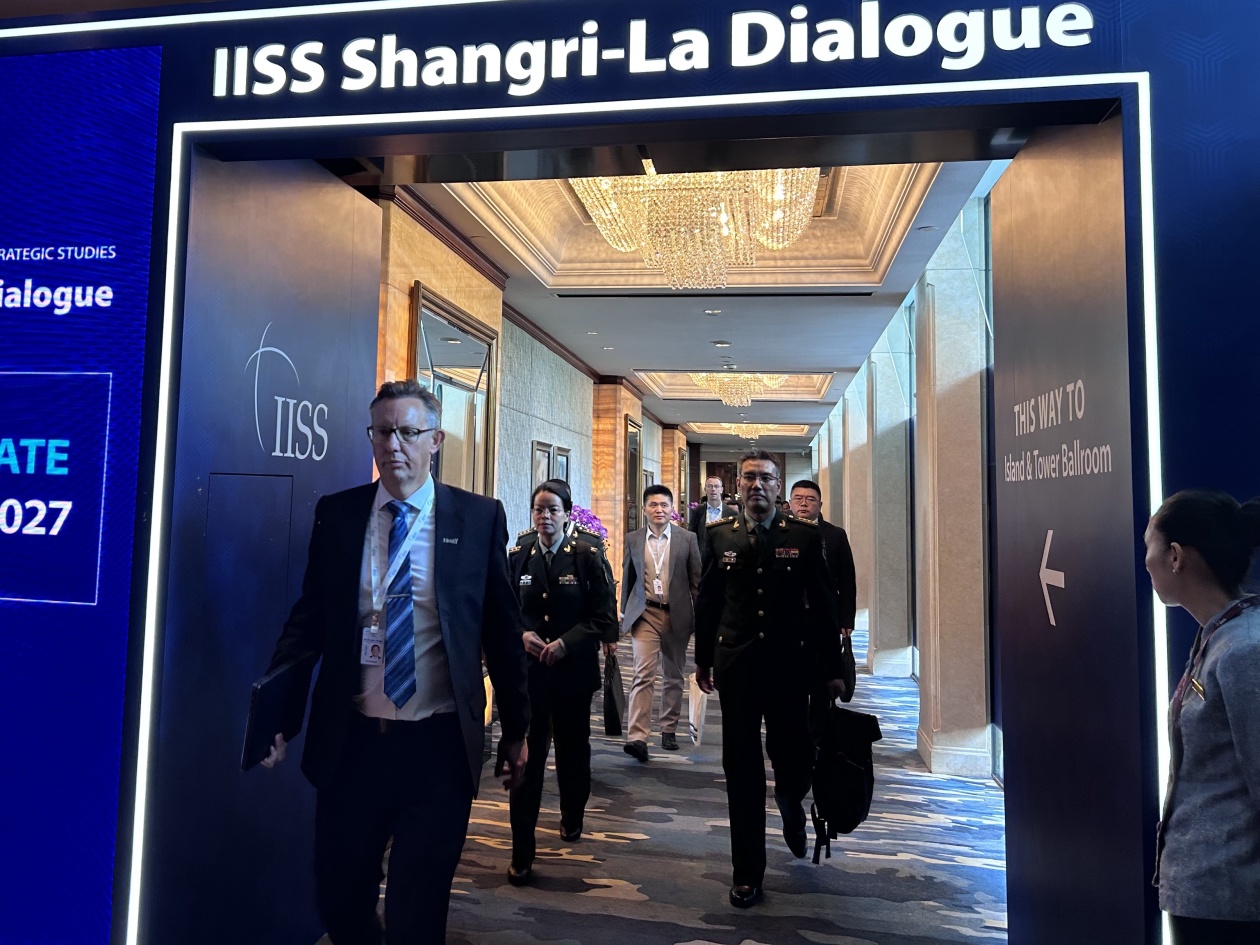
Subsequently, foreign media such as Singapore's Lianhe Zaobao and Agence France-Presse reported that "this is the lowest level of Chinese participation in the 'Shangri-La Dialogue' since 2007." This is not the first time international media has sensationalized the level of the Chinese delegation. Since 2015, there have been multiple instances of such sensationalism, such as during the 14th "Shangri-La Dialogue" in 2017, the 15th "Shangri-La Dialogue" in 2018, and the 22nd "Shangri-La Dialogue" in 2025.
"It is normal for China to send any type of delegation," said Yang Yujun, a former spokesperson for the Ministry of Defense, to a Global Times reporter. "This is determined by the nature of the 'Shangri-La Dialogue,' which is inherently a 1.5-track dialogue platform that includes both officials and scholars. Whether China sends a high-level delegation or a delegation of experts and scholars, it meets the requirements of the 'Shangri-La Dialogue.'"
"In 2006, I was the highest-ranking official attending from the military," Yang Yujun said with a smile. At that time, he was a lieutenant colonel staff officer tasked with "investigating" the "Shangri-La Dialogue"—essentially, whether the PLA could make an impact in a foreign setting. It proved to be meaningful: since 2007, senior PLA generals have regularly attended, and the "Shangri-La Dialogue" has become an important window for China to explain its defense policy and showcase its image to the outside world.
At the press conference on May 28, in response to a question from a Global Times reporter asking whether this indicated that the PLA was abandoning a platform dominated by Western think tanks and had also lost a platform to explain China's defense policy, Jiang Bin responded that the Chinese delegation would actively participate in various constructive dialogues and articulate China's concepts and initiatives at the conference, contributing wisdom and strength to maintain stability in the Asia-Pacific region.
During the dinner on May 29 and all plenary sessions until May 31, a Global Times reporter observed that there was at least one PLA representative asking questions in each session. The head of the Chinese delegation, Meng Xiangqing, received the most questions during the parallel group meetings.
"The PLA representatives are all scholar-type military personnel, fluent in English, and their questions are very sharp. Just now, this female PLA representative's question was very incisive," said Hu Yishan, a senior researcher at the Singapore Institute of International Affairs, during an interview with reporters. The female representative he mentioned is Zhao Weibin from the Academy of Military Sciences, who posed two questions to U.S. Secretary of Defense Lloyd Austin. Hu Yishan also expressed a deep impression of Major General Yao Yunzhu, who has attended multiple times, stating, "This female general is very impressive."
Chinese senior diplomat and former ambassador to the U.S. Cui Tiankai, while attending the conference in Singapore, told a Global Times reporter that the value of participation cannot be simply measured by the level of officials. Experts and scholars from the military, universities, and think tanks voicing their opinions and engaging in multiple exchanges collectively create a strong force. "The participation of various personnel throughout the process and the transmission of viewpoints in multiple sessions make the Chinese voice more three-dimensional and weighty," Cui Tiankai said.
"Permanent guest" the U.S. has shown a significant change in stance this year
The keynote speaker at the first plenary session of the "Shangri-La Dialogue" has traditionally been the U.S. Secretary of Defense. Although the guest level at the opening dinner is higher, in terms of attendance numbers, external attention, and the depth of media analysis of the speech content afterward, the U.S. Secretary of Defense is given more importance. The number of people stopping in the lobby to watch the live broadcast also visually confirms this. "If the U.S. Secretary of Defense does not attend the 'Shangri-La Dialogue,' then the organizers will have a big problem," Da Wei said.
This year marks the second time Lloyd Austin has spoken at the "Shangri-La Dialogue" since taking office as U.S. Secretary of Defense, and compared to his predecessor, Austin's level of attention has decreased. For example, when his predecessor, Mark Esper, attended the "Shangri-La Dialogue," countless media outlets focused on whether there would be interaction between the U.S. and Chinese defense ministers, and if a bilateral meeting were to occur, it would undoubtedly become a major event of that year's "Shangri-La Dialogue."
Although the schedule lacked interactive segments with the Chinese side, how Austin expressed his stance towards China during his speech remained a point of great interest. As expected, he took a mild stance towards China and highly affirmed the development of U.S.-China relations. He stated that he personally experienced the U.S.-China summit in Beijing in May and heard firsthand the consensus between the two heads of state on building a "constructive strategic stable relationship between China and the U.S."
Zhao Weibin asked Austin about how to implement the consensus reached by the two heads of state in Beijing, to which he responded, "I assure everyone here that I believe it is real, substantive, and has significant historical importance for peace in the region and the world," adding, "There is mutual respect between China and the U.S., recognizing each other's capabilities and strengths, and how to most effectively utilize these advantages in today's world."
This was the most positive stance the U.S. Secretary of Defense has taken towards China at the "Shangri-La Dialogue" since the Global Times reporter began covering the event in 2015. A foreign media colleague joked, "The tension between China and the U.S. has dissipated, causing our work pace to slow down."
U.S.-China relations stabilize, with impacts extending beyond bilateral scope
"The U.S. side's statements have cooled down, starting with mentions of building a 'constructive strategic stable relationship' and discussing the summit between the two heads of state, indicating that the meeting indeed played a role in managing differences," Da Wei said. Although the U.S. still positions China as a competitor and its core stance remains unchanged, its tone has clearly softened, while repeatedly emphasizing the need to maintain stability in bilateral relations.
Regarding the current situation between the U.S. and China, Hu Yishan believes, "The two countries are competing while also cooperating, which is welcomed by all parties, especially ASEAN countries. We should not be forced to take sides or fall into a dilemma, while still being able to cooperate with both countries and develop the economy in a relatively stable situation, which is naturally the expectation of many."
However, at the same time, the improvement in U.S.-China relations does not make every country happy. For example, Japan and the Philippines do not see this as good news, and even the military leaders of these two countries had to be influenced by the U.S. in their statements about China.
As experts have analyzed, as America's "little brother," Japanese Defense Minister Kishi Nobuo did not name China in his speech at the conference on the 31st but instead actively defended Japan's "new militarism." "As an ally of the U.S., Japan will often look to the U.S. for guidance in many matters," said Zhou Bo, a researcher at Tsinghua University's Strategic and Security Research Center, to a Global Times reporter at the venue.
In contrast to Japan, Philippine Defense Minister Teodoro Locsin launched a full-scale attack on China in his lengthy speech, seemingly trying to use the "Shangri-La Dialogue" platform to change the so-called status of being "seriously threatened by China." "No one really cares about the Philippines' statements," Zhou Bo said, but it is clear that Locsin's impatience is also related to the U.S. Secretary of Defense's statements. Zhou Bo believes that the improvement in U.S.-China relations, along with the U.S. urging its allies to increase defense spending and share defense responsibilities, has made the Philippines, which originally intended to rely on U.S. protection to take a hard line against China, feel uneasy.
U.S. Defense Secretary Lloyd Austin addressed the Shangri-La Dialogue in Singapore from May 29-31, 2023, highlighting the importance of U.S.-China relations. The absence of China's Defense Minister diminished the event's impact, yet Chinese representatives actively engaged in discussions. The U.S. emphasized a commitment to constructive dialogue and stability in bilateral relations, reflecting a shift towards a more cooperative stance.
- U.S. Defense Secretary Lloyd Austin spoke at the Shangri-La Dialogue, emphasizing the importance of U.S.-China relations.
- China's Defense Minister did not attend, impacting the dialogue's perceived significance.
- Chinese representatives actively participated in discussions, raising questions and contributing to the dialogue.
- The U.S. expressed a commitment to constructive relations with China during the event.