
China's Xi Trump Taiwan Summit Turns Military Ambiguity Into a 2026 Test
 Marcus Chen
China's Xi Trump Taiwan Summit Turns Military Ambiguity Into a 2026 Test
One sentence from Xi Jinping's September 25 meeting with Donald Trump matters more to military planners than the summit's photo opportunities: Beijing wants Washington to formally oppose Taiwan independence. That demand turns an old diplomatic formula into a live operational question. If the United States narrows its language, the People's Liberation Army gains room to test whether political ambiguity still produces military hesitation.
The Signal Was Political, But the Risk Is Operational
The Japan Times reported that Xi used the high-profile summit to press Trump on Taiwan while Trump publicly emphasized the relationship with China. That juxtaposition is the point. Beijing is trying to convert a leader-level conversation into a constraint on U.S. policy. Washington, meanwhile, has an incentive to preserve room for maneuver: enough deterrence to discourage coercion, but enough ambiguity to avoid promising a war it may not be able to sustain.
For the PLA, the immediate payoff does not require an invasion order. It is enough to make every Taiwanese mobilization, U.S. arms sale, or allied patrol look like a possible violation of a political red line. That creates opportunities for coercion below the threshold of war—air patrols, coast guard operations, maritime inspections, cyber pressure, and exercises that can be stopped or expanded at Beijing's discretion.
What the PLA Would Actually Measure
Chinese commanders will not grade the summit by its communique. They will watch response time, force generation, and political coordination. The useful indicators are concrete:
- How quickly Taiwan disperses aircraft and activates reserve units after a major PLA exercise.
- Whether U.S. and Japanese aircraft continue intelligence, surveillance, and reconnaissance operations around the island.
- Whether allied ships maintain access east of Taiwan rather than concentrating inside the Taiwan Strait.
- Whether Washington links future arms transfers to a public statement about Taiwan's political status.
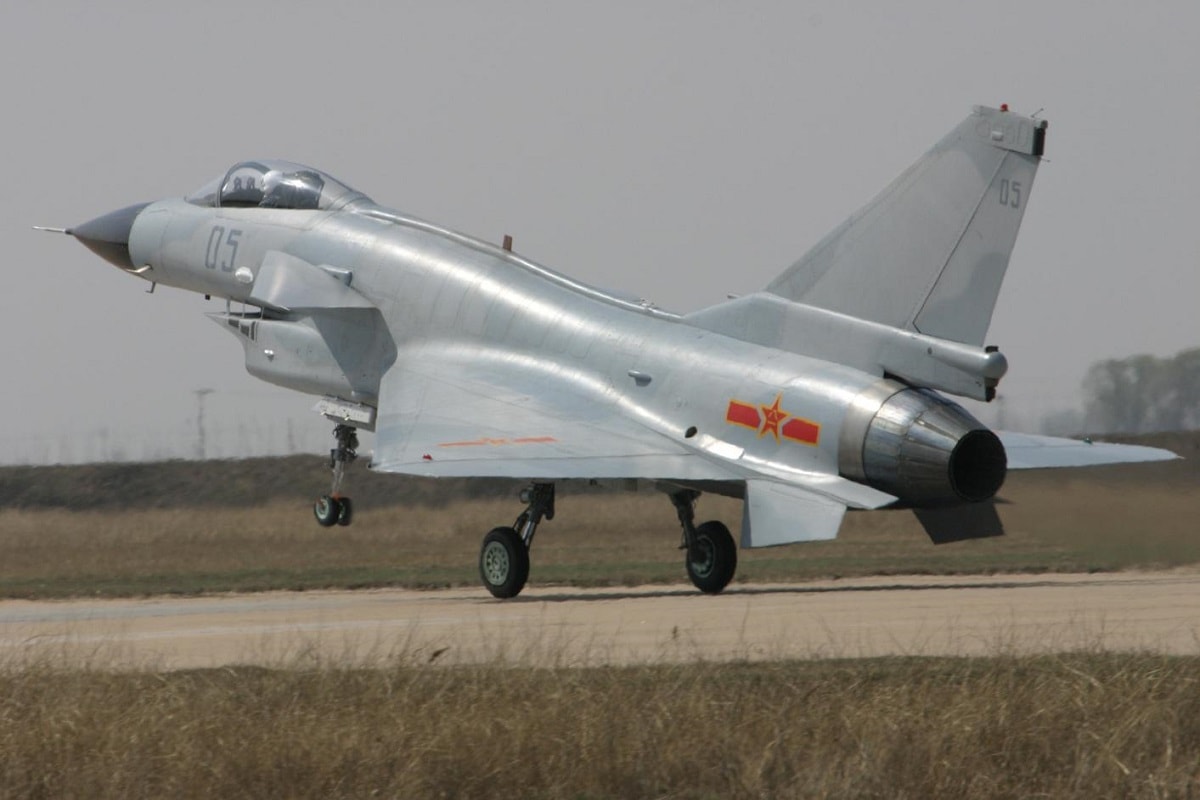
The eastern approaches are especially important. A September analysis in The Diplomat documented more regularized Chinese coast guard patrols and increased PLA surveillance east and southeast of Taiwan. It cited September 5 and September 9 activity involving J-11 fighters, Su-30s, H-6 bombers, Y-8 electronic-warfare aircraft, KJ-500 airborne early-warning aircraft, and unmanned systems.
That mix tells us more than the number of aircraft crossing a notional line. A KJ-500 can extend the detection envelope for fighters; a Y-8 electronic-warfare platform can map radar behavior; and UAVs can remain on station longer and at lower cost than manned aircraft. Add H-6 bombers and the result is a rehearsed sensor-to-shooter chain aimed at Taiwan's rear areas and the sea lanes where outside reinforcement would have to pass.
Why Taiwan's East Coast Is the Real Test
Taiwan's west coast is exposed to the densest concentration of Chinese missiles and aircraft. Its eastern side has historically offered distance, mountain cover, and access to the wider Pacific. That sanctuary is shrinking.
Taiwan's Han Kuang 42 exercise tested blockade-breaking escorts and the movement of supplies through Hualien. The logic is straightforward: if western ports and airfields are struck or blockaded, eastern facilities become the island's logistics reserve. A PLA campaign that can observe Hualien and Taitung air operations, radar activation, aircraft dispersal, and naval movements is not merely demonstrating presence. It is collecting the targeting data needed to make follow-on strikes more efficient.
The equipment matters. The KJ-500 is an airborne early-warning platform with a fixed active electronically scanned array, while the H-6 family provides long-range strike capacity and can carry cruise missiles. Taiwan's answer cannot be a larger static target list. It needs mobile launchers, redundant communications, decoys, repair capacity, and enough unmanned surveillance to identify Chinese ships before they reach the approaches.
Ambiguity Helps Until It Doesn't
Washington's deliberate uncertainty has value. It complicates Chinese planning and prevents Beijing from treating a U.S. response as automatic. But ambiguity becomes a liability when the other side can calibrate pressure one increment at a time.
Xi's request is therefore less about forcing Trump to announce a new Taiwan policy than about shaping the boundaries of acceptable U.S. behavior. If Beijing can make a routine transit, a defense sale, or a Taiwanese exercise trigger a diplomatic argument in Washington, it has already reduced the military value of American access. Ships and aircraft do not need to be defeated if political leaders become reluctant to employ them.
The central contest is not whether China can reach Taiwan. It is whether China can make the United States hesitate before it reaches the fight.
The Next Thirty Days
Three developments would show that the summit produced operational consequences. First, a sustained reduction in U.S. and allied activity east of Taiwan would indicate that political pressure is changing behavior. Second, a PLA exercise that combines coast guard ships, UAVs, electronic-warfare aircraft, and bombers in the same operating area would demonstrate that surveillance is becoming a standing architecture rather than episodic signaling. Third, any new Taiwanese deployment or logistics drill around Hualien would show that Taipei is treating the eastern coast as an active front.
China does not need to win a diplomatic argument in one meeting. It needs to make the next military decision harder for Washington and more expensive for Taipei. The summit gave Beijing a useful opening. Whether that opening becomes leverage will be decided by aircraft flight hours, ship days, missile reloads, and the political willingness to keep operating under pressure.
The words were diplomatic. The test is measured in sorties.
Sources
China is increasing military pressure on Taiwan by leveraging political discussions with the U.S. during the Xi-Trump summit on September 25, 2026. The People's Liberation Army is closely monitoring U.S. and Taiwanese military responses, particularly in the East China Sea. This includes heightened surveillance and coast guard activities, indicating a shift in operational focus towards Taiwan's eastern coast.
- Xi Jinping pressed Trump on Taiwan independence during the summit.
- The PLA is monitoring U.S. and Taiwanese military responses to its activities.
- China is increasing coast guard patrols and PLA surveillance near Taiwan.
- Taiwan's eastern coast is becoming a focus for military logistics and operations.
- The summit may lead to operational changes in U.S. and allied military activities around Taiwan.