
269 drones and ballistic missiles over Kyiv — Russia shifts strikes to the Ukrainian military economy
 Dmitri Volkov
269 drones and ballistic missiles on Kyiv — Russia shifts strikes to the Ukrainian military economy
On the night of October 19, Russia launched 269 drones at Ukraine, as well as ballistic and cruise missiles. The Ukrainian Air Force reported the destruction or suppression of 243 drones and four missiles; however, one person was killed and eight were injured in Kyiv (according to Associated Press, October 19, 2026). In this statistic, the intensity of the raid is not the only important factor. Moscow simultaneously announced strikes on a data center, the logistics hub Fire Point, storage facilities for drone and cruise missile components "Flamingo," as well as on an enterprise related to the production of polymers for the defense industry. If we separate the official report from verifiable facts, we see a significant shift in the logic of the Russian air campaign.
From striking cities to disrupting the production chain
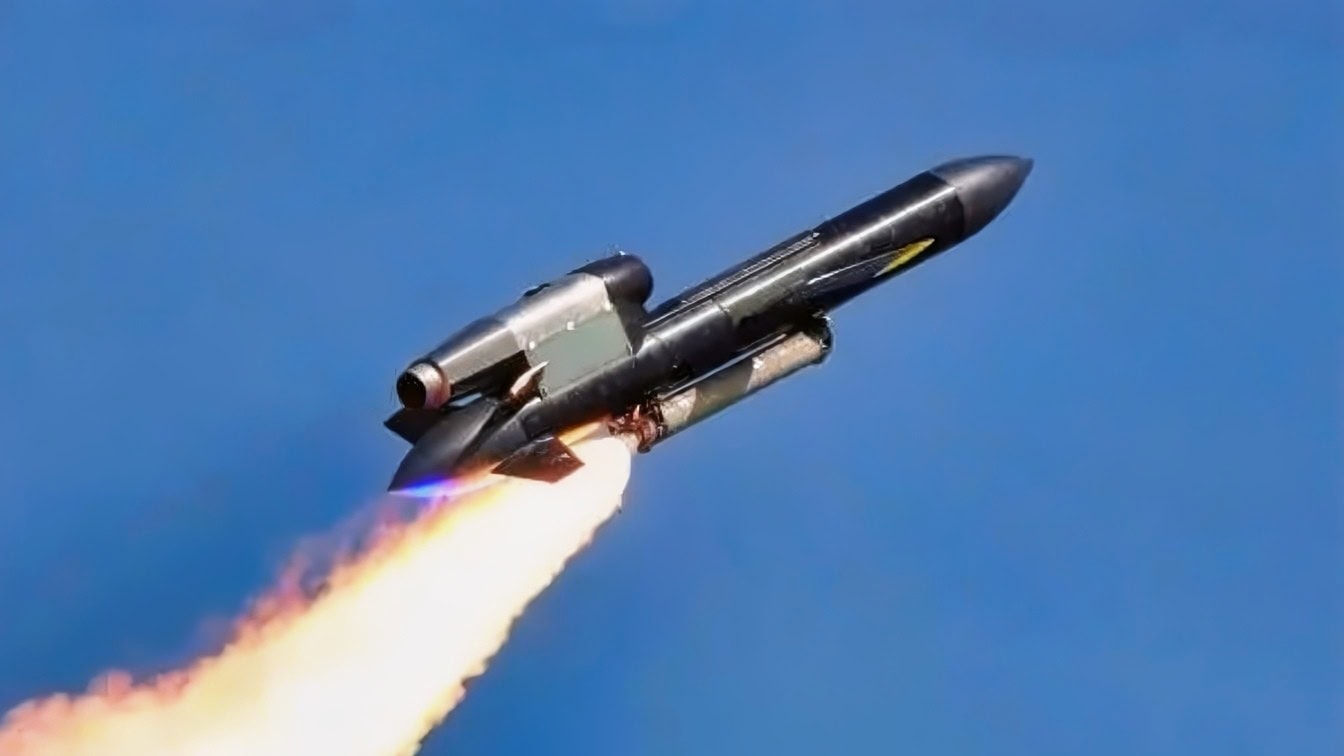
The Russian Ministry of Defense claims that the targets were Ukrainian defense industry facilities and weapons storage. It is currently impossible to independently verify each of the listed targets, so the term "destroyed" should be understood as a statement from one side of the conflict rather than an established fact. However, the very list of targets is indicative. The logistics center, component production, data center, and railway hub form not four random points, but elements of one system — from digital management and storage to assembly and delivery.
Here, the Russian strategy encounters a problem it created itself in 2022–2024. The mass use of "Shaheds," decoys, and missiles requires constant replenishment of stocks, meaning Ukraine has become for Moscow not only a battlefield but also a distributed industrial network. A strike on one factory rarely changes the balance if production is dispersed, equipment is repaired, and critical parts arrive via multiple routes. Therefore, 269 drones serve not just as munitions but also as tools for reconnaissance of Ukrainian air defense.
The math of the raid does not equal strategic success
The Ukrainian figure of 243 destroyed or suppressed drones indicates an approximate neutralization rate of 90 percent, assuming the Russian report of 269 launched devices is accurate. However, such arithmetic has limitations. "Suppression" by electronic warfare does not necessarily mean physical destruction, and debris can damage infrastructure even after a successful interception. On the other hand, a single penetrating munition can cause disproportionate damage, especially if it hits a power supply or storage hub.
Recent materials from Defense News on the development of Ukrainian interceptors and the use of artificial intelligence in counter-drone defense show that Kyiv is adapting to the quantitative model of the Russian attack. Russia responds by complicating routes, combining ballistic missiles with drones, and choosing nighttime windows when the defense has to distribute limited munitions. This is no longer a "missile versus missile" competition. It is a competition between the cost of a single launch, the time to restore a target, and the system's ability to quickly replenish losses.
Why the data center is more important than the loud list of targets
The mention of the data center in the Russian report deserves separate attention, but not because it automatically proves the destruction of the Ukrainian command system. Rather, Moscow is demonstrating a change in the perception of military infrastructure. For the Soviet school, the main object was the command post, headquarters, or communication hub. In modern warfare, a similar function can be performed by commercial servers, distributed cloud services, and data centers related to logistics, planning, and production.
However, such a strategy has its limits. Digital infrastructure is inherently easier to disperse than an airfield or a large factory. Backups, mobile servers, foreign cloud platforms, and manual procedures allow for survival after a single strike. The Russian command likely does not expect an instantaneous shutdown of Ukrainian command but rather a cumulative effect — more time for recovery, more mistakes in supply, more strain on allies. This is a rational calculation, but it requires a series of successful defeats, not just one "massive attack."
The political significance of the October strike
The strike occurred against the backdrop of statements by Vladimir Putin about creating a "security zone" along the Russian border, which Moscow claims is a matter not subject to discussion (Reuters, October 16, 2026). The military and diplomatic lines coincide here. Russia is trying to present offensive actions, long-range strikes, and demands for future negotiations as parts of a unified coercion of Kyiv. However, the attack on the capital with civilian casualties simultaneously confirms the weakness of this logic. If Ukraine is capable of continuing the production of drones and missiles after months of strikes, then the scale of the raid becomes evidence not of control but of the need to repeatedly prove its existence.
In the Russian military bureaucracy, the massiveness of an order is often taken as a measure of the depth of the result. History teaches the opposite — the result is defined by what the opponent could not restore.
For Ukraine, the main conclusion is as unpleasant as it is obvious. A 90 percent interception rate does not automatically protect infrastructure if the remaining munitions are directed at high-value nodes. Kyiv needs not only additional air defense missiles but also cheaper interceptors, distributed warehouses, backup data centers, and constant changes in logistics routes. For Russia, however, the campaign creates its own financial pressure: producing hundreds of drones overnight makes sense only when the damage from each successful hit exceeds the cost of the raid.
The October attack therefore does not prove either the collapse of Ukrainian defense or the decisive success of the Russian defense industry. It shows a transition to a war of attrition against production systems. Russia will be able to sustain this model if it maintains the pace of producing cheap drones, access to missile components, and the ability to find new targets. Ukraine will be able to mitigate it if it transforms air defense from a set of expensive systems into a multi-layered network of interception and recovery. In the coming months, victory will not go to the one who loudly calls the strike "massive," but to the one who can restore the damaged node to operation faster.
On October 19, 2026, Russian Armed Forces launched 269 drones and 4 ballistic missiles at Kyiv, targeting Ukrainian military infrastructure. Ukrainian Air Force reported the destruction or suppression of 243 drones and 4 missiles, resulting in one civilian death and eight injuries. The strikes aimed at disrupting Ukraine's military production capabilities, indicating a strategic shift in Russian operations.
- Russia launched 269 drones and 4 ballistic missiles at Ukraine on October 19, 2026.
- Ukrainian forces reported destroying or suppressing 243 drones and 4 missiles.
- One civilian was killed and eight injured in Kyiv during the strikes.
- Targets included a data center, logistics hub, and military production facilities.
- The operation marks a shift in Russian strategy towards targeting Ukraine's military industrial base.