

Space Force Playing in the Big Leagues: Why America’s Smallest Military Branch Needs to Grow- The newest American military service can fit entirely in a minor league ballpark but is already playing in the big leagues. The Albuquerque Isotopes (the Colorado Rockies’ AAA affiliate) host 13,500 nightly. The United States Space Force (USSF) is six years old and numbers 10,600 personnel. Those Guardians fight daily “above their weight class” as they manage several no “no-fail” missions of using and protecting America’s space assets.
Consider the work of the 2nd Navigation Warfare Squadron (2 NWS), which manages the Global Positioning System (GPS) satellite constellation. Thirty-one GPS satellites, managed by a handful of brilliant 19– to 26-year-olds, are used by three-quarters of the world’s population for everything from ordering a pizza or finding the nearest emergency room to military applications that use precise targeting to minimize collateral damage. Every day, six billion users benefit from GPS worldwide, generating more than $1.4 TRILLION in economic impact.
Or take the 2nd Space Warning Squadron (2 SWS). Their patch is an “All-Seeing Eye,” which is fitting, as they detect and track every ballistic missile launch worldwide. From illegal ballistic missile tests in North Korea to the thousands of missiles launched near-simultaneously by Iran earlier this year, 2 SWS tracks every single one of them and accurately predicts where they are going to impact.
That predicted impact service is valuable for the obvious early warning of “get out now!” But it also preserves American and our allies’ missile interceptors because defensive munitions aren’t expended on missiles that land in the ocean or uninhabited areas. As an aside, 2 SWS can also detect any nuclear detonation anywhere in the world.
Then there’s the 4th Space Operations Squadron (4 SOPS). It has the motto “Linking the Forces” because it protects all U.S. military satellite communications. By “all,” I mean all wideband, polar, ultra-high, and low-frequency communications worldwide for all U.S. military operations, simultaneously; from an embarked Marine near the Straits of Hormuz ordering a part for an Osprey, to a soldier using a map during a training exercise in the Mojave Desert, to the proverbial “nuclear football” that a military aide keeps near the president at all times.
Or take 1st Space Operations Squadron (1 SOPS), which protects all of America’s space-based assets. It operates maneuverable vehicles for “close-proximity engagement” and conducts orbital warfare.
It also breaks an adversary’s intelligence collection and surveillance capabilities in times of war.
I sleep better at night knowing these Space Guardians are working every night. But then I lose sleep when I think about the challenges they face. Each of these critical capabilities operates at the intersection of national security and global commerce with a razor-thin margin of success.

SpaceX Launch. Image Credit: SpaceX.
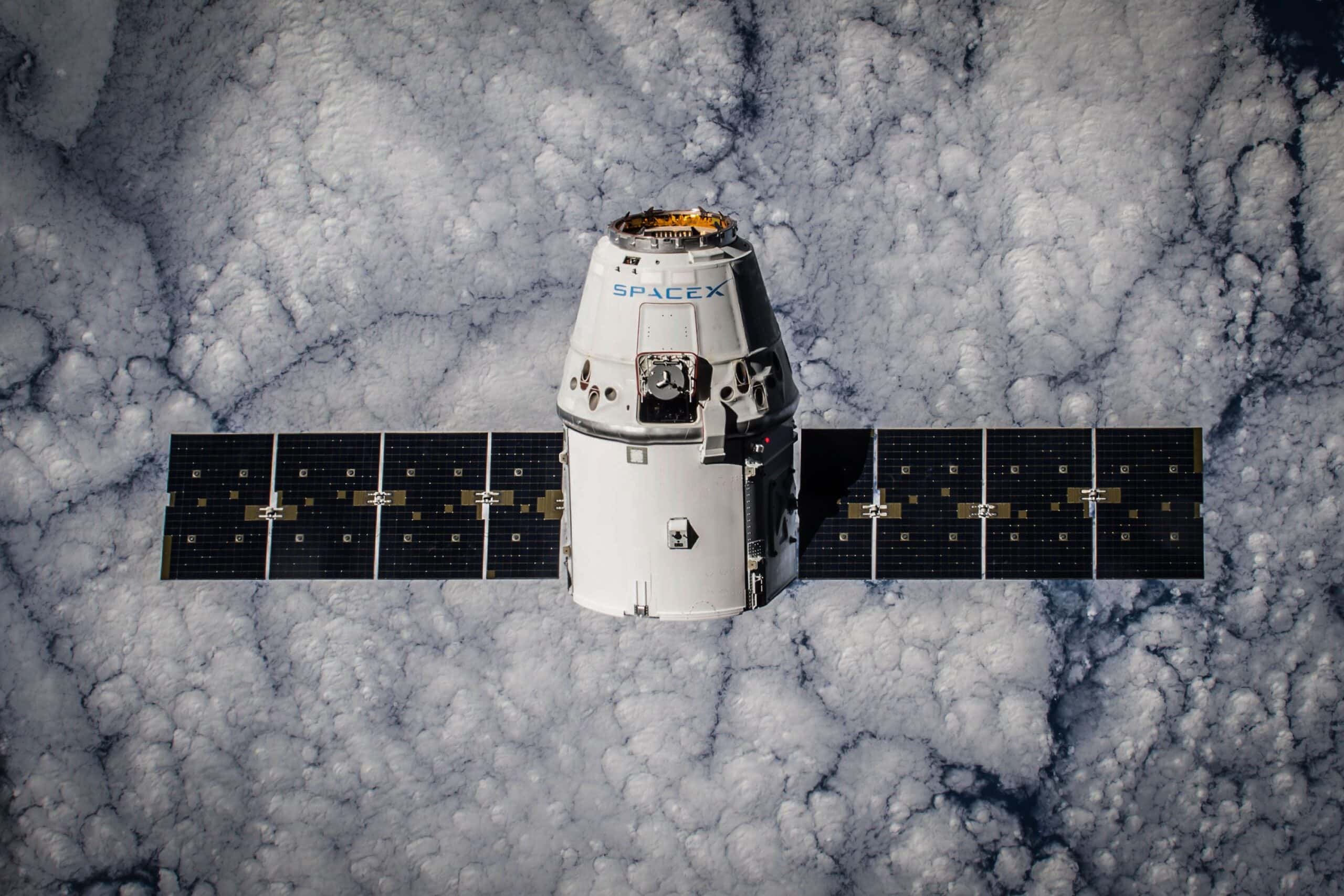
SpaceX Satellite. SpaceX Photo.
1 SOPS is bound by physics and orbital mechanics and must continually make “maneuvering without regret” decisions to manage orbital fuel consumption. 4 SOPS operates legacy hardware that is 15 years past its planned design lifespan. 2 SWS faces an unprecedented surge in threat activity; 10 years ago, operators might see eight to 20 missile launches in a three-year assignment – today they see that consistently in an eight-hour shift.
4 SOS keeps it all running with a single, lean operational team. 2 NWS lives with the risk that a single day of GPS downtime could cost the U.S. economy a billion dollars.
Every Space Force team is vulnerable to electrical infrastructure attacks and must defend legacy systems from by-the-minute, AI-generated cyberattacks while operating with a bare minimum of staff. I lose more sleep knowing the People’s Republic of China has increased its orbital presence 925% over the last 10 years to “…enable long-range precision strikes and [deny] other militaries the use of space-based information.”
As impressive as their work is, USSF needs to scale up to do more. Congress can help all Americans sleep better by doing three things.
First, by fully authorizing USSF’s $7.859 billion FY2027 Budget request. These funds are the minimum needed to build the resilience required to keep each of these mission areas fully functioning in the event of an attack.
Second, eliminate the habit of using Continual Resolutions (CRs) instead of passing budgets. CRs adversely affect all military services, but USSF feels it most acutely because it is software-dependent, and each “fix” or “upgrade” counts as a CR, a legally prohibited new start. CRs create a cascading cession of advantage to our adversaries.
Third, prioritize and fund USSF’s Single-Component Transfer Program. Unique in the military organizational structure, this plan lets members of other services’ reserve forces work “part time” for USSF and eases shortages in highly technical fields.
The Albuquerque Isotopes did not have a winning season this year. But with congressional help, Space Force can win every day, every year.
About the Author: Mike Jernigan
Mike Jernigan is a Visiting Fellow in the Allison Center for National Security at The Heritage Foundation.