
300,000 New Soldiers for Donbas Show the Limits of the Russian Mobilization Model in 2026
 Dmitri Volkov
300 thousand new soldiers for Donbas reveal the limits of the Russian mobilization model in 2026
The figure of 300 thousand in itself does not signify strength. On the contrary, in the Russian context of late August 2026, it sounds like an acknowledgment that the current model of warfare has ceased to cover its own losses. According to Vladimir Zelensky, as quoted by Reuters and the Institute for the Study of War on August 23, the Kremlin is preparing a new wave of recruitment of approximately 300 thousand people after the September elections to the State Duma. If this estimate is correct, it is not about a reserve for future triumph, but an urgent attempt to plug the gap between Putin's political terms and the actual rate of wear and tear of troops in the Donetsk direction.
This is the main paradox of the current Russian war. Moscow still wants to create the impression of a state that can wage war almost without mobilization shock to society, relying on contract soldiers, regional payments, recruiting prisoners, pressure on migrants, and covert administrative campaigns. But the longer this approach persists, the more noticeable its cost becomes. It is more expensive than Soviet mass mobilization, slower than a classic draft, and politically more toxic than an open acknowledgment that the army can no longer cope with previous means.
Why the Kremlin needed exactly this number
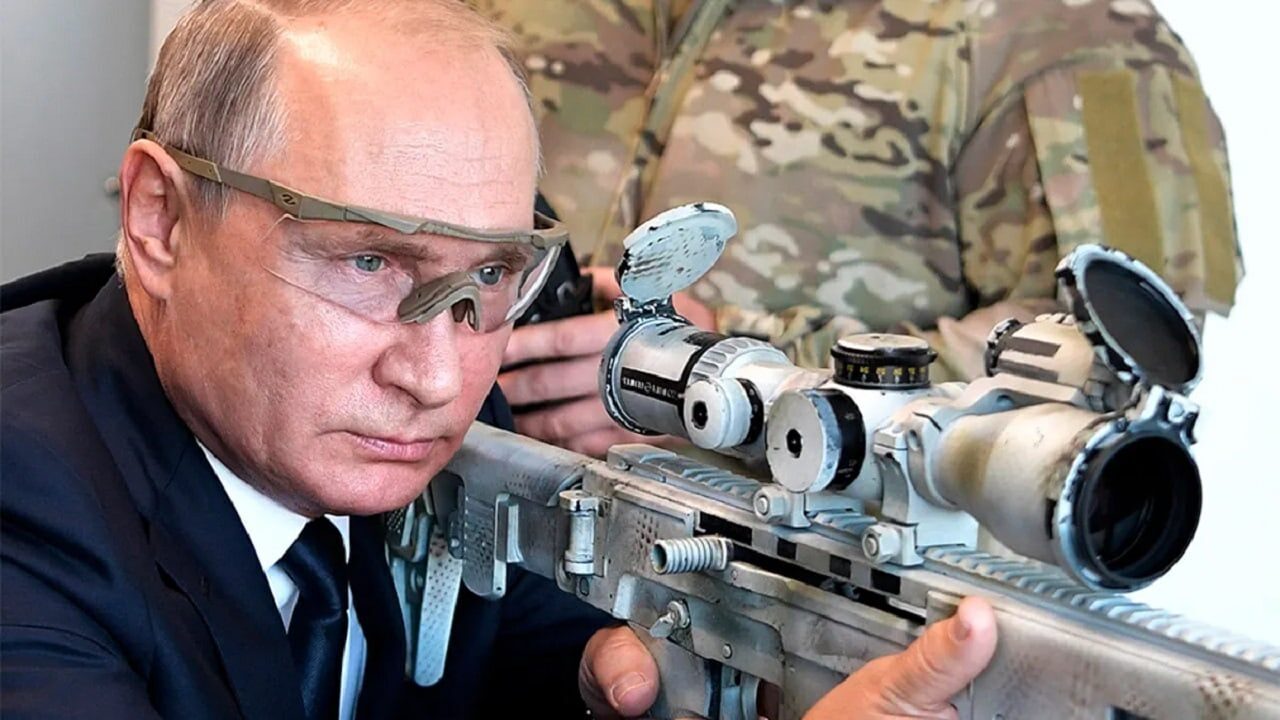
The ISW report from August 23 provided two important assessments simultaneously. First: Putin allegedly demands the complete capture of the Donetsk region by the end of 2026. Second: since the beginning of the current year, Russian forces have reportedly lost about 267 thousand personnel across the front, according to Ukrainian estimates. Even if one approaches Ukrainian figures with necessary caution, the logic here is clear. An army conducting an exhausting offensive on the fortified belt of Konstantinovka – Slavyansk – Kramatorsk cannot endlessly compensate for losses solely with money and propaganda. It needs a new mass of infantry.
Specifically infantry, not just specialists. The Russian army in 2026 continues to reproduce an old ailment: elite platforms, drones, and glide bombs reduce losses in some phases of battle, but do not eliminate the need to physically hold landings, villages, ruins of industrial zones, and logistical hubs. To advance near Konstantinovka, Slavyansk, and other sections of the front, what is needed is not beautiful presentations from the defense industry, but people to fill assault groups, second echelons, rear security, and rotation of exhausted units. When the state begins to seek 300 thousand people at once, it almost always means that the rotation system is already operating at its limit.
Why mobilization will be hidden again
The Kremlin has learned a lot since the fall of 2022. At that time, partial mobilization provided the army with personnel, but simultaneously caused panic in society, the flight of men abroad, and a dangerous moment of truth for the regime. Since then, Moscow has been trying to rely on numbers without uttering the word "mobilization" aloud. In this sense, a possible autumn recruitment in 2026, if it begins after the elections, will almost certainly be framed as a recruitment of "volunteers," reinforced by a call for contracts, regional quotas, and semi-administrative coercion.
This is a typically Russian compromise between the front and the television: the army needs masses, while the authorities need the appearance that no new universal sacrifice is occurring.
But such a compromise is not free. The more hidden the mobilization becomes, the lower the quality of incoming reinforcements and the higher the corrupt price of the process. Regions are forced to increase payments, enterprises lose labor force, military enlistment offices expand gray practices, and command receives not so much motivated contract soldiers as raw human material. For short-term retention of the pace of war, this may be sufficient. For a qualitative breakthrough on the front — it is not.
What this says about the state of the Russian military system
- Putin's military goals are still defined from the top by political desire, rather than from the bottom by actual combat pace.
- The Russian offensive model remains extremely voracious in terms of personnel, especially in the Donetsk direction.
- The Kremlin fears open mobilization almost as much as a shortage of soldiers, and therefore chooses a more expensive hidden form.
It is important not to fall into simplification here. Russia is not on the brink of immediate military collapse. It still has demographic reserves, a repressive apparatus, budgetary priorities in favor of war, and an industry capable of supporting a protracted conflict. But each new need for hundreds of thousands of people shows the limits of this resilience. The system holds not because it is effective, but because it is willing to burn resources longer than others and more slowly acknowledge its own flaws.
Consequences for the autumn and winter of 2026
If after the elections the Kremlin really begins to recruit 300 thousand people, it will be a sign that Moscow is preparing not for a swift political conclusion to the war, but for yet another long cycle of exhaustion. On the front, this will likely allow for sustained pressure in Donbas and partially address the issue of losses. However, strategically, the picture is less encouraging for Moscow. Mass replenishment does not automatically create a quality army, especially if recruits arrive in units that chronically lack trained junior command, modern communication, and time for cohesion.
In other words, the additional 300 thousand is not a solution, but a postponement. Russia will likely be able to buy time once more with blood, money, and administrative coercion. But this is where the limit of its mobilization model in 2026 manifests: to maintain the offensive pace, the state has to intrude deeper into its own society, without resolving the fundamental problem of the mismatch between imperial ambition and the actual military instrument. In Russia's history, such rifts sometimes endure for a long time. But they almost never resolve themselves.
Russia is preparing to mobilize 300,000 new soldiers for the Donbas region by the end of 2026 in response to significant personnel losses. This move aims to maintain military pressure on the front lines while avoiding public panic associated with formal mobilization. The Kremlin's strategy reflects a need for additional infantry to sustain operations, particularly in light of ongoing losses and the challenges of maintaining troop morale and effectiveness.
- Russia plans to mobilize 300,000 soldiers for the Donbas region by the end of 2026.
- This mobilization is a response to significant personnel losses, estimated at around 267,000 since the beginning of the year.
- The Kremlin aims to maintain military pressure without causing public panic over mobilization.
- The mobilization will likely be framed as a recruitment of 'volunteers' rather than a formal mobilization.
- The Russian military's current approach is costly and politically sensitive.