
4 Black Sea Fleet ships damaged in Novorossiysk and the base is no longer a rear area
 Dmitri Volkov
4 ships of the Black Sea Fleet damaged in Novorossiysk and the base is no longer a rear
The Black Sea Fleet has an old habit of considering geography as protection. After the strikes on Sevastopol, this habit received a new name — Novorossiysk. On the night of August 12, the Ukrainian operation demonstrated that over 300 kilometers from the front line is no longer a distance if the enemy is capable of linking reactive drones, cruise missiles, and maritime drones into one package.
According to the General Staff of Ukraine, four ships were damaged at the base: the Project 11356 frigates "Admiral Makarov" and "Admiral Essen," the Project 21631 small missile ship "Buian-M," and the Project 22160 patrol ship "Vasiliy Bykov." Reuters reported that the Ukrainian strike on Novorossiysk hit a military base and forced two major grain terminal facilities to temporarily halt operations. Russian authorities, according to Al Jazeera, reported three dead and 24 injured; among the dead was a child. Early statements from the governor of the Krasnodar region mentioned a lower number of injured, which is typical in the first hours after a massive strike when civilian casualties and industrial damage are reported through different channels.
A fleet that has retreated once
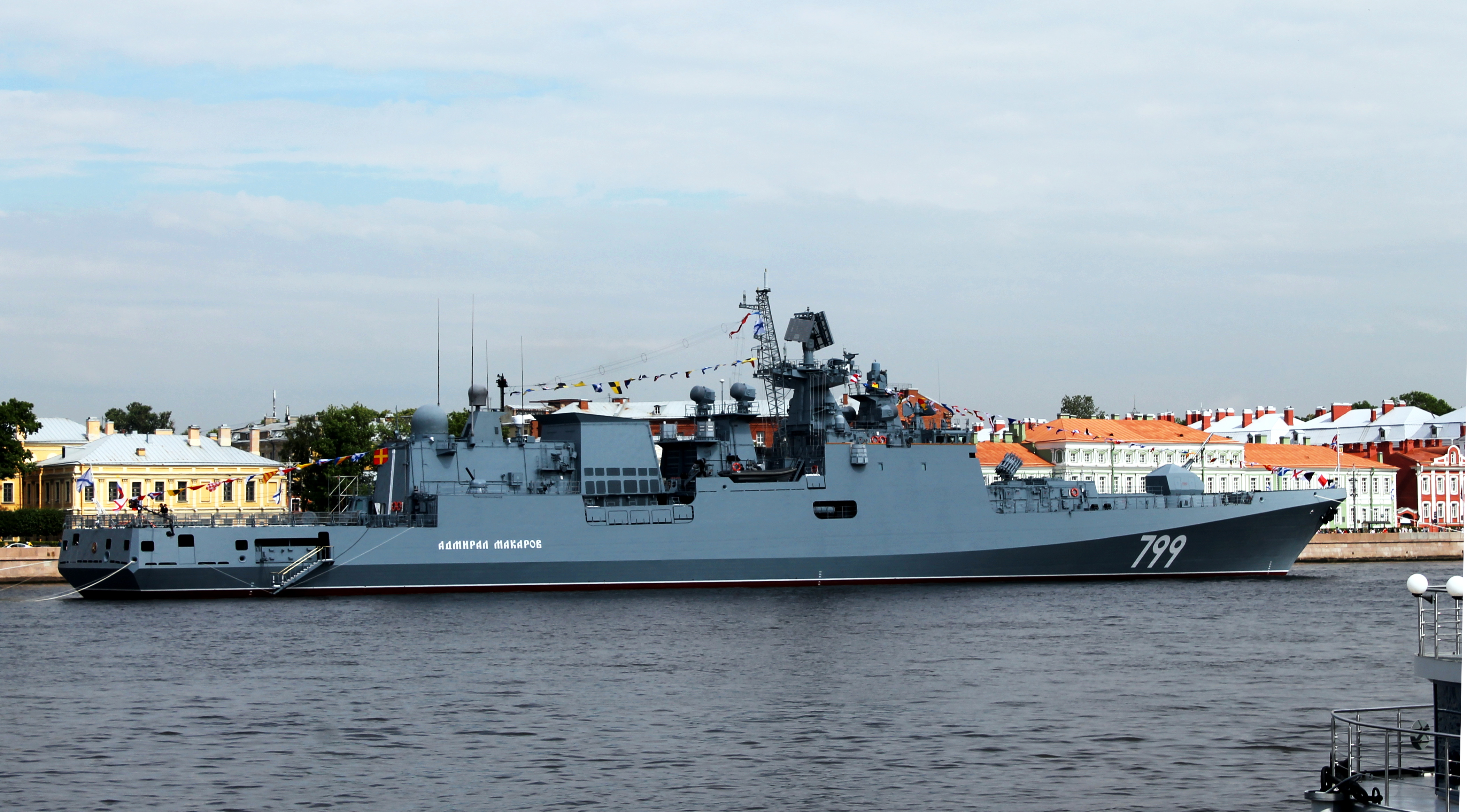
The military significance of this attack is not that Ukraine struck a Russian port again. The significance lies in the fact that the strike hit a location where the fleet retreated after losing security in Crimea. Since 2022, the Black Sea Fleet has lost the cruiser "Moskva," part of its amphibious capabilities, several boats, and the sense of impunity in Sevastopol. Novorossiysk has become not a backup anchorage, but the last major material base where ships could be repaired, resupplied, and dispersed away from the direct pressure of Ukrainian maritime drones near Crimea.
Now this logic is broken. President Volodymyr Zelensky called the operation "unique" and stated that Palianytsia reactive drones, Neptune anti-ship missiles, and unmanned maritime systems were used. This set is more important than a single hit: Palianytsia forces air defense to engage against a fast aerial target, Neptune requires a missile defense response, and maritime drones create a threat in the water area and at the docks. If all of this was indeed used synchronously, it is not just a raid, but a suppression of the base as a system.
Which ships could have lost combat value
The list of damaged ships is unpleasant for Moscow precisely because of its functional mix. The two Project 11356 frigates are carriers of "Kalibr" missiles, long-range ships for the Black Sea, and a political symbol that the fleet is still capable of acting not just as a coastal missile battery. The "Buian-M" is smaller but is also a carrier of cruise missiles; its value after 2022 was that small ships could participate in strike packages against Ukrainian infrastructure while remaining in protected harbors. The "Vasiliy Bykov" is a patrol ship of a different category, but its role in securing the base area, escorting, and controlling the water area is especially important when the fleet fears maritime drones.
The Ukrainian side is currently speaking of "varying degrees of damage," and caution is needed here. Damage to the superstructure, radar, or launch area does not equate to sinking. But for a fleet operating from a limited base, even repairs lasting weeks change the balance. The Soviet school liked to count ships by their listed composition. In real war, what matters is not the list, but the readiness to go to sea, having functional sensors, communication, self-defense air defense, and a crew that believes the dock is not a frontline. After August 12, the last point looks the weakest.
The strike on the docks and radars was not a side effect

Ukrainian reports through the General Staff and SBU indicate the defeat of the 30N6E radar of the S-300 complex, a mobile fire group at pier No. 2, the portal part of the Grushovaya oil depot tunnel to the Sheskharis terminal, and the infrastructure of piers No. 3, No. 6, and No. 7. Even if some of this data requires independent confirmation, the structure of the targets is indicative. Ukraine was not only hitting the hulls of ships but also what makes a base a base: radar coverage, anti-drone protection, oil logistics, and the dock front.
The Russian Ministry of Defense reported 502 downed Ukrainian drones over several regions, Crimea, Krasnodar Krai, and the Black Sea. The figure, as is often the case, is intended to demonstrate the effectiveness of air defense while concealing an uncomfortable question: if 502 were shot down, why is the port on fire, grain terminals are halting, and the Ukrainian side is listing damaged ships by name? In the Russian bureaucratic tradition, "repelling the strike" and "consequences of the strike" live in different reports. In war, they meet in one port.
Grain, oil, and the American boundary of patience
Novorossiysk is not just a naval point. It is one of Russia's main outlets to the global grain market, and Russia remains the largest exporter of wheat. The suspension of two major terminals may be brief, but the signal for insurance companies, traders, and buyers in Africa and the Middle East will last longer than the repair of gates or conveyors. The Ukrainian strategy of long-range strikes has long gone beyond oil refining: Tobolsk, Ukhta, and Nizhnekamsk have shown the economic geography of war, and Novorossiysk has added maritime geography.
A separate nuance is oil transportation. The Financial Times, citing Ukrainian officials, reported that Kyiv, after a request from U.S. Vice President J.D. Vance, agreed to suspend strikes on oil tankers using Novorossiysk, including the sensitive area around the CPC pipeline and non-Russian vessels. The strike on August 12 appears to be Ukraine's response to this boundary: not to sink tankers, but to hit the military base, air defense, docks, and port infrastructure if they support the Russian war. This is a very narrow line, and in Washington, it will surely be read as a line, not as a coincidence.
Russia, in turn, will try to present the strike as an attack on a civilian port and grain security. Kyiv will emphasize the ships, S-300, docks, and "Kalibrs." Both versions use real elements of one picture. This is the new phase of the war in the Black Sea: Russia's military infrastructure is so tightly integrated into export and energy infrastructure that a strike on the former almost inevitably affects the latter.
Forecast
The nearest outcome will depend on satellite images and repair timelines. If at least one Project 11356 frigate is out of commission for a long time, the Black Sea Fleet will lose not just another unit, but the remainder of its operational depth. If the damage is limited to superstructures and coastal facilities, the effect will still remain: Novorossiysk has ceased to be a rear harbor. The fleet can only retreat further in a political sense, but geographically there is almost nowhere else to go.
Ukrainian Armed Forces struck four ships of the Black Sea Fleet in Novorossiysk on August 12, causing significant damage to naval vessels and military infrastructure. The operation utilized Palianytsia drones and Neptune missiles, resulting in three fatalities and 24 injuries. This attack disrupted operations at major grain terminals, indicating a shift in the operational capacity of the Black Sea Fleet.
- Four ships of the Black Sea Fleet were damaged in Novorossiysk.
- The attack involved the use of Palianytsia drones, Neptune missiles, and sea drones.
- Russian authorities reported three dead and 24 injured, including a child.
- The attack disrupted operations at two major grain terminals.
- The Black Sea Fleet has lost operational depth due to this strike.