
FREMM Frigates 2026 — Why NATO Cannot Protect Three Black Sea States Alone with More Ships
 Dr. Klaus Weber
FREMM Frigates 2026 — Why NATO Cannot Protect Three Black Sea States with More Ships Alone
When Reuters reported on November 3 about a growing European demand for frigates, missiles, and drones, the real news was not the arms fair near Paris. It lay in the geographical reason for this demand. The war in the Black Sea increasingly impacts the security interests of Romania and Bulgaria, while Ukraine attempts to push back Russian naval power with unmanned systems, long-range weapons, and attacks on maritime logistics. Three NATO neighbors — Romania, Bulgaria, and Turkey — thus face the same problem, but certainly not with the same capabilities.
The obvious answer at present is: more ships. European shipyards are promoting FREMM frigates, air defense, maritime reconnaissance, and autonomous platforms. However, an additional hull in the harbor does not equate to maritime defense. In the Black Sea, the combination of sensors, data, coastal defense, mine countermeasures, drone defense, and politically robust rules of engagement is decisive. This very combination remains Europe's institutional weakness.
The Black Sea is Not an Ordinary Operational Area
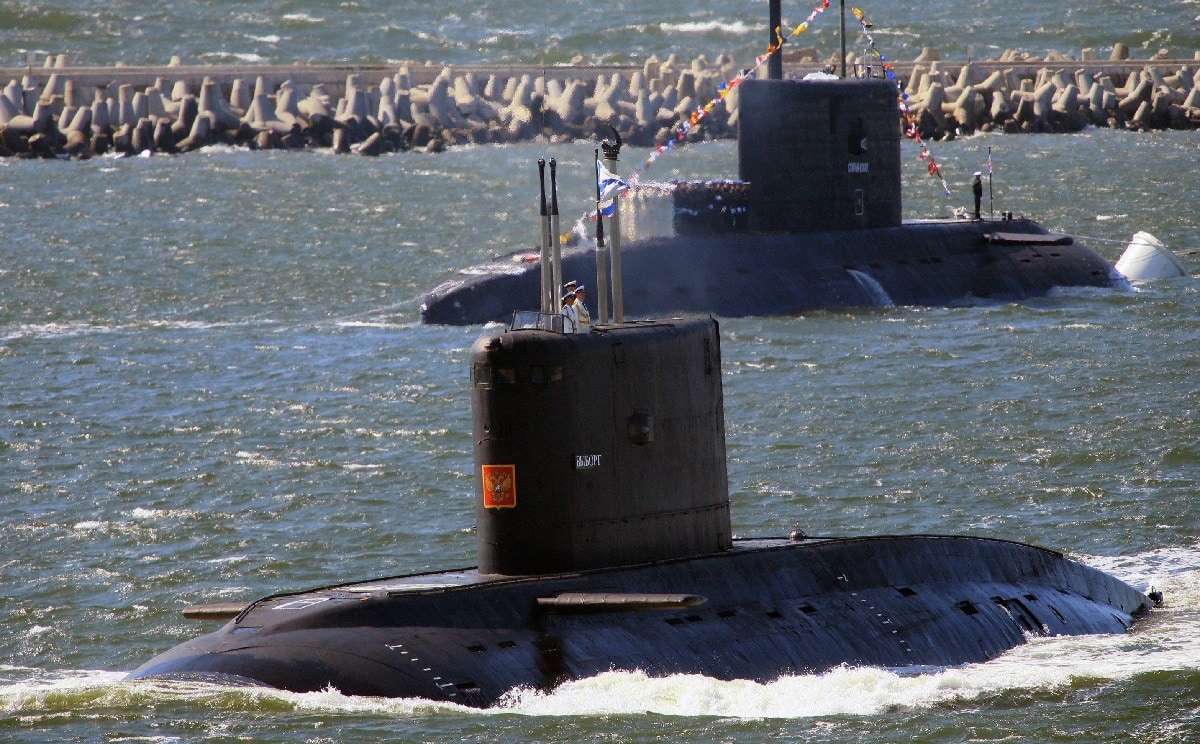
Russian and Ukrainian attacks on ships and port infrastructure have altered the maritime risk map. Reuters reported on November 3 that attacks on cargo ships off the coasts of NATO members like Romania and Bulgaria have increased in recent weeks. This is strategically more significant than the individual damage to a merchant vessel. Each such attack creates a gray area between acts of war, economic disruption, and alliance activation — a zone where Moscow can test the alliance's readiness to respond without necessarily committing a clearly attributable attack on NATO forces.
NATO has not responded to this development with inaction. The alliance has increased its presence and maritime cooperation in the Black Sea since 2018; following the Russian large-scale attack in 2022, additional ships, aircraft, and troops were deployed to the eastern flank. NATO documentation regarding the eastern flank explicitly mentions training, exercises, and port visits with Ukraine and Georgia. This strengthens interoperability but does not automatically resolve the problem of daily situational awareness. Those who want to protect merchant ships must not only know where a frigate is operating but also which drone, mine, or coastal missile could become relevant in the coming hours.
FREMM is Capable — But Not a Political Concept
The FREMM frigate represents an important European capability: a large multi-role ship with missiles, anti-submarine warfare, air defense, and command capabilities. France and Italy have demonstrated with this class that European states can jointly develop complex platforms. Nevertheless, it would be a mistake to derive a European maritime strategy from the success of this ship type.
- A frigate can monitor a maritime section but cannot secure an entire trade route against cheap drones.
- Its missiles are valuable; deploying them against any small unmanned target would be economically unwise.
- Its effectiveness depends on satellites, reconnaissance aircraft, coastal radar, and national clearances.
- In the mined and geographically constrained Black Sea, availability is more important than maximum range.
The cost difference between a modern frigate and an attacking drone is therefore not merely a technical question but a strategic imbalance. Europe's defense industry cannot solve this problem with new ships alone. It needs scalable defense systems, electronic warfare, cost-effective interceptors, and a common maritime data architecture. Otherwise, Europe finances expensive platforms that will be used for tasks they were not designed for in a crisis.
NATO Has Presence, But No Common Black Sea Logic Yet
The political difficulty is greater than the military one. Turkey controls the straits and remains the most important NATO actor at the access to the Black Sea. Romania has become the central logistical and military hub of the southeastern eastern flank. Bulgaria has an important coastal position but more limited maritime resources. These three states share a risk but do not share a unified perception of threats, procurement planning, or operational culture.
The NATO activity Eastern Sentry already demonstrated in 2025 how the alliance responds to new Russian drone and air threats with a mix of traditional capabilities and novel technologies. The principle is correct. However, a time-limited vigilance activity is not yet a permanent Black Sea architecture. For that, common rules for situational awareness sharing, standardized drone defense, robust port logistics, and regular multinational mine countermeasure units would be necessary. Above all, European members must clarify who decides in the event of an incident — the coastal state, the NATO commander, or the national navy whose ship is affected.
Europe's Procurement Problem Begins After the Contract is Signed
The European defense debate continues to confuse industrial production with military readiness. Reuters describes an industry that wants to modernize its fleets in light of doubts about American reliability. This is politically understandable. However, an order for FREMM, Type 31, or other frigate programs only creates a capability years later. The acute threat from drones, mines, and attacks on merchant ships, on the other hand, demands systems that can be available in months and deployed in days.
Here lies the real test for the EU programs under Readiness 2030 and for NATO planning. Joint financing makes sense if it creates common standards, spare parts chains, and command structures. It is wasteful if seven states buy seven national solutions and then find that their sensors cannot exchange data. More money is necessary. However, it is no substitute for prioritization.
A frigate can show presence. Deterrence only arises when the opponent knows that Europe can detect, disrupt, and politically respond to the entire attack cycle.
The Black Sea thus forces Europe into an uncomfortable decision. Should it treat its maritime security as a platform project — with visible, prestigious ships — or as a networked defense problem, where drones, data, and coastal infrastructure hold the same importance as the frigate? The first option is industrially attractive and politically easy to sell. The second would be militarily more effective but institutionally more challenging.
Europe's paradox is thus: It needs more FREMM frigates, but it cannot afford to believe that FREMM frigates will solve the Black Sea problem. Those who only order ships buy presence. Those who integrate maritime capabilities build deterrence.
Sources
NATO is enhancing its maritime presence in the Black Sea due to rising security threats, particularly from increased attacks on commercial vessels. The alliance is focusing on procuring advanced naval capabilities, including FREMM frigates, to address these challenges. However, Turkey, Romania, and Bulgaria face differing military capabilities and threat perceptions, complicating coordinated defense efforts.
- NATO is increasing its maritime presence in the Black Sea region.
- Attacks on commercial vessels near NATO member states have increased recently.
- European shipyards are promoting FREMM frigates and other naval capabilities.
- The Black Sea poses unique challenges for maritime security due to its geopolitical significance.
- Turkey, Romania, and Bulgaria face shared risks but lack a unified threat perception.