
$41 Billion U.S. Arms Deals for the Gulf in 2026 Reveal Dependency Gap
 Ahmed Al-Rashid
US Arms Deals Worth $41 Billion for the Gulf in 2026 Reveal Dependency Gap
On July 27, 2026, the figure crossing the news of US arms deals with Gulf Cooperation Council countries was not just $41 billion. The more significant military figure is that 12 out of 15 announced deals this year went to air defense and aviation, which is an attempt to close the gap opened by the Iran War in interception stocks before it opened in the sky.
A Buying Wave, Not a Power Plan
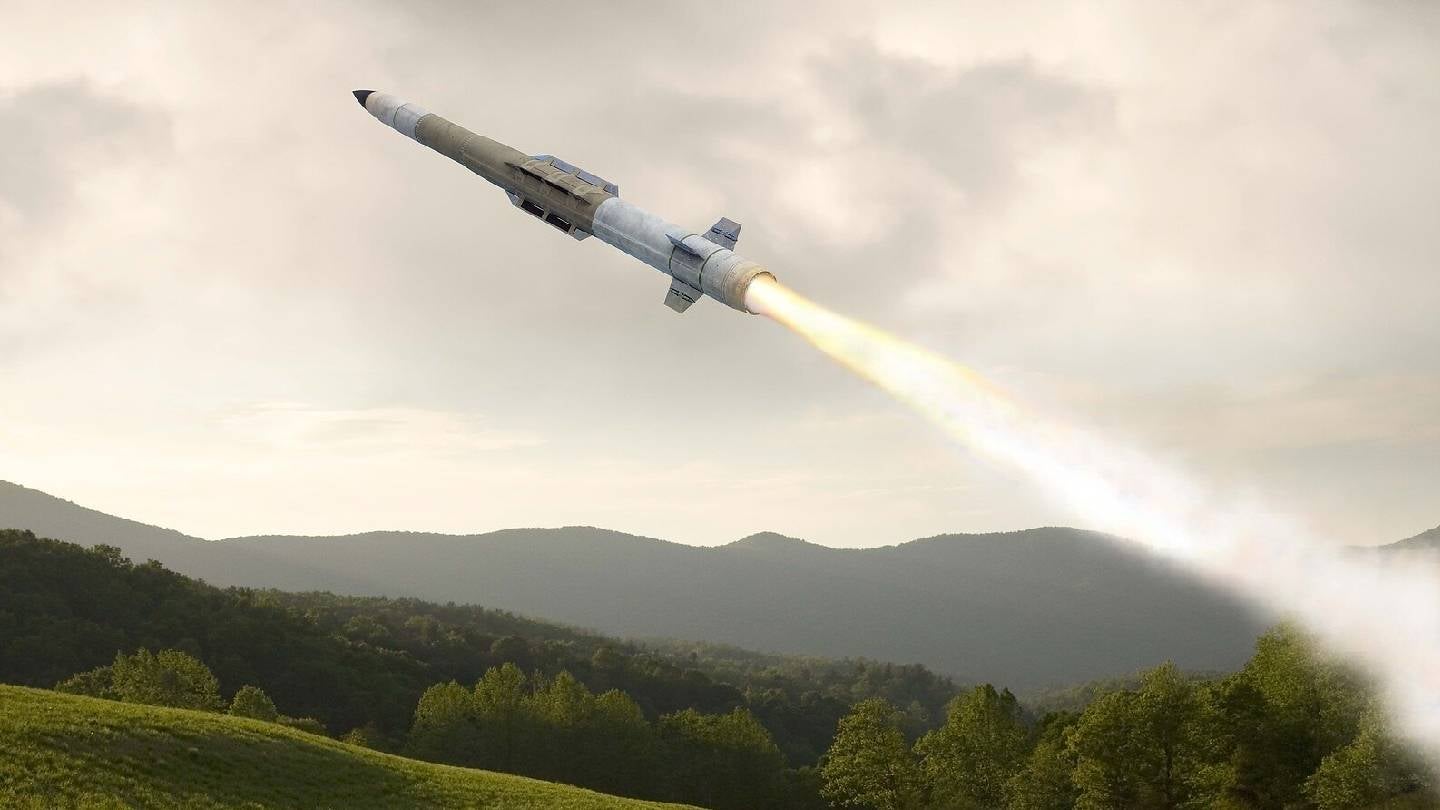
AGBI's analysis of US State Department data places the value of approvals announced from January to the end of June at $41 billion, compared to about $9 billion for the entire year of 2025. There is another figure that is equally significant, as the newspaper indicates that Washington approved at least an additional $17 billion as expansions to previous deals that were not announced in the same format. Militarily, we are facing a contracting rush rather than a completed transformation in capability.
The largest known item is Saudi Arabia's request for 730 PAC-3 MSE missiles for the Patriot system, with an estimated value of $9 billion. This figure alone reveals the size of the problem. The number of missiles requested by Saudi Arabia exceeds what Lockheed Martin planned to produce of this type in 2025, according to the published analysis. The buyer can sign, and Washington can notify Congress, but the production line does not turn into a ready stockpile simply by signing a Letter of Offer and Acceptance.
Here lies the old Gulf paradox. Countries are buying capability on paper faster than they can build readiness in reality. Any military personnel who has served in the region knows that air defense is not measured by the number of missiles alone, but by the speed of integrating radars, clarity of rules of engagement, maturity of the supply chain, and the ability of crews to operate under the pressure of a combined attack with missiles, drones, and loitering munitions.
Why Air Defense Dominates Purchases
The Iran War made the political logic of purchasing clear. Gulf capitals do not want to appear before their people and energy markets as exposed, and Washington wants to prove that its umbrella is not over. Therefore, the deals for Patriot, PAC-3 MSE, APKWS, and aviation and reconnaissance files seem as much a message of deterrence as they are technical purchases.
The US approval of the Saudi PAC-3 MSE deal states that the missiles will support an integrated air and missile defense system in the CENTCOM area and protect Saudi, American, and local allied forces. This is familiar language in DSCA releases, but it hides a practical question that capitals do not like, which is who will manage the battle when it begins? If software, updates, heavy maintenance, spare parts, and deep training are all tied to the United States, then operational sovereignty remains limited even if the flag on the battery is Saudi.
The same issue appears in the Qatar MQ-9B file, which Washington previously approved for $1.96 billion for eight drones with radars, data links, communication sensors, JDAM and Hellfire munitions, and ground control stations. This is not just an aircraft; it is a complete dependency network. Those who buy the MQ-9B are not just purchasing a long-range reconnaissance platform, but a complex political and technical operating system with many American keys.
APKWS Explains the Changing Drone Threat
The existence of over $3 billion in Advanced Precision Kill Weapon System deals for Saudi Arabia, the UAE, and Qatar has significant meaning. The Gulf can no longer address every cheap drone with a million-dollar intercept missile. APKWS converts unguided Hydra 70 rockets into laser-guided munitions, providing a relatively cheaper solution against small targets, but it is not a magic wand. It requires launch platforms, detection sensors, laser designation, training, and a clear operational concept.
In my opinion, this is the point that the Arab reader should pay attention to. After years of purchasing extravagant systems, Gulf countries are now spending large sums on things that seem less glamorous but are more relevant to daily warfare. Defense against drones is not a showcase at an exhibition, but a repetitive, tedious, and costly task. Those who do not build an early warning system, fire control, and training rotations will find themselves launching the right missile at the wrong time or keeping it in storage until the target is missed.
Congress, Elections, and Production Lines
The timing of the deals is not innocent. AGBI reports analysts saying that the US administration and Gulf countries are trying to lock in as many files as possible before the US midterm elections, as a change in control in the House of Representatives could complicate some approvals. Once the first letter is signed and the first payment is made, stopping the deal becomes more difficult politically and legally.
However, political locking does not solve the industry's bottleneck. The United States itself has depleted intercept stocks in the Iran War, and demand is also coming from Ukraine and other allies. Therefore, Gulf buyers will stand in the same queue in front of the production lines for Patriot, PAC-3, and air defense munitions. In the military market, money is not enough if everyone wants the same thing in the same year.
For this reason, I read the figure of $41 billion as a sign of concern more than a sign of strength. If the Gulf air defense structure were self-sufficient and mature, it would not need a buying wave of this size just months after the escalation. The deals implicitly acknowledge that the war has revealed a stock gap, an integration gap, and a trust gap in the local forces' ability to endure a prolonged conflict.
Military Summary
Military capability is like a triangle that is only complete with three sides: weaponry, training, and institution. The Gulf continues to extend the weaponry side rapidly, but it still pays the price for the slow development of the other two sides. There is no shame in purchasing PAC-3 MSE, APKWS, or MQ-9B, as these are necessary tools in a missile and drone environment. The flaw is when purchasing becomes a substitute for building an independent operational school.
The paradox is that Gulf countries are buying from Washington to reduce their fear of Iran, but in doing so, they increase their need for Washington in every upcoming crisis. As our military personnel say, ammunition that you cannot replenish is not ammunition you fully own, but a political promise stored in a distant warehouse.
Sources
- AGBI, US approves $41bn of arms sales to GCC in six months, July 27, 2026.
- DSCA, Kingdom of Saudi Arabia PATRIOT Advanced Capability-3 Missile Segment Enhancement Missiles, January 30, 2026.
- DSCA, Qatar MQ-9B Remotely Piloted Aircraft, March 26, 2025.
The U.S. approved $41 billion in arms sales to Gulf states, primarily for air defense systems, on July 27, 2026. This includes significant requests from Saudi Arabia for PAC-3 MSE missiles and Qatar for MQ-9B drones. The sales reflect a strategic response to perceived threats and highlight ongoing gaps in military readiness and integration capabilities among Gulf nations.
- U.S. approved $41 billion in arms sales to Gulf states in 2026.
- 12 out of 15 deals focus on air defense and aviation.
- Saudi Arabia requested 730 PAC-3 MSE missiles worth $9 billion.
- Qatar approved for 8 MQ-9B drones valued at $1.96 billion.
- The arms sales indicate a gap in military readiness and integration capabilities.