

Summary and Key Points: Six hours after American bombs fell on Libya in April 1986, two men flew an unarmed aircraft over the targets to photograph what was left. Maj. Brian Shul and Maj. Walter Watson took an SR-71 Blackbird in while Libyan air defenses were fully awake and looking for exactly that, and the only protection the jet carried was altitude and speed. Watson, watching for a missile lock, told Shul to push it up. Shul did — and in his account of the flight, written afterward, they crossed Mach 3.5 above 80,000 feet. “We are a bullet now, except faster,” he wrote. It is one of the most retold stories in aviation, and one number in it does not appear in any official record. The Blackbird’s recognized speed record is 2,193.167 miles per hour, about Mach 3.3. NASA says the aircraft was designed to cruise at Mach 3.2. Whatever the needle actually read that night, the rest of it is not in dispute.
The SR-71 Blackbird and Mach 3.5
Forty years after Operation El Dorado Canyon, Brian Shul’s account of a missile-threatened reconnaissance run remains astonishing. It also needs one important caveat.
40 Years Since Operation ‘El Dorado Canyon’ Took Place This Year
RAF Lakenheath marked Operation El Dorado Canyon’s 40th anniversary this year by painting an F-15E Strike Eagle in the camouflage and markings of the F-111Fs that attacked Libya in April 1986.
Wing historian Jeffery McGovern called the raid one of the “defining moments” in how the Air Force projects power, while Brig. Gen. Jack Arthaud said the two men lost aboard F-111F KARMA 52, Capt. Fernando Ribas-Dominicci and Capt. Paul Lorence, “are heroes.” It took 22 days to paint the famous jet.
As this anniversary loomed earlier this year, so did the memories of what ensued following the bombs: a bold reconnaissance mission by the SR-71 Blackbird. The jet’s pilot said it reached the whopping speed of Mach 3.5 while Libyan surface-to-air missiles attempted to down it.
Blackbird Conducted Battle Damage
Then-U.S. President Ronald Reagan instructed the strike to go ahead following the shocking bombing of West Berlin’s La Belle discotheque.
American service personnel had often visited the venue.
Muammar Gaddafi’s Libyan regime was accused of sponsoring the brutal attack, which killed two people and left 29 injured. Regan said, in light of the strikes: “Today we have done what we had to do,” telling the American public that the strike was “carefully targeted to minimize casualties.”
Twenty-four F-111Fs and five EF-111As departed bases in England.
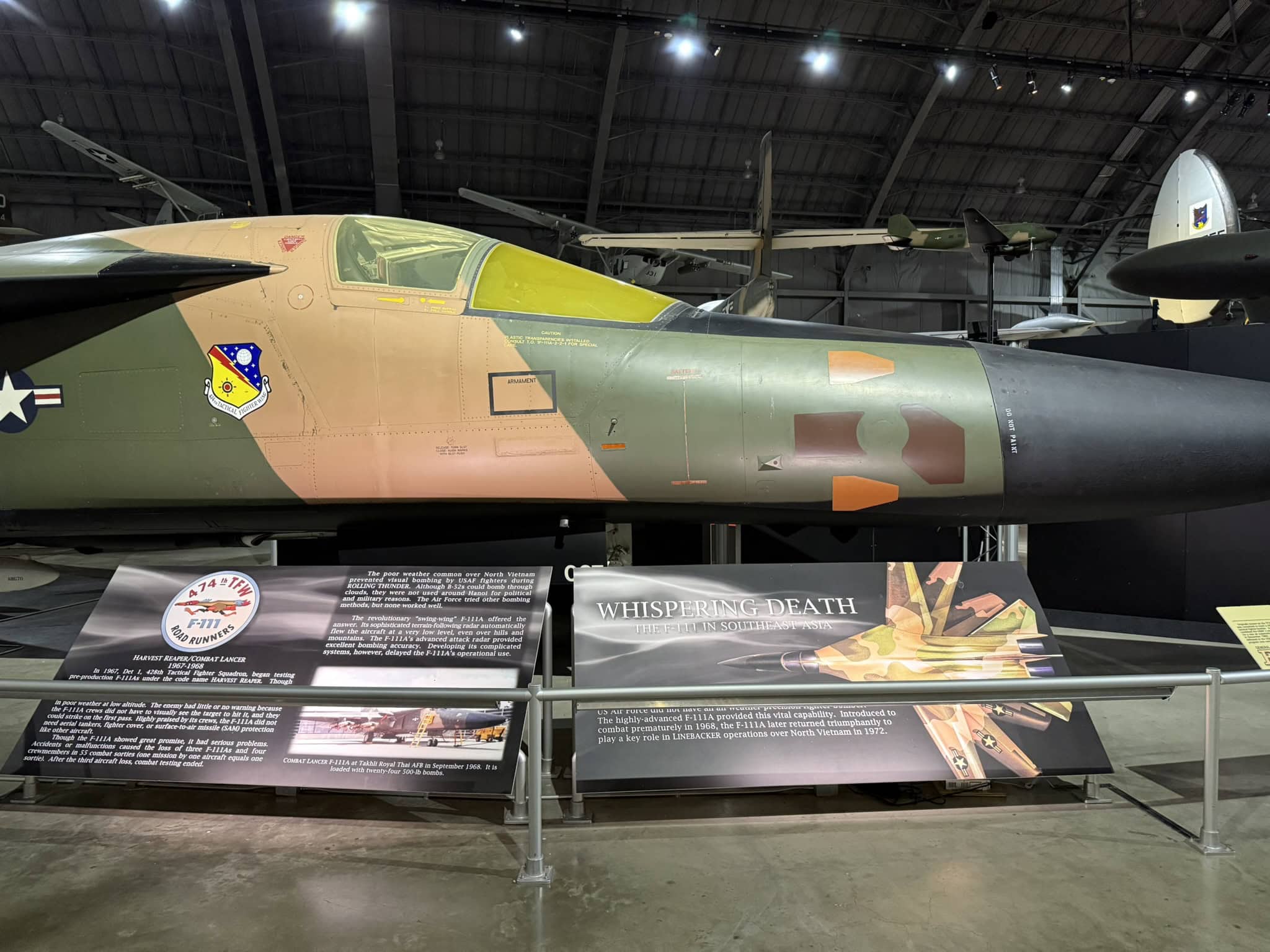
F-111 at the National Museum of the U.S. Air Force. 19FortyFive Photo by Harry J. Kazianis.
After airborne spares had to turn back, some 18 F-111s continued. They linked up with 27 Navy aircraft and hit five target areas. A recently published official history of the episode referred to the mission as evidence of American “global reach” and an “effective deterrent.” However, 11 F-111s deployed weapons under strict rules of engagement and because of malfunctions. KARMA 52 did not return.
Historian Jim Rotramel said that forces based “1,500nm (nautical miles)… apart” hit five target arrays in the short span of 20 seconds. Combined operations like this “were just not done,” he explained, back in 1986. One Naval Review analysis of the raid calls it a case study in land- and sea-based airpower.
Shul and Watson Worked in Tandem
At 5 a.m. GMT, SR-71 61-7980 departed RAF Mildenhall in eastern England. An hour and fifteen minutes later, the backup, 61-7960, followed with Maj. Brian Shul at the controls and Maj. Walter Watson occupying the seat of the reconnaissance systems officer.
Some six hours had passed since the attack and Libya’s defenses were on edge. The Aviationist said that the mission to obtain battle-damage imagery was a “high-risk overflight”.
The jet carries no weapons. NASA says it could reach 2,200 mph or more at altitudes of about 85,000 feet, and the Smithsonian lists it as the fastest jet-propelled aircraft in the world.
With the Blackbird on the last leg of its flight, Watson kept an eye out for signs that a Libyan missile was locked onto the plane.
In Shul’s version of events, Watson instructed Shul to “push it up.” Shul increased the power but kept the jet on its assigned course so that its camera could photograph the target. The aircraft exceeded Mach 3.45. “We cross Mach 3.5 when we top 80,000 feet. We are a bullet now, except faster,” Shul would write after the fact. Following completion of the reconnaissance mission, the Blackbird crew turned back toward the Mediterranean Sea and flew away from Libya.
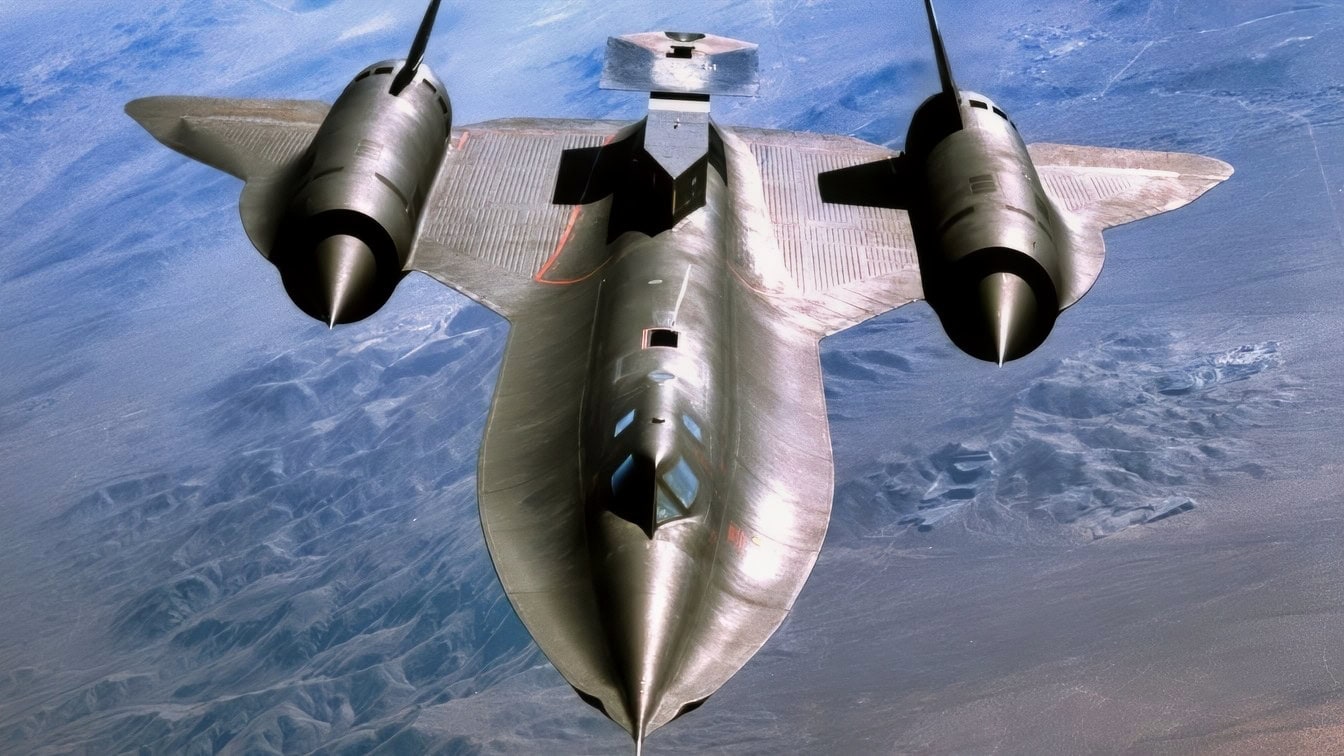
SR-71 Blackbird US Military Photo Handout
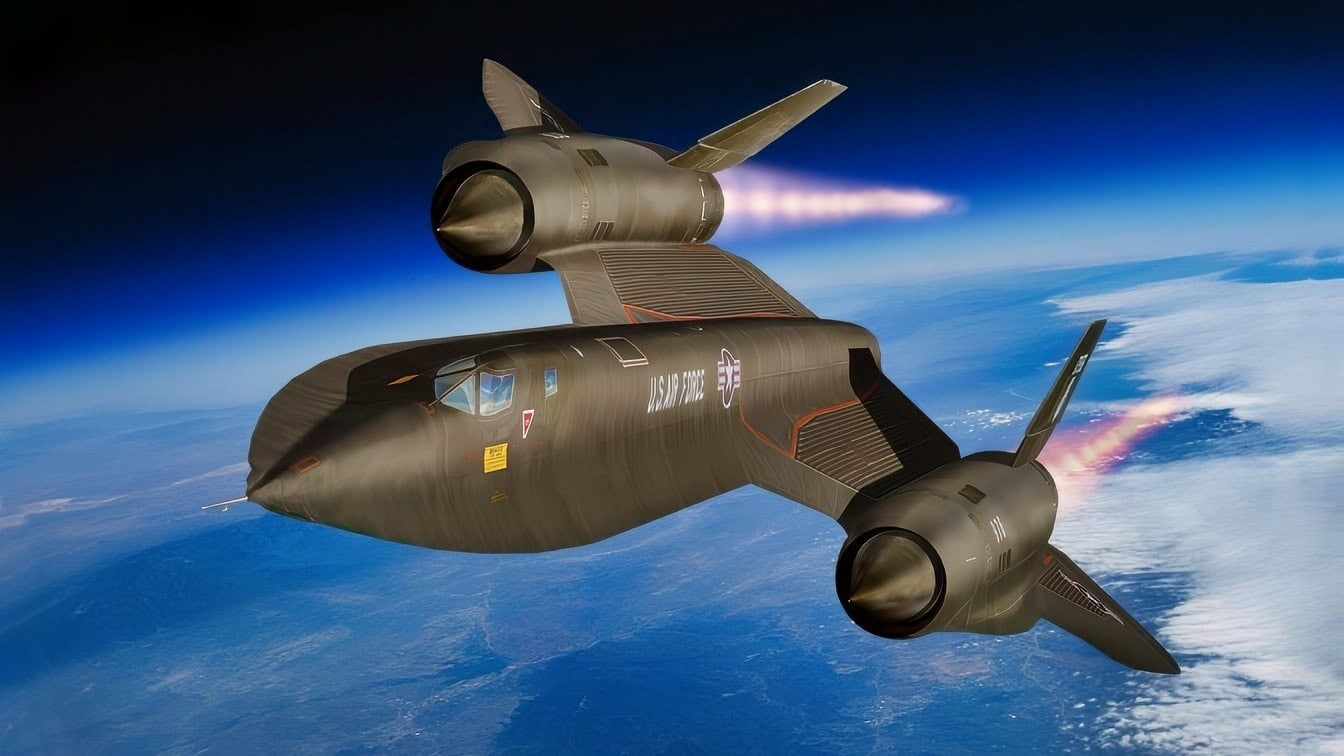
SR-71 Blackbird Above the Earth Creative Commons Artist Image
This Mach 3.5 run is nowhere mentioned in the official log. NASA notes that the Blackbird was “designed to cruise at Mach 3.2.” In fact, the aircraft’s officially recorded speed record is 2,193.167 mph, which equals Mach 3.3. Shul provides this speed figure in his own account of the mission.
Whatever its precise speed that night, he regarded the SR-71 as “the most remarkable aircraft of the twentieth century.” He even opined that the jet was “better” for its speed. Regardless of what speed is actually noted down, it is clear that on that April night in 1986, the pair and their jet achieved something remarkable.
About the Author: Georgia Gilholy
Georgia Gilholy is a journalist based in the United Kingdom who has been published in Newsweek, The Times of Israel, and the Spectator. Gilholy writes about international politics, culture, and education. You can follow her on X: @llggeorgia.