

Germany has officially received its first F-35A Lightning II. The delivery marks the beginning of a major overhaul for the German Air Force at a time when Berlin is openly reconsidering the nature of its relationship with the United States, and Russia could be preparing to test NATO’s resolve by launching an attack on European soil.
Germany’s Defense Minister Boris Pistorius attended a ceremony at Lockheed Martin’s facility in Fort Worth, Texas, on September 18, marking the formal rollout of the first of 35 F-35As Germany ordered.
The aircraft, designated 35+01 by the German Air Force, had already completed its maiden flight from Fort Worth on September 8.
It’s an important milestone for Berlin, despite any disagreements with the United States, as the country continues its efforts to modernize its military.
The fifth-generation stealth fighter will eventually replace the aging Panavia Tornado in some of its most sensitive missions, including Germany’s role in NATO’s nuclear-sharing arrangements.
Germany’s reliance on American technology could theoretically be its strength, but politically, it is becoming troubled — and the ceremony came only a day after Chancellor Friedrich Merz said that the era of “unconditional” transatlantic friendship had come to an end.
This Is Germany’s First F-35
Germany first agreed to acquire the F-35A in 2022, with a contract for 35 aircraft. It came months after Russia launched its full-scale invasion of Ukraine.
Then-Chancellor Olaf Scholz announced a major increase in German defense spending in anticipation of potential future conflict with Russia.
It was a €10 billion procurement that went far beyond the acquisition of F-35s.
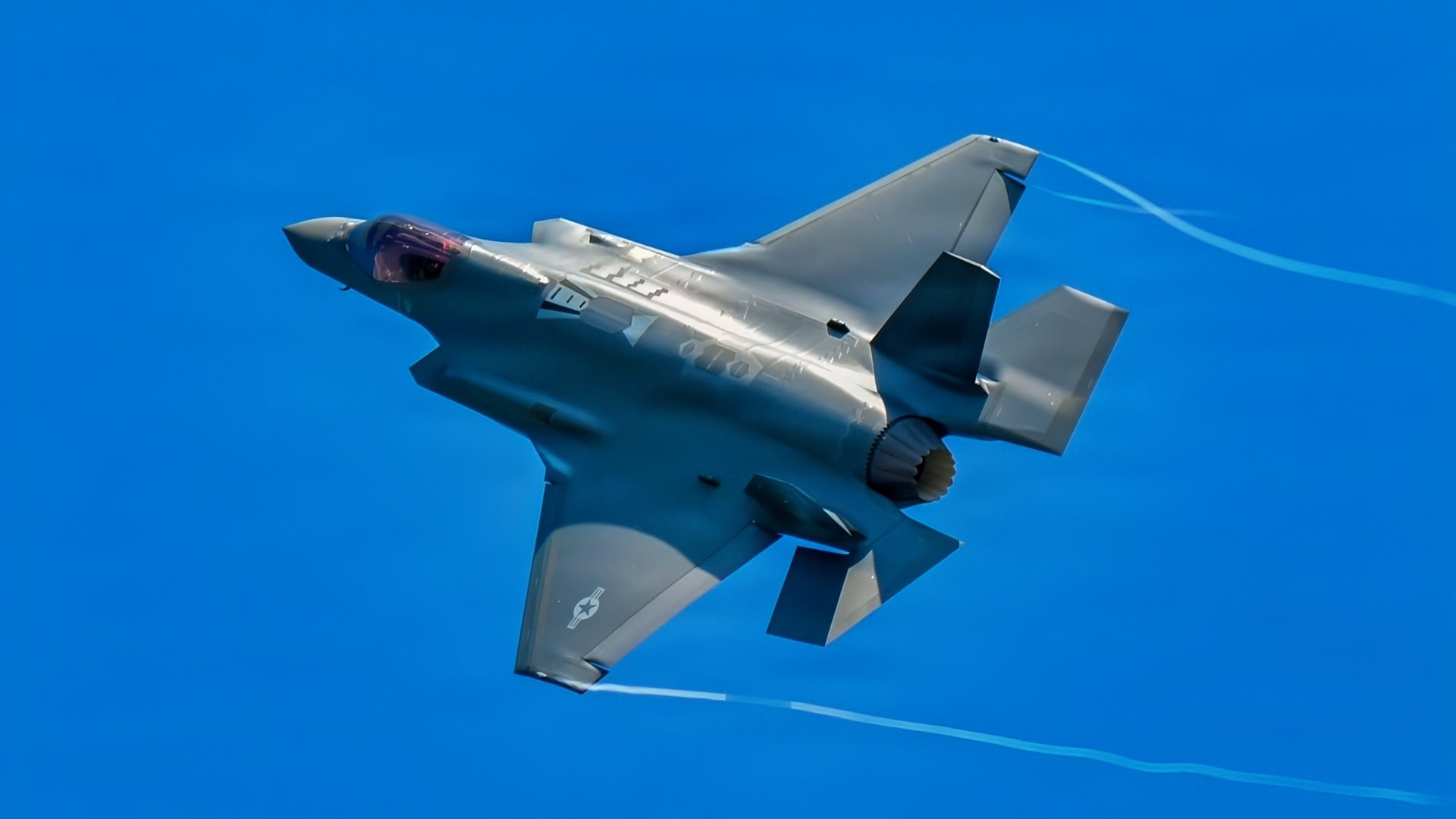
U.S. Air Force pilot Maj. Brian ‘Brass’ Burke, 104th Fighter Wing unit conversion officer, flies an F-35A Lightning II over Barnes Air National Guard Base at exactly 1:04PM EST, officially marking the historic first arrival of the fifth-generation fighter aircraft to the Wing, June 11, 2026.
After delivering one of the first four F-35’s to the 104th Fighter Wing, U.S. Air Force Col. Michael ‘Shot’ Glass gave a powerful speech to members of the wing on the significance of receiving the F-35, and presented the wing with its new mission statement, vision, and wing priorities.
“With the F-35, our new wing mission is to forge combat-ready airmen prepared to defend our Nation and employ lethal F-35 airpower. Our new vision is to be America’s premier combat wing, projecting decisive, unrelenting airpower across the spectrum of joint warfare. And lastly, our new wing priorities are to develop elite airmen, optimize readiness and lethality, strengthen partnerships, and drive continuous improvement.
(U.S. Air National Guard Photo by Jay Hewitt)
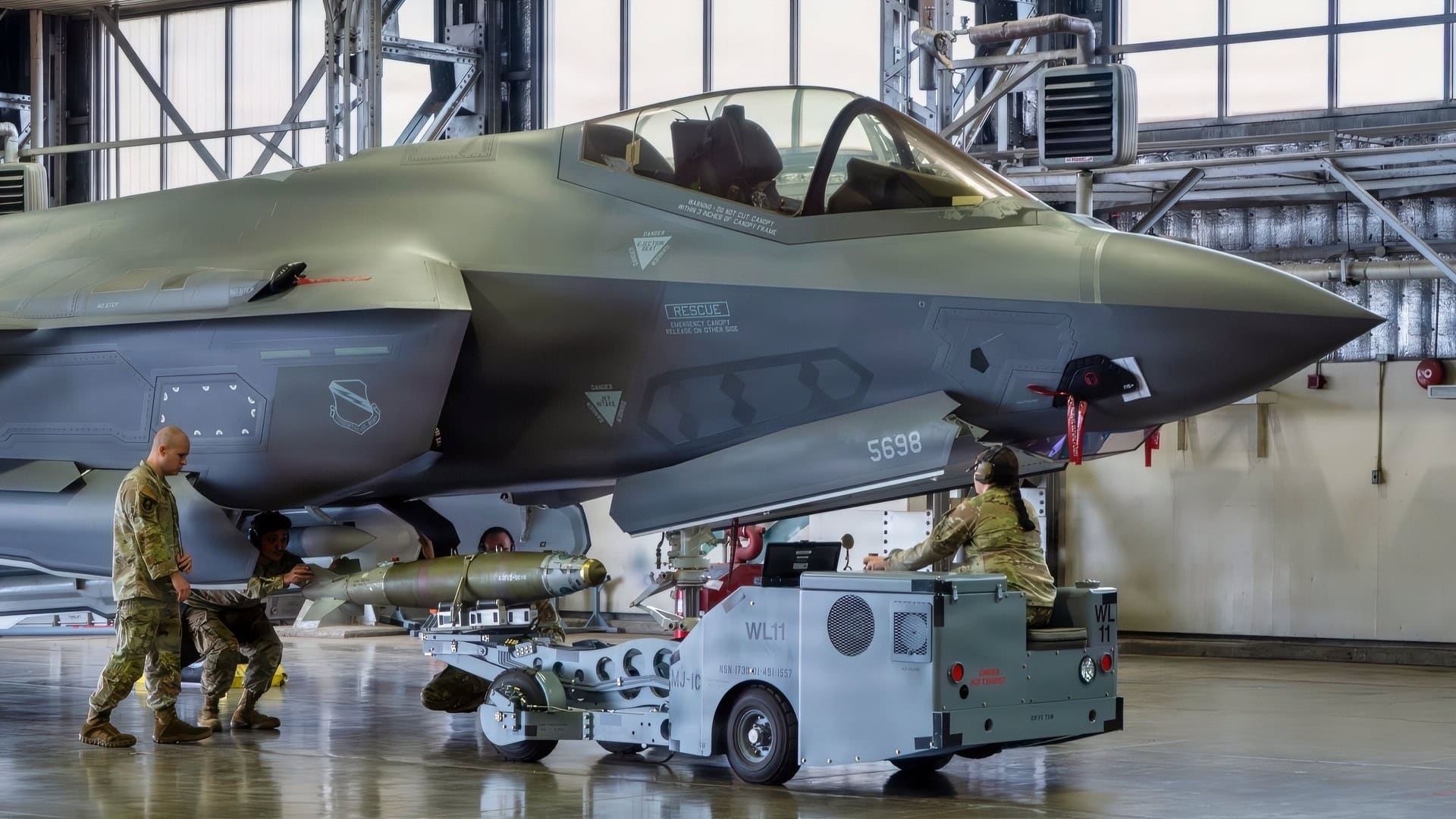
U.S. Airmen assigned to the 35th Aircraft Maintenance Squadron load a munition onto an F-35A Lightning II during a weapons loading demonstration at Misawa Air Base, Japan, Sept. 11, 2026. The demonstration highlighted the precision and technical proficiency required to safely generate combat-ready aircraft and sustain the 35th Fighter Wing’s ability to deliver airpower across the Pacific. (U.S. Air Force photo by Airman 1st Class Angelica Winther)
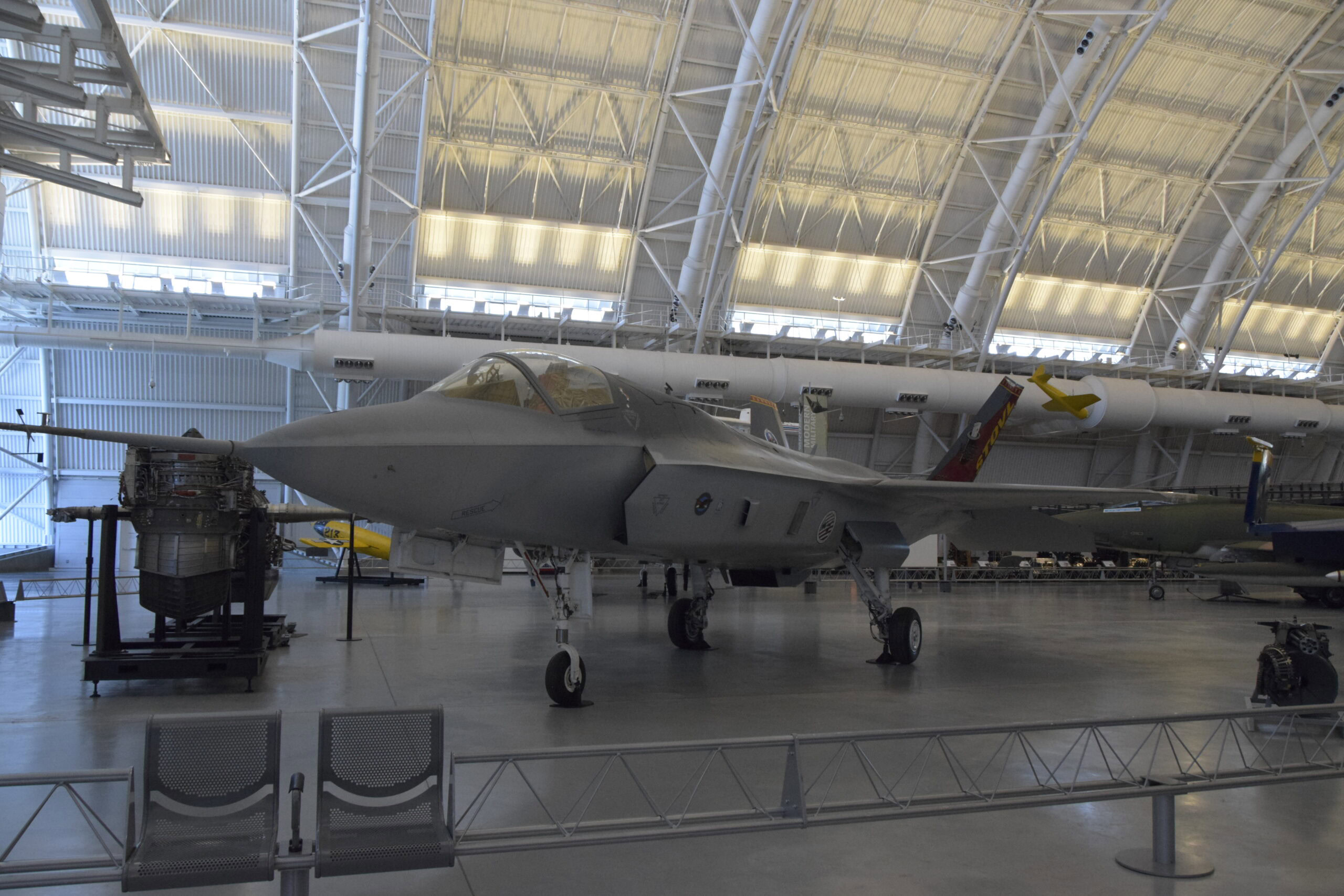
F-35 at the Smithsonian. 19FortyFive original image.
Germany’s military has previously said the package includes weapons, spare parts, training and maintenance support during the first five years of operation.
Germany is also spending heavily on the infrastructure needed to operate the aircraft.
The first eight German jets are expected to be temporarily stationed in the United States, where German pilots and ground crews are set to train at Ebbing Air National Guard Base in Arkansas.
The aircraft will begin arriving at Buchel Air Base in western Germany in 2027, with deliveries continuing through 2029.
Replacing the Tornado
For Germany, one particularly important capability considered when the F-35 was chosen was NATO’s nuclear-sharing arrangements.
Under those arrangements, American nuclear weapons are stationed in Europe and can be delivered by aircraft belonging to an allied country if their use is authorized.
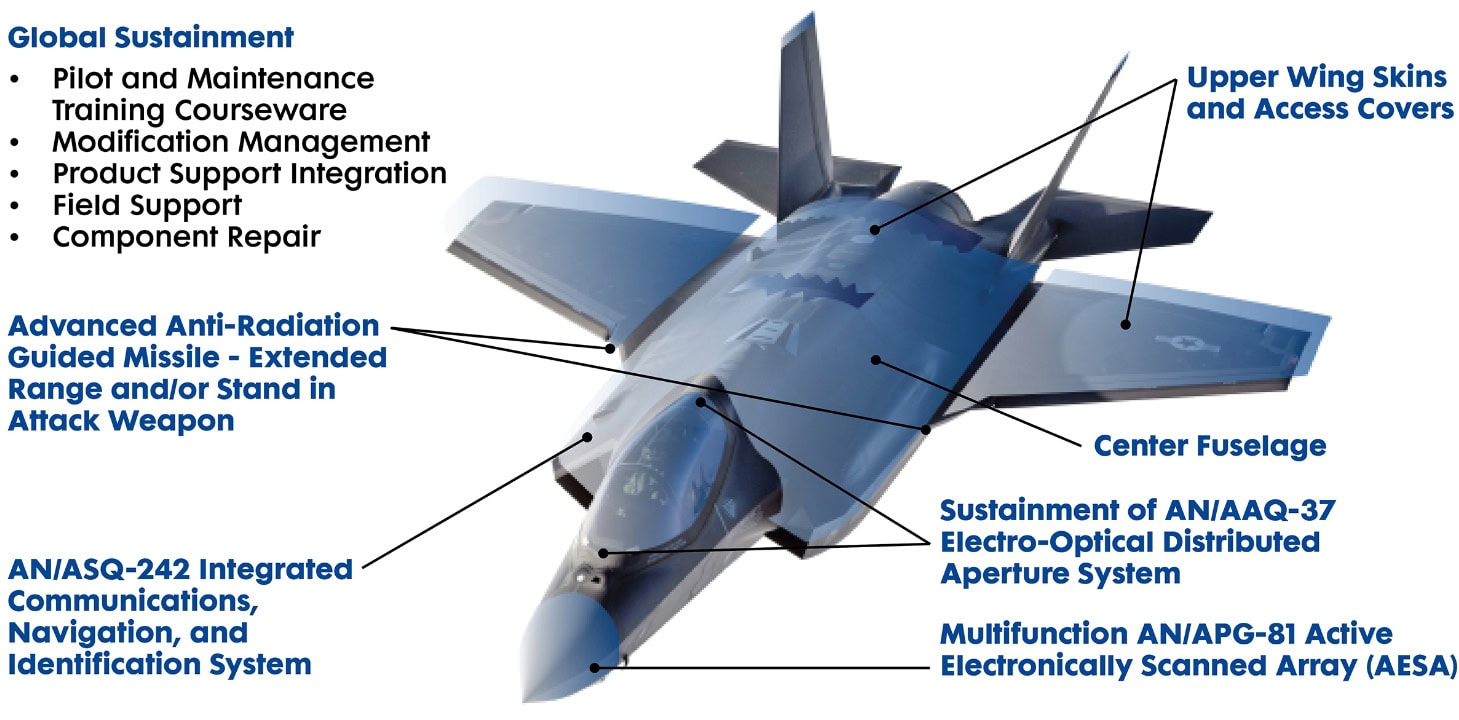
F-35 Fighter. Image Credit: Industry Handout.
Germany needs to maintain that capability, and the F-35 will support it. Germany’s Tornado aircraft has performed that mission for decades, but it is now approaching the end of its operational life.
Berlin plans to retire the type in 2030, and the F-35A will assume the nuclear-sharing role as the Tornado leaves service.
The F-35 is the most capable fifth-generation fighter jet on the planet, but the nuclear requirement made it particularly attractive to Berlin.
The fighter jet has been certified to carry the newer B61-12 nuclear gravity bomb, meaning it will be ready from the get-go to perform those duties if necessary, and Germany would not need to adapt and certify a whole new fighter.
The F-35 also offers capabilities the Tornado does not, including stealth, an internal weapons bay, and substantially more modern sensors and networking technology.
F-35s Head to Buchel
Germany has saved time and resources by adopting the F-35 rather than building or adapting an entirely new aircraft, but preparation is still necessary — and substantial work remains.
The F-35s operating in Germany will be stationed at Buchel Air Base in Rhineland-Palatinate, where Tactical Air Wing 33 currently operates the Tornado. Construction of a dedicated F-35 campus began there in October 2024.
The project has included the construction of new maintenance facilities, a hangar, spare-parts storage, an aircraft-washing facility, and a new operations building.
The Bundeswehr, the unified armed forces of the Federal Republic of Germany, says the upgrades are necessary both to accommodate the F-35 and its advanced technology and to ensure cybersecurity, noting that Buchel was previously built specifically for the Tornado.
The work is extensive: in July, Germany’s military procurement office also sought a dedicated Cyber Security Operations Center and Network Operations Center for the F-35 campus, along with the development of new, secure connections between different military networks.
The campus is scheduled to be ready by November 2026.
More F-35s Could Follow
Despite political disagreements, the investment is important for the German military and for shared NATO responsibilities — and the 35 aircraft already ordered may not be Germany’s last.
This year’s collapse of the fighter component of the Franco-German-Spanish Future Combat Air System (FCAS) program has left Berlin reconsidering its future fighter plans.
Additional F-35s are one possibility to bridge the gap until a next-generation fighter is developed, with reports suggesting that Germany may be considering another 15 aircraft.
About the Author: Jack Buckby
Jack Buckby is a British researcher and analyst specializing in defense and national security, based in New York. His work focuses on military capability, procurement, and strategic competition, producing and editing analysis for policy and defense audiences. He brings extensive editorial experience, with a career output spanning over 1,000 articles at 19FortyFive and National Security Journal, and has previously authored books and papers on extremism and deradicalization.