
44 mines in Central Sahel under pressure — JNIM turns gold into a battlefield
 Marie Dubois
44 mines in Central Sahel under pressure — JNIM turns gold into a battlefield
On July 22, between Inata, Boungou, Tinzaouatène, and the dusty tracks leading towards Gao, an ACLED report pinpointed what many Sahelian officers are already observing on the ground: the war is no longer just fought around garrisons. It is fought around mines, markets, supply routes, and gold panner camps.
According to the analysis reported by RFI, ACLED studied violence related to 44 industrial and artisanal mines in Burkina Faso, Mali, and Niger. The significant figure is not just 44. It is primarily this: nearly 90% of incidents related to mining occur outside the concessions themselves, within a radius of about ten kilometers. In other words, the sensitive point is not always the well, the pit, or the processing plant. It is the road that leads to it.
This nuance may seem technical. It is operational. A column can protect the entrance of a mine, but if it does not hold the nearby market, the fuel station, the bridge, the motorcycle workshop, and the laterite track, it controls almost nothing. From experience, armed groups know this better than many staff officers.
A mining map that overlaps with the insurgency map
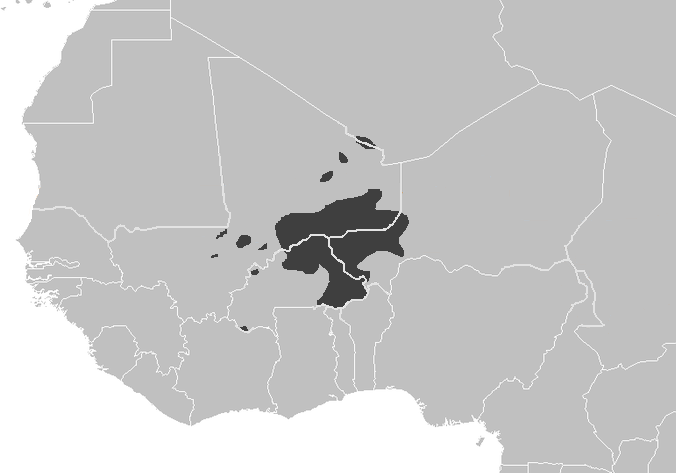
In Burkina Faso, the report cited by RFI emphasizes Inata, Boungou, Solhan, and the corridor of the national road N3. In Mali, it mentions Talhandak, Tinzaouatène, and Intahaka in the North, as well as the gold-bearing areas stretching from Kayes to Sikasso. In Niger, Samira, Komabangou, and M’Banga appear in the same logic.
These names do not form a simple geological list. They outline a second map of the Sahelian war. It cuts across administrative borders, traverses transhumance areas, follows smuggling routes, and often connects spaces where the state is present intermittently. JNIM, or the Group for Support of Islam and Muslims linked to al-Qaeda, does not need to officially take a mining town to exploit it. It can impose a blockade, tax trucks, abduct personnel, threaten subcontractors, or strike a convoy.
This is less spectacular than an attack on a barracks. It is sometimes more profitable.
JNIM seeks governance as much as gold
The temptation would be to summarize this evolution as a question of funding. Gold finances the purchase of fuel, motorcycles, phones, light weapons, commercial explosives, and spare parts. This is true. But the issue is broader. In certain artisanal gold panning areas, ACLED describes sites transformed into semi-permanent bases where fighters can blend in among miners, store equipment, and alternate between civilian and military life.
This capacity for dilution is a nightmare for a regular army. An armed pickup is visible. A network of lookouts scattered between the wells, shops, and workshops is much less so. When fighters also control access to water, fuel, and tracks, they control the economic lifeblood of the sector.
JNIM has understood that authority is built with daily rules. Collecting a tax, arbitrating a local conflict, punishing a thief, allowing or prohibiting traffic: all of this is political. In Central Sahel, the mine is no longer just a source of cash. It becomes a laboratory for insurgent governance.
Sahelian states respond with laws and strikes
In the face of this pressure, Sahelian juntas and governments are not only using force. Burkina Faso is nationalizing certain sites. Mali is renegotiating contracts and amending its mining code. These decisions have a clear sovereignist logic: to regain control over revenues deemed strategic and to show that national resources will no longer be managed according to old balances.
But on the ground, sovereignty written in a mining code does not secure a track between two isolated localities. It can even increase pressure on operators, caught between more demanding governments and more aggressive armed groups. RFI reports that ACLED speaks of an increasingly difficult operational environment for mining companies, subjected to a double constraint.
The Russian partners of the Africa Corps add another layer to this battle. Their presence provides the Malian and Burkinabe armies with strike capabilities, intelligence, and tactical support, but it does not solve the central problem: sustainably holding economic peripheries without turning every mine into a fortress.
The coastal risk is already inscribed in the tracks
On July 20, AllAfrica also published an analysis on the forests of the Sahel and the Gulf of Guinea that have become refuges for terrorist groups, from the W-Arly-Pendjari park to the wooded areas near Benin and Niger. Two days earlier in the information cycle, another text echoed UNOWAS alerts about a threat moving towards coastal states, with groups capable of administering territories, controlling roads, and leaning on criminal economies.
These two dynamics converge. An artisanal mine, a classified forest, a cattle corridor, and a secondary road can belong to the same operational system. For a group like JNIM, the interest is in multiplying support points rather than holding a continuous front. This allows it to wear down regular forces, impose costs on companies, and test the defenses of coastal countries without announcing a general offensive.
One must remain cautious: not all incidents around a mine prove structured jihadist control, and local information often remains fragmented. But the trend is clear enough to no longer be treated as peripheral crime. The resource becomes the terrain.
What to watch for now
The next indicator will not only be the number of attacks against mining sites. One will need to look at ambushes on secondary axes, kidnappings of foreign technicians, temporary mine closures, increases in informal taxes, and movements of gold panners. One will also need to monitor airstrikes, as a successful strike against a militarized gold panner camp can be tactically useful but politically dangerous if many civilians are present.
In northern Mali, the areas around Gao and the roads to Tinzaouatène will remain vulnerable. In Burkina Faso, the N3 and the gold-bearing areas in the East deserve particular attention. In Niger, the sites in the West may become friction points between the army, criminal networks, and jihadist cells.
The immediate danger is not that JNIM becomes a clandestine mining company. The danger is simpler: that it transforms every road to gold into a taxation corridor, every gold panner camp into a human shield, and every isolated concession into a credibility test for already overwhelmed states.
Main sources: RFI on the ACLED report published on July 22, 2026; AllAfrica on forest refuges in the Sahel and the Gulf of Guinea; AllAfrica/UNOWAS on the evolution of armed groups in West Africa.
The JNIM is transforming gold mining areas in the Sahel into conflict zones, exerting control through taxation and threats. Key locations include Inata, Boungou, and Gao, with significant incidents occurring within a 10 km radius of mining sites. Governments are responding by nationalizing sites and renegotiating contracts, while the JNIM continues to adapt its tactics to maintain influence over these economically vital areas.
- JNIM is exerting control over mining areas in the Sahel region.
- 90% of mining-related incidents occur outside the concessions, within a 10 km radius.
- The JNIM imposes blockades and taxes on mining operations.
- Governments are responding with nationalization and renegotiation of mining contracts.
- The situation is creating an increasingly difficult operational environment for mining companies.