
Taiwan's 2026 HIMARS and Drone Drills Cannot Solve the Ammunition Problem
 S.W
S.WTaiwan's 2026 HIMARS and Drone Drills Cannot Solve the Ammunition Problem
Taiwan put missiles and unmanned aircraft into the same combat drill on September 18, just six days before the first Trump-Xi summit since May. That timing matters. Taipei is showing Washington that it is adapting to modern war while reminding Beijing that a blockade or landing would meet a distributed response. But the exercise also exposes the hardest part of Taiwan's defense: not finding targets, but sustaining fire after the first day.
The Drill Is About Integration
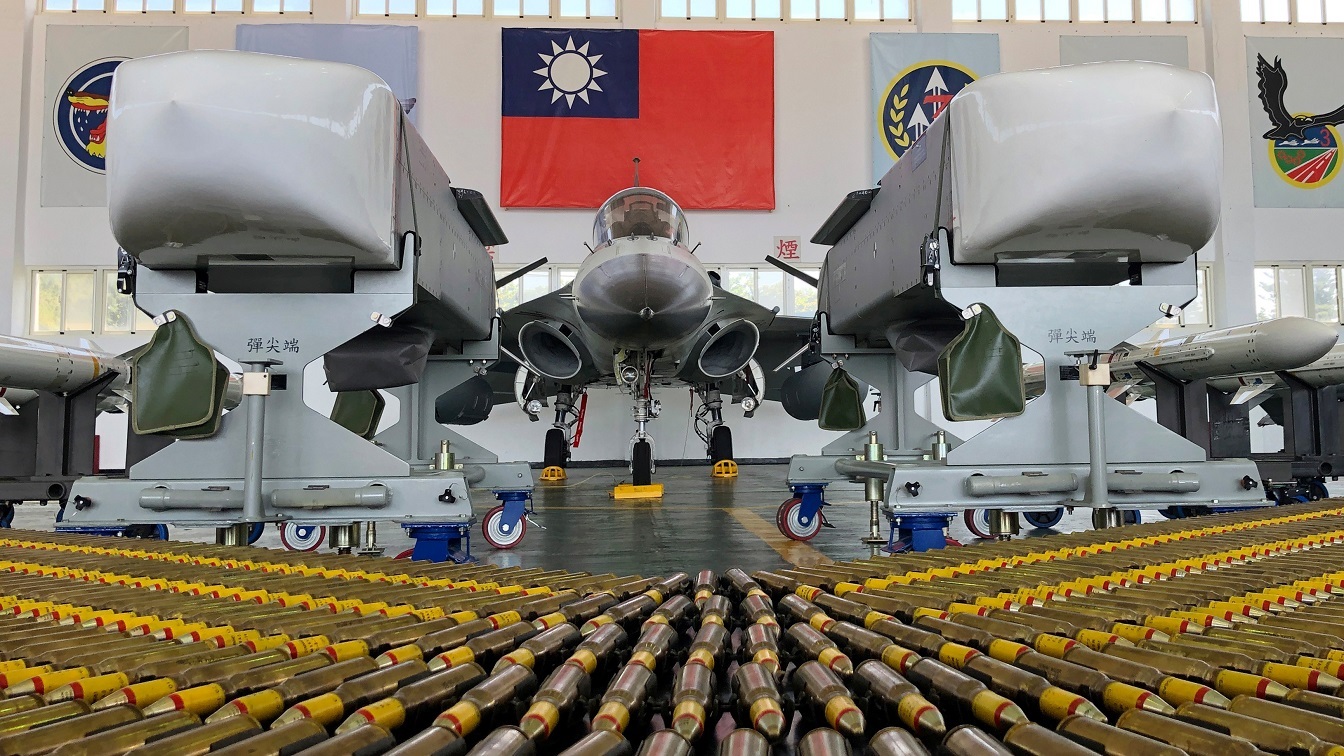
According to the Associated Press report from Pingtung, the Taiwanese military conducted its first joint combat exercise using multiple types of attack drones. The Ministry of National Defense did not identify the drone models, and that omission is important. These were not advertised as a new wonder weapon. They were used as part of a larger kill chain alongside conventional weapons.
President Lai Ching-te described the coordinated use of unmanned vehicles and conventional systems as an adaptation to modern warfare. Taiwan also fired anti-air, anti-ship, and anti-landing missiles during the event. The operational logic is straightforward: drones extend the sensor picture, complicate Chinese targeting, and help a defender spend expensive missiles against the right targets.
That is useful, but it is not the same as creating sea control. A drone can locate a landing ship. It cannot by itself keep the ship from unloading troops, suppress a coastal battery, or reopen a port after missile strikes. Taiwan needs a functioning network of sensors, command posts, launchers, reloads, and repair teams. Every link is vulnerable.
HIMARS Adds Range but Not Endurance
The next phase of Taiwan military drills will feature newly acquired US-made M142 High Mobility Artillery Rocket Systems, better known as HIMARS, and Stinger missile simulators. A standard HIMARS launcher can fire a six-round pod of Guided Multiple Launch Rocket System missiles or one larger Army Tactical Missile System round, depending on the configuration and authorization. The platform is mobile, accurate, and easier to hide than a fixed missile battery.
Mobility is valuable on an island facing a large missile force. A launcher that fires, moves, and hides is harder to kill than a permanent site. HIMARS can also support Taiwan defensive fire against landing areas, logistics nodes, and ships that enter the weapons engagement zone. But the system does not remove the arithmetic problem. Six rockets per pod is six opportunities to impose cost. It is not a deep magazine.
In a serious blockade or invasion scenario, Taiwan would need to fire from many locations while preserving launchers for later phases. Reload vehicles must survive. Roads and bridges must remain usable. Satellite navigation and communications may be degraded. If the United States cannot move replacement rockets across the Pacific, a launcher becomes an expensive truck waiting for ammunition.
The Summit Raises the Political Risk
The drill is also a message about procurement. AP reported that Trump postponed a planned $14 billion Taiwan arms package after the May summit and called arms sales a very good negotiating chip with China. The September 24 meeting therefore creates an uncomfortable sequence: Taiwan is demonstrating that it is buying and training for a missile-heavy fight while the political decision to release additional US weapons remains uncertain.
Beijing will read the exercise as evidence that Taipei is hardening a military response. Washington may read it as evidence that Taiwan is finally moving toward a more credible defense model. Both readings can be true. The danger is that the public display of capability is mistaken for a measure of wartime stockpiles.
The United States has its own magazine problem in the Indo-Pacific. US Pacific Command activities in September show a wide pattern of multinational training, including maritime cooperation with the Philippines and Canada and missile-related readiness events. Those exercises improve access and interoperability. They do not guarantee that enough interceptors, rocket artillery rounds, anti-ship missiles, and air-defense reloads will be available at the right island, port, or airfield when Chinese strikes begin.
What Taiwan Should Measure Next
Taiwan should judge this drill by four numbers rather than by the number of drones in the air. First is the time from detection to a firing solution. Second is the time required to relocate and reload a launcher. Third is the percentage of command nodes that remain connected after simulated jamming and missile attack. Fourth is the number of days that the force can maintain a credible salvo rate without external resupply.
The fourth number is the one that will decide whether the exercise has military weight. Taiwan has geography on its side, but geography does not replenish magazines. The island is roughly 160 kilometers from the Chinese coast at the narrowest point of the Taiwan Strait, close enough for China to attack fixed infrastructure rapidly and far enough that outside resupply is difficult under fire.
Drones and HIMARS improve Taiwan force design because they make the defense more distributed and more difficult to target. They also create a demand for batteries, control links, spare launchers, trained crews, and ammunition that cannot be met by a parade or a single procurement announcement.
The Bottom Line
Taiwan is moving in the right direction by integrating drones, missiles, and mobile rocket artillery. The September 18 drill shows a defender trying to turn sensors into fires before a political crisis becomes a shooting war. It does not prove that Taiwan can sustain those fires.
That distinction will matter after the opening exchange, when the easy targets are gone and every rocket must be allocated against a landing ship, a fuel depot, or an air-defense battery. HIMARS gives Taiwan a sharper knife. The question is whether Taipei, Washington, and Congress are willing to stock enough blades for the fight. If not, the drill will demonstrate adaptation without delivering endurance.
Sources
Taiwan conducted joint military drills on September 18, 2026, integrating attack drones and HIMARS to enhance its defense capabilities against potential Chinese aggression. The exercise aimed to demonstrate Taiwan's adaptation to modern warfare, although concerns remain about sustaining firepower in a prolonged conflict. The drills coincide with political tensions regarding US arms sales to Taiwan, highlighting the strategic implications of military preparedness in the region.
- Taiwan conducted its first joint military exercise using attack drones on September 18, 2026.
- The exercise integrated drones with conventional weapons to enhance military response.
- Taiwan plans to use HIMARS in future drills to improve artillery capabilities.
- The drills are a response to potential threats from China, showcasing Taiwan's military adaptation.
- Political implications arise from the timing of the drills in relation to US-Taiwan arms negotiations.