
45 Billion Euros for Ukraine 2027 — EU Funding Meets Europe's Defense Limits
 Dr. Klaus Weber
45 billion euros for Ukraine 2027 — EU funding meets Europe's defense limits
The European Commission proposed on November 2, 2026, to release the remaining 45 billion euros of the Ukraine Support Loan for 2027. This is a significant political commitment. However, it does not yet represent significant military capability. This very difference is once again underestimated in Brussels.
A loan is not a defense capability
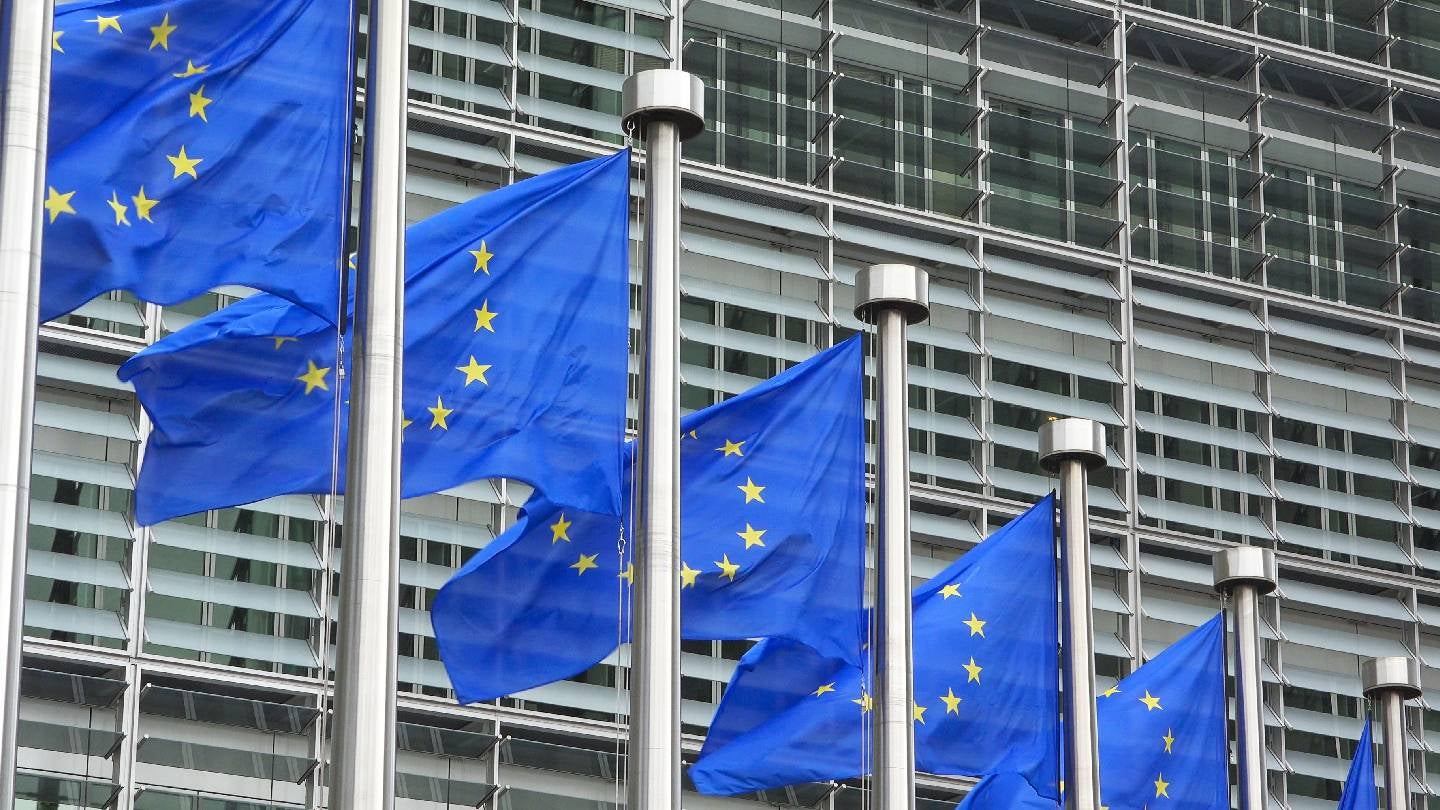
The Commission's proposal follows the planning revealed at the end of October to provide Ukraine with a total of around 45 billion euros in loans in 2027. Euronews reported that the EU wants to accelerate disbursement given Ukraine's strained financial situation. The Commission is thus speaking a necessary language of continuity: Kyiv should not have to ask every year for the basic funding of its state functions and defense.
However, the construction remains a financing instrument, not a production program. A loan can buy ammunition if ammunition is available. It can trigger an order if a factory has spare capacity. However, it can neither produce additional PAC-3 MSE interceptors in the short term nor make European supply chains independent of American components overnight. The political commitment is immediately visible; the military effect follows — if at all — with significant delay.
The strategic gap lies between money and delivery
The recent debates about Ukrainian air defense clearly illustrate the problem. The United States has approved the potential sale of 500 Patriot PAC-3 MSE missiles worth about 2.1 billion dollars. This strengthens Ukraine's procurement position but does not automatically resolve the bottleneck. The manufacturing of such missiles is bound in the long term, and delivery times can extend into the 2030s. For a state that needs protection from Russian missile attacks this winter, this is a strategic imposition.
The EU can take on the bill. It can pool demand and prefer European companies through SAFE or the Ukraine Support Loan. What it cannot do is finance away the industrial reality. Europe's air defense industry has neither an immediate alternative to Patriot in sufficient quantity nor a fully integrated network of sensors, command, and interceptors. Those who only consider the budget approach confuse fiscal capacity with military availability.
Britain wants access, not exclusion
In this context, the British initiative for closer EU defense relations gains significance. The Financial Times reported on November 2 that London is seeking stronger cooperation with the EU, precisely because the procurement logic is shifting towards "Made in Europe." Britain does not primarily fear a lack of European rhetoric. It fears being excluded from the financing and procurement structures, even though its defense industry, intelligence services, and armed forces remain indispensable for European security.
This is the institutional core of the problem. The EU wants to secure European industrial value creation with SAFE and the new loan instruments. This is understandable as industrial policy. However, it becomes dangerous from a security policy perspective when "European" effectively means "EU member state." Britain is not an EU member but a European nuclear state, a leading maritime power, and a central player in supporting Ukraine. Excluding London would not make European defense capability more autonomous but would shrink its political and industrial base.
The 65 percent logic remains incomplete
The debate about the European share of SAFE-funded projects shows the conflict of objectives. A high share of local components is intended to prevent European defense budgets from merely financing American or Asian products. This makes sense in the long term. However, in the short term, strict localization can increase the costs or delay precisely those systems that Ukraine needs now.
A wise rule should therefore distinguish three levels. First, Ukraine needs immediately available systems, regardless of where they were manufactured. Second, European states must build joint maintenance, ammunition, and production capacities. Third, Europe needs access to critical technologies so that it does not remain permanently dependent on export approvals and political decisions from Washington. These three goals are interconnected but not identical. Summarizing them in a single percentage produces mainly good press releases.
The political value of the loan
The 45 billion euro proposal nonetheless has strategic value. It signals to Russia that European support does not depend on a single national budget or a short-term election cycle. It gives Ukraine more planning certainty and can force European governments to disclose their own multi-year procurement plans. In this sense, the loan is an instrument of political commitment.
But commitment is not the same as deterrence. Deterrence arises from credible capabilities, not from the size of a funding headline. For the EU, this means that it must not only secure expenditures with the 45 billion euros. It must make delivery timelines, production quantities, spare parts stocks, and common standards measurable. Every euro should be traceable: as a contract, as delivered ammunition, or as additional industrial capacity.
Europe's dilemma becomes more visible with more money
The Commission has taken a necessary step with its proposal. However, it has also made Europe's fundamental problem more sharply visible. The EU increasingly has financial instruments but does not yet have a correspondingly integrated defense industry. Britain has military and industrial capabilities but sits outside the crucial EU programs. Ukraine needs weapons today while Europe organizes its production base for tomorrow.
This is not an argument against the 45 billion euros. It is an argument against the self-deception that financing already means capability. Europe needs the money to be able to act. However, it needs institutions, factories, and political openness so that money can also translate into security. The contradiction remains: the larger Europe's funding commitments become, the less it can afford to ignore the gap between approved loans and delivered defense capability.
Sources: European Commission and EU Neighbours East, November 2, 2026; Euronews, October 30, 2026; Financial Times, November 2, 2026; Defence Industry Europe, October 30, 2026.
The European Commission proposed releasing 45 billion euros for Ukraine's support in 2027, aiming to enhance its defense capabilities. However, the report emphasizes the gap between financial commitments and the immediate military effectiveness of such funding. Concerns are raised about the logistical challenges in delivering necessary military equipment, particularly in light of ongoing threats from Russia. The UK is also seeking closer defense ties with the EU as procurement strategies evolve.
- The European Commission proposed to release 45 billion euros for Ukraine in 2027.
- The funding aims to provide financial support for Ukraine's defense capabilities.
- There are concerns about the immediate military effectiveness of the funding.
- The report highlights the gap between financial commitments and actual military capabilities.
- The UK seeks closer defense ties with the EU amid procurement shifts.