
The Russian "Gerbera-2" Changes the Role of Decoys in the Drone War over Ukraine in 2026
 Dmitri Volkov
Russian "Gerbera-2" Changes the Role of Decoys in the Drone War Over Ukraine in 2026
From Cheap Target to Strike Platform
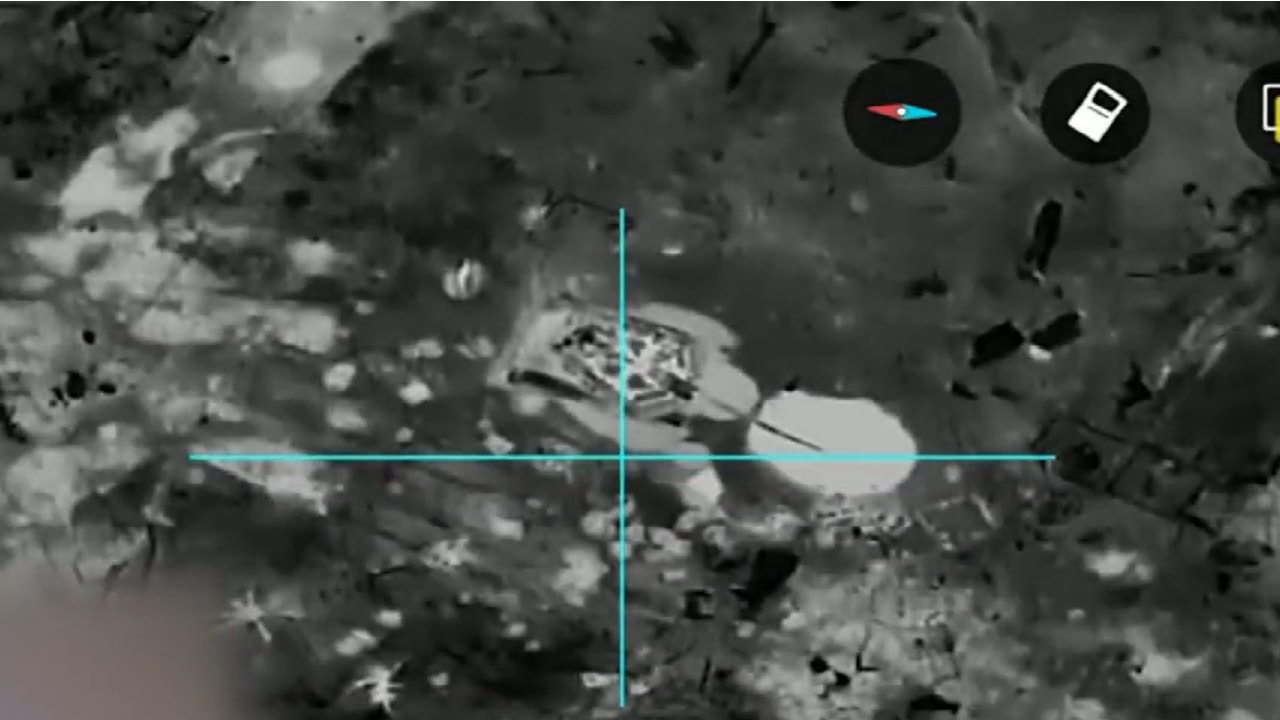
The Russian drone program has developed in a way that would have seemed paradoxical not long ago. The "Gerbera," initially used primarily as a reconnaissance and decoy target to overload Ukrainian air defense, has reportedly been modified into a strike version called "Gerbera-2," according to Ukrainian military intelligence. This was reported by Ukrainian sources on November 2, and the Institute for the Study of War included this information in its assessment of the Russian offensive campaign. We are not just looking at a new type of munition. This is an attempt by Russia to narrow the gap between the number of deployed drones and their combat value.
It is important not to overestimate the name. There is currently no independent confirmation that "Gerbera-2" represents a completely new serial system with characteristics comparable to the "Shahed." It is more likely that this refers to a gradual modification of an already established platform. This logic is characteristic of Russian military production in wartime: first, a mass-produced, relatively cheap airframe is created, and then navigation systems, warheads, and new application algorithms are added as needed.
Why the Russian Army Needed a New Function
In October 2026, the Russian side sharply increased its long-range air campaign. According to the General Staff of Ukraine, referenced by ISW, 6,473 strike drones of the "Shahed" and "Geran" types were launched at Ukraine in one month, of which 4,859 were estimated to have been shot down by Ukraine. Even if Kyiv's counting methodology includes separate categories of drones and is not entirely transparent, the scale is evident. For such a campaign, Moscow needs not only longer-range drones but also a constant flow of means capable of forcing Ukrainian defenses to expend missiles, activate radar stations, and reveal positions.
Previously, the "Gerbera" addressed this task as a decoy. It mimicked some signatures of more expensive strike drones and forced the defense to react to a threat that might only carry reconnaissance equipment or have no warhead at all. The transition to a strike modification changes the cost calculation. If the same airframe can serve as a decoy in one flight and strike a target in another, Russian command gains a more flexible system for planning strikes. Ukraine can no longer automatically assume that a detected cheap drone is safe for priority targets.
Technical Economy Instead of Technological Breakthrough
Open data currently does not allow for confident statements about the mass of the warhead, range, guidance system, or exact cost of "Gerbera-2." Therefore, it is more accurate to speak not about characteristics but about production architecture. A drone of this class likely uses a simpler engine and navigation than a full-sized "Shahed," and its main advantage is serial production. The Russian defense industry has proven in recent years that it can scale the production of relatively simple drones faster than complex cruise missiles.
This is both a weakness and a strength. A cheap drone with limited accuracy does not replace a missile when attacking a defended target. However, in a mixed salvo, it creates uncertainty: the Ukrainian crew must determine which drones are reconnaissance, which are decoys, and which carry a payload. Even a small percentage of strike "Gerberas" can force the defense to maintain a more expensive state of readiness. In this sense, the effect is achieved not only through explosions but also through the constant necessity to doubt.
Consequences for Ukrainian Air Defense
The changing role of the "Gerbera" increases pressure on Ukraine's layered defense. Different means are effective against large strike drones—from mobile fire groups and machine gun crews to surface-to-air missiles and aviation. But a mass strike creates a problem of target distribution. If the defense expends an expensive missile on a drone that was previously considered an empty decoy, Moscow gains an economic advantage. Conversely, if a target is missed, the risk of hitting an object increases.
The response does not necessarily have to be the procurement of even more missiles. A more rational adaptation includes cheap interceptors, acoustic and optical posts, automatic target classification, and navigation suppression where possible. Ukraine is already moving in this direction, developing FPV interceptors and networked detection systems. However, the Russian modification of the "Gerbera" shows that the competition is not between individual models but between the economies of interception and launch.
Doctrinal Significance for Moscow
In Russian military logic, the drone gradually ceases to be an independent type of weapon and becomes an element of managed attrition. Some drones gather reconnaissance information, others saturate the space, and others strike. The boundary between these categories is now intentionally blurred. This resembles the Soviet practice of creating complex layered systems against the enemy, only instead of aircraft and missiles, mass drone platforms are used.
However, there is also an institutional problem hidden here. Russian command tends to declare any new modification as proof of technological superiority. In reality, "Gerbera-2" may primarily be evidence of rational economy and a lack of more advanced strike systems. It is easier to modify a cheap airframe than to quickly increase the production of high-precision missiles, resilient guidance channels, and engines. Russian industry is adapting—but adaptation does not equal a qualitative leap.
Forecast
In the coming months, we should expect an expansion of mixed strikes, in which "Gerberas," "Gerans," reconnaissance drones, and decoys will be launched with a unified intent. If the Ukrainian side confirms the regular use of "Gerbera-2" and its acceptable accuracy, Russia will gain a new layer of mass weaponry for nighttime attacks. However, if the modification turns out to be low-volume or too vulnerable to electronic warfare, its significance will remain limited.
The main conclusion is still cautious. Moscow has not found a magical solution to the problem of Ukrainian air defense, but it is consistently transforming simple platforms into more versatile tools. The drone war is increasingly defined not by who has the most advanced model but by who can more cheaply replenish losses and quickly change the role of already deployed drones.
Sources
- Institute for the Study of War, Russian Offensive Campaign Assessment, November 2, 2026.
- Critical Threats Project, Russian Offensive Campaign Assessment, November 2, 2026.
- General Staff of the Armed Forces of Ukraine, report on long-range strikes for October 2026, cited in ISW's assessment.
The Russian Armed Forces modified the Gerbera drone into a strike version known as Gerbera-2 in October 2026, enhancing its role in drone warfare over Ukraine. This modification allows the drone to serve as both a decoy and an attack platform, complicating Ukrainian air defense responses. In the same month, Russia launched thousands of strike drones against Ukraine, indicating a significant escalation in aerial operations.
- The Gerbera drone has been modified into a strike version called Gerbera-2.
- In October 2026, Russia launched 6,473 strike drones against Ukraine, with 4,859 reportedly shot down.
- The modification aims to enhance the operational flexibility of Russian drone strikes.
- The Gerbera-2 is intended to confuse Ukrainian air defenses by acting as both a decoy and a strike platform.
- The report indicates a shift in Russian military strategy towards more economical drone usage.