

Summary and Key Points: More than a decade after Russia announced it, the Project 545 Laika-class is still a design. The Malakhit bureau began work in 2014, signed its Ministry of Defense contract in 2016, and reported the preliminary design complete in 2019. What is known comes from a model shown in 2017: a Yasen-like teardrop hull, a conformal bow sonar with six 533 mm tubes firing straight ahead, roughly 11,340 tons submerged, 35 knots, 600 meters of depth and 90 days at sea, with vertical launchers for Oniks, Kalibr and Zircon.
Russia’s Laika-Class Submarine: Will She Ever Sail?
Several years ago, Russia announced it was developing a next-generation submarine to replace its current Yasen-class fleet.
The Project 545 Laika-class, sometimes called the Husky-class, is envisioned as a “fifth-generation” multipurpose submarine that will incorporate newer, more advanced technologies than its predecessors.
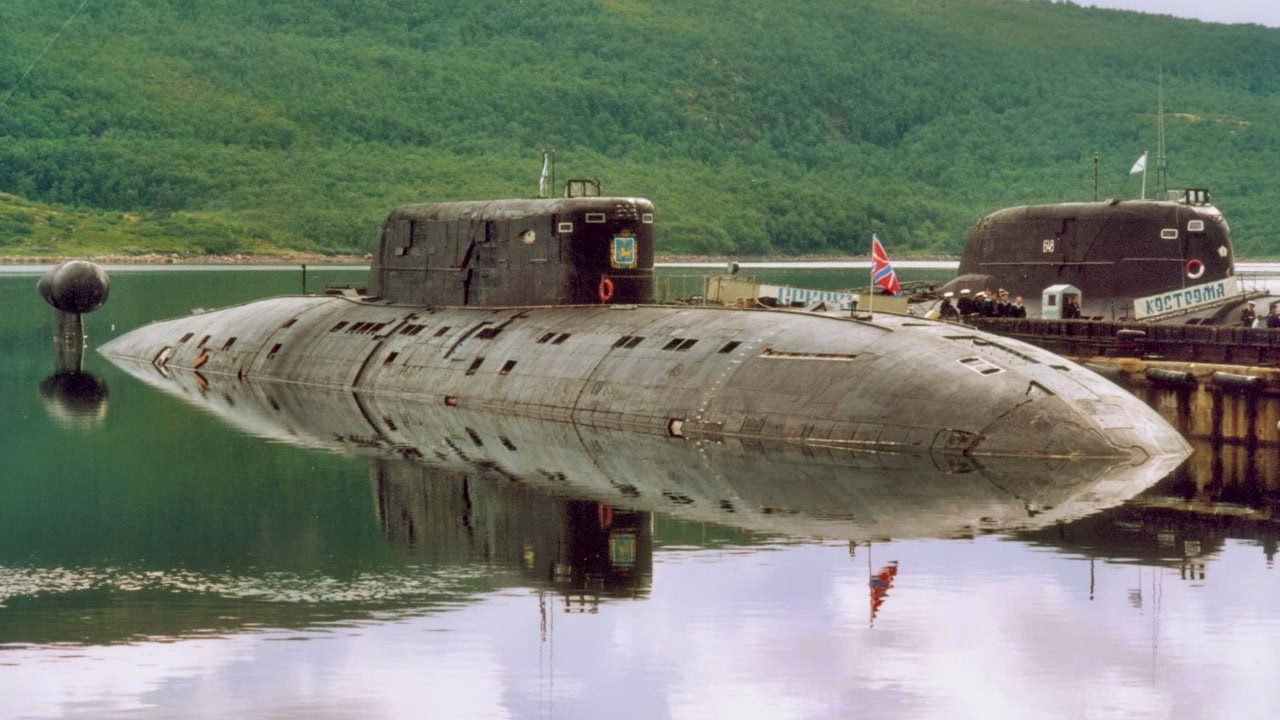
Sierra-Class Submarine. Image Credit: Creative Commons.
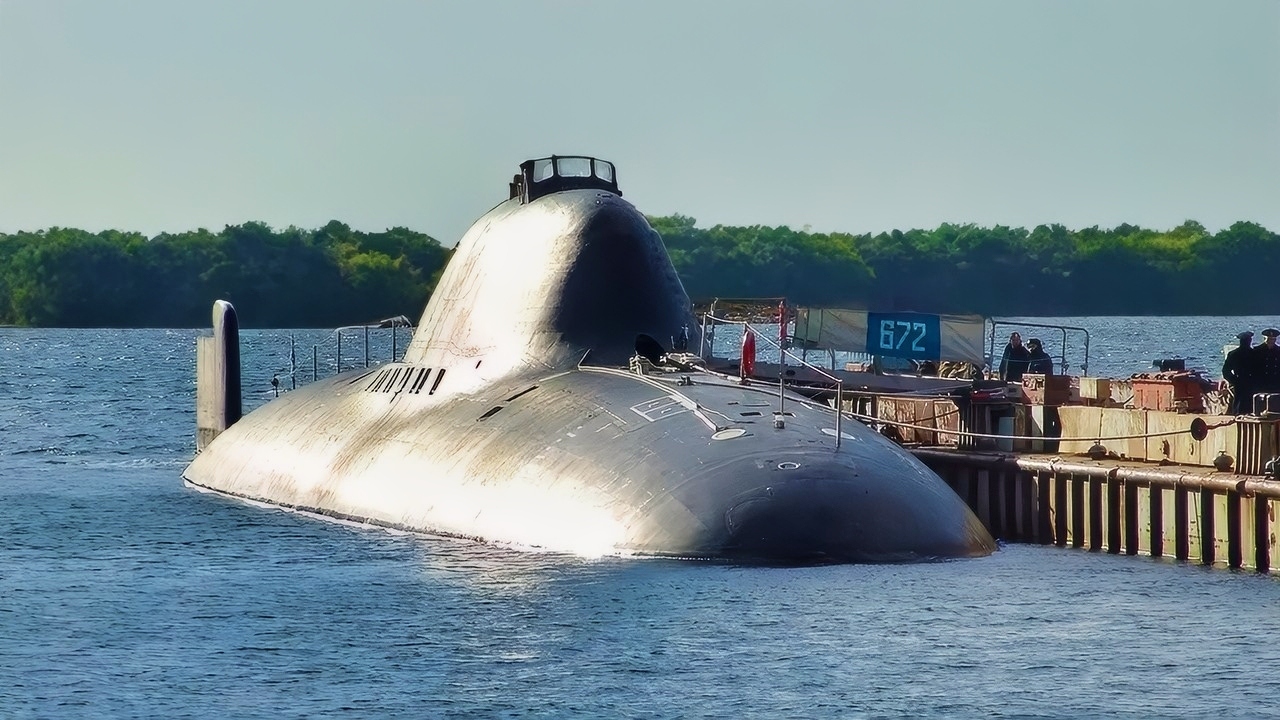
Sierra-Class Submarine Creative Commons Photo
Nearly a decade later, little new information has emerged about this mysterious project, aside from occasional confirmations that the new submarine is still under development.
The Laika-class is designed to replace older Soviet-era models like the Akula-, Victor III-, and Sierra II-class attack submarines.
The Laika-class: What Do We Know?
Development of the Laika-class reportedly began in 2014, when it was announced that the Malakhit Design Bureau, the same bureau responsible for the Yasen-class’s development, was working on a fifth-generation design under the codename “Husky.”
In 2016, Vladimir Dorofeev, Malakhit’s General Director, confirmed that the Bureau had signed a contract with the Russian Ministry of Defense for the new vessels. “Work has now begun on the creation of the next, 5th generation of nuclear multi-purpose submarines, which will replace the Project 885/885M Yasen nuclear submarine,” he said. Dorofeev also confirmed that the new ship could be created “after 2020.”
In 2019, Russian news sources reported that the preliminary design for the new submarine was complete and that the Design Bureau had begun R&D work under the new codename “Laika.”
The exact specifications of the Laika-class are classified.
However, Russia’s National Center for Defense Management revealed a model of the Project 545 submarine in 2017, which some suspect could be related to the Husky/Laika program.
The model heavily resembles the Yasen-class design, with a conventional tear-shaped hull and a cruciform tail with two-part control surfaces.
The upper rudder appears to carry a towed sonar array, with a conformal main sonar and a large flank array running almost the entire length of the hull.
The ship’s propeller appears to be a traditional screw rather than a pumpjet, which several modern submarine designs use, including Russia’s Borei-class.
Thanks to its conformal main sonar, the Laika-class appears to have around six 533 mm direct-ahead torpedo tubes rather than the slanted tubes on the Yasen-class.
In One Word: Mystery
The Laika-class will reportedly have a submerged displacement of around 11,340 tons at full load, a speed of 35 knots (whether surfaced or submerged is not clarified), a depth of around 600 meters, and an endurance of 90 days.
Some sources suggest that it will be armed with six 533 mm torpedo tubes.
Like the Yasen-class, the Laika-class will likely carry 3M14 Vertical Launch Systems (VLS) capable of launching P-800 Oniks cruise missiles, Kalibr-family cruise missiles, and Zircon hypersonic cruise missiles.
Some sources also report that the class will be able to launch ballistic missiles.
The ship will be powered by a nuclear reactor and incorporate the most advanced stealth systems available to the Russian Navy.
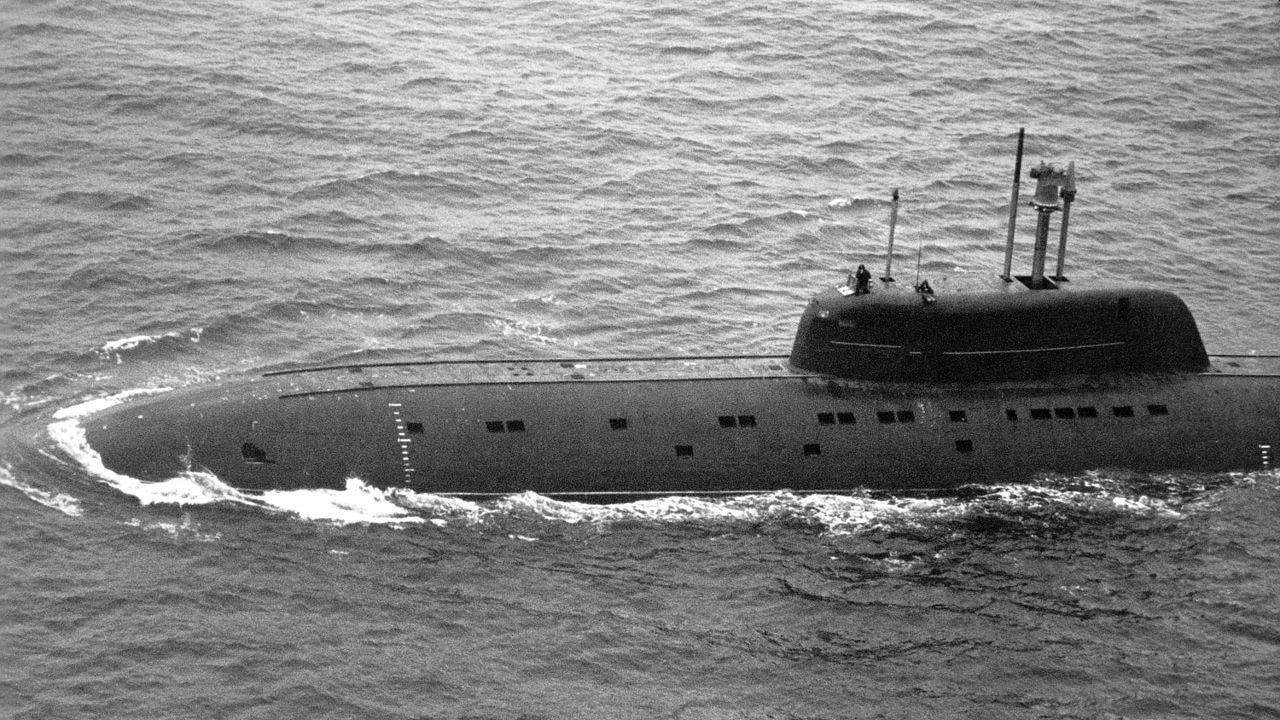
Sierra-Class Submarine. Image Credit: Creative Commons.
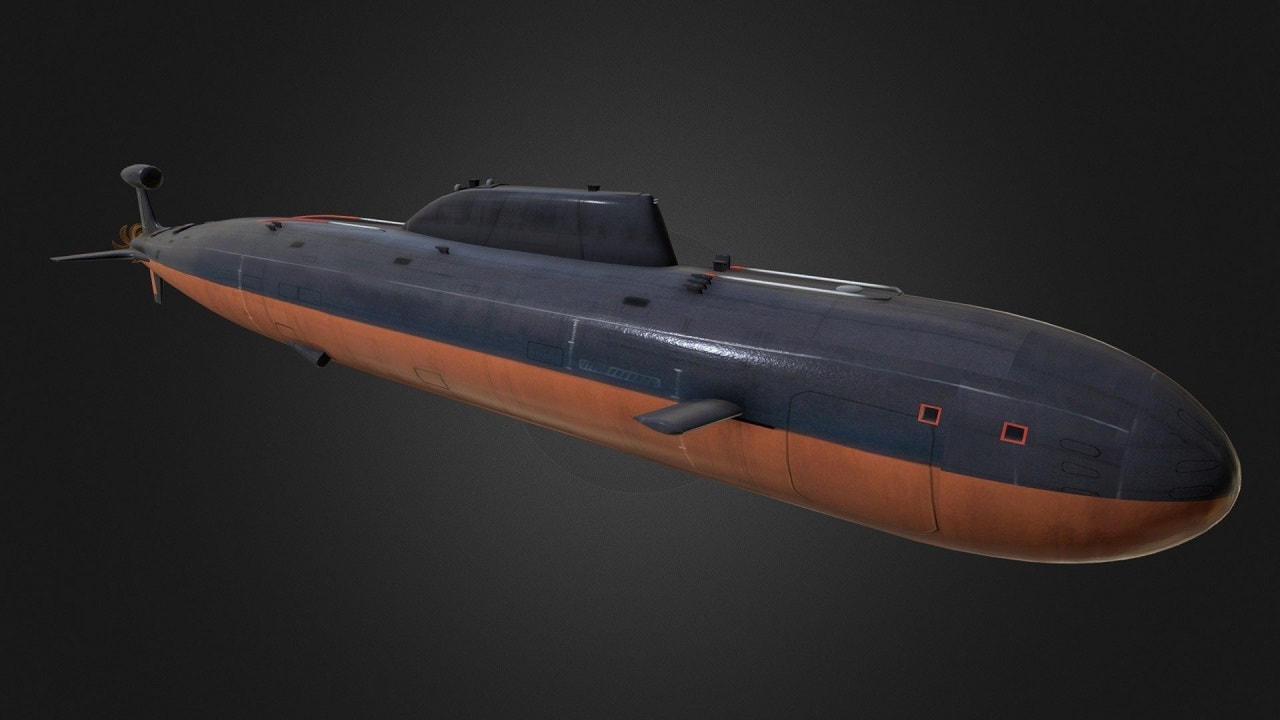
Russian Sierra-class nuclear-powered attack submarine. Artist rendering.
The exact size, dimensions, and crew complement are currently unknown.
Granted, this information comes from a scale model shown at a 2017 defense showcase and should not be interpreted as the final design specification for the Laika-class. The ship’s design will likely be refined further as the program progresses.
The lead ship of the class was originally expected to be built by 2027 or 2030.
However, due to the war in Ukraine and Russia’s strained defense budget, the class will likely be delayed for some time.
The last official mention of the Laika-class came from the Commander-in-Chief of the Russian Navy, Admiral Aleksandr Moiseyev, in a 2026 interview with the Russian state news channel Zvezda. “We are already working on developing fifth-generation submarines,” he said. “A multipurpose program has already been approved for the development of a fifth-generation boat.”
A Ship For the Future
The Laika-class is reportedly designed to fulfill both multipurpose and strategic roles. Modularity is one of the program’s major goals.
To cut costs, Russia’s future submarines will share key components and be highly modular to suit different mission sets.
Depending on their configuration, the ships will carry either cruise missiles or ballistic missiles.
This, however, remains mostly speculative, as concrete information on the Laika-class is scarce.
For now, the Russian Navy remains focused on expanding its Yasen-class fleet. Russia has currently completed seven Yasen-class boats, two of which are undergoing sea trials, and plans to expand the fleet to twelve ships.
The Laika-class will replace Russia’s older Akula- and Victor III-class ships.
More details on this new submarine type will likely be revealed later.
The Russian Ministry of Defense has not yet issued any contracts to procure Laika-class submarines, though it has approved their development.
The Russians are unlikely to build the lead ship by 2027, though construction may start before 2030.
As it stands, too many unknowns remain about the Laika-class.
The only concrete information is that it will be nuclear-powered and multifunctional.
The Yasen-class, though it is one of Russia’s most formidable submarines, is also one of its most expensive.
The Laika-class program aims to deliver similar capabilities at a much lower cost.
About the Author: Isaac Seitz
Isaac Seitz, a Defense Columnist, graduated from Patrick Henry College’s Strategic Intelligence and National Security program. He has also studied Russian at Middlebury Language Schools and has worked as an intelligence Analyst in the private sector.