
48 civilians killed in Dori — the Burkinabé army punishes villages after the Essakane ambush
 Marie Dubois
48 civilians killed in Dori — the Burkinabè army punishes villages after the Essakane ambush
On August 4, on the road to Dori, in the Sahel region, a supply convoy destined for the Essakane mine hit an improvised explosive device. The largest gold mine in Burkina Faso was waiting for its fuel. The ambush killed about ten soldiers and injured around fifteen others. What followed was no longer counter-insurgency: it was a massacre of peasants, just a few kilometers away.
The ambush of the mining convoy

The Dori–Essakane route crosses Oudalan, the northern province of Burkina where JNIM, the Sahelian branch of Al-Qaeda, has imposed its law for years. The escorted convoy was heading towards the mine when the explosion tore through the column. Military toll claimed by local sources: about ten dead, around fifteen injured among the Burkinabè armed forces. The improvised explosive device is the signature of JNIM on this route, used both to block the road to convoys and to strike at the supply columns that sustain the gold economy.
- Target: supply convoy of the Essakane mining company
- Military toll: about ten dead, around fifteen injured
- Method: improvised explosive device (IED), signature of JNIM in the region
The backlash against civilians
At the time of the explosion, a bus and several civilian vehicles were coming from the opposite direction. “At the wrong place at the wrong time,” recounts a passenger. The soldiers immobilized the motorists, struck the men with belts, and then headed towards the villages of Alkoma and Sambonaye, five kilometers away. The residents heard the explosion and then saw the soldiers arrive, accusing them of complicity with the jihadists responsible for the attack.
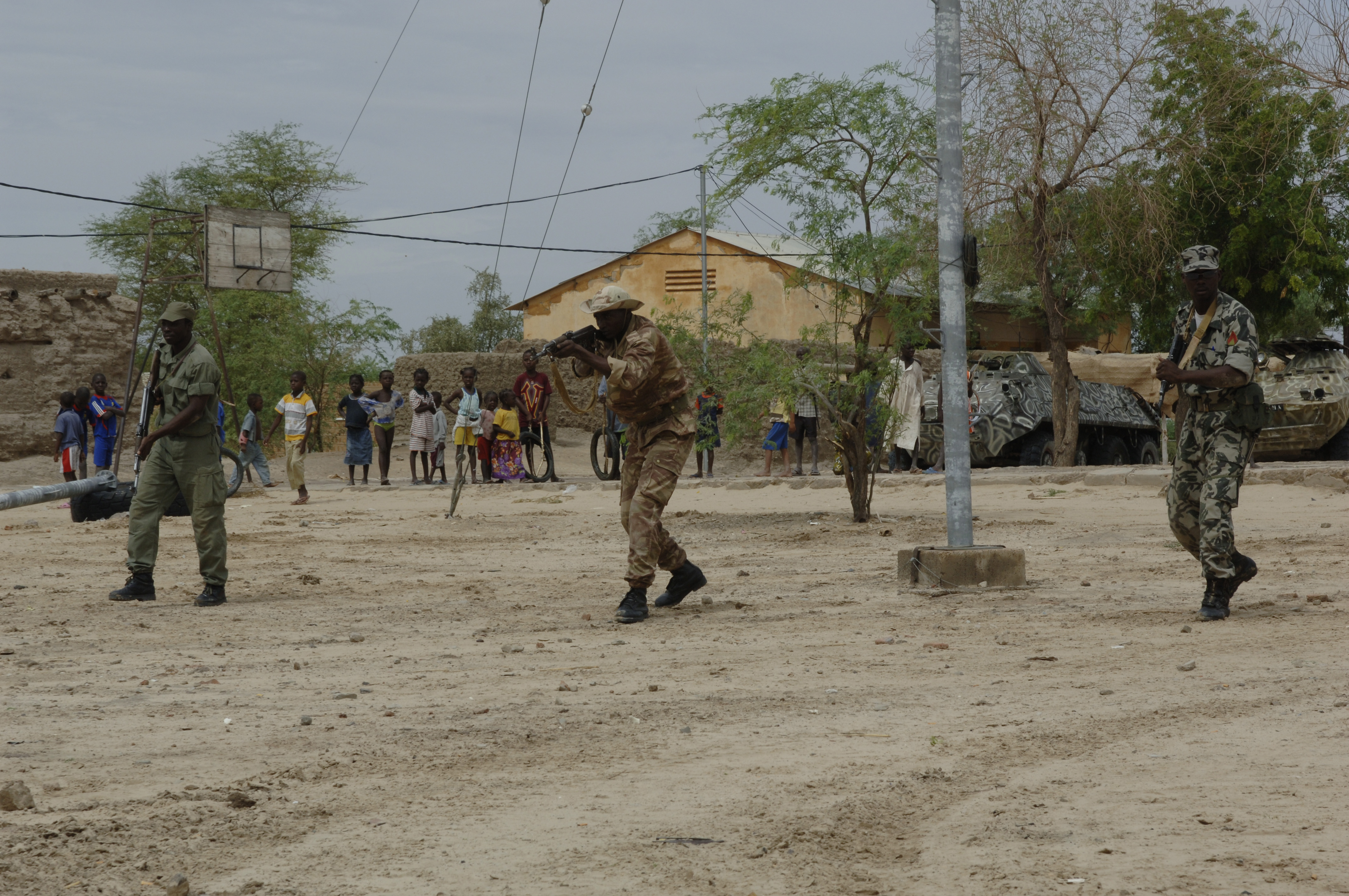
It was the rainy season. In the morning, everyone is in the fields to cultivate. An old man testifies that he lost four sons, aged 14 to 24, all killed in his own field. The survivors count at least 48 civilian deaths.
A toll of 48 dead, no official reaction
Forty-eight dead is the count from the villagers, unconfirmed by independent sources — it is likely underestimated. Neither the army nor the transitional government has reacted publicly. A security source only confirmed the attack on the mining convoy, without a word about the aftermath. The silence from Ouagadougou is in itself information: regarding the blunders, Captain Ibrahim Traoré's junta does not comment, waiting for the controversy to die down.
The Nondin precedent, the Traoré method
This process is not isolated. In February 2024, after a series of jihadist attacks near Ouahigouya, the army and its auxiliaries killed more than 223 people in Komsilga, Nondin, and Soro. Human Rights Watch documented at least 1,837 civilians killed between January 2023 and August 2025, with at least 1,255 attributed to the army and its Russian auxiliaries, and described the targeting of the Fulani community as a war crime. In Dori, the presumed victims were not planting bombs: they were cultivating their fields.
From Nondin to Alkoma, the scenario repeats: a jihadist attack, then the army turning against the civilians.
The strategic gift to JNIM
From a strictly operational point of view, this massacre is a victory for JNIM. Every peasant killed by the army is a recruitment argument for the jihadists, who have presented themselves for years as the protectors of communities against a predatory state. Collective punishment empties the villages, destroys the network of informants on which all counter-insurgency depends, and pushes young survivors towards the only camp that seems to offer protection and income: that of JNIM.
The logic is what I saw at work in Mali between 2016 and 2019: an army striking the population it claims to protect, villages tipping over, an insurgency spreading. The transitional regime abolished political parties in January, eliminated civil channels of dissent, and now allows its forces to settle their failures on the peasants. It is creating the very conditions for the jihadist expansion it claims to combat.
The gold route, a strategic issue
The economic stakes worsen the picture. Essakane is the largest gold mine in the country, one of the few sources of revenue still supporting a drained state. Every convoy that supplies it is a target; every ambush costs soldiers and billions of CFA francs in escorts, fuel, and risk premiums. If the junta chooses to respond to IEDs with blind reprisals, it transforms a logistical route into a machine for producing insurgents.
The rainy season temporarily masks the extent of the disaster: the laterite tracks will remain muddy until October, and search operations will be limited to passable routes. But when the tracks dry, the army will have to choose: escort the fuel to Essakane, or avenge its dead in the villages. It cannot do both. JNIM, on the other hand, does not have this dilemma.
On August 4, the Burkinabè army retaliated against villages near Dori after an ambush on a supply convoy to the Essakane gold mine, resulting in approximately 48 civilian deaths. The ambush, attributed to the JNIM, also caused the deaths of 10 soldiers and injuries to 15 others. Following the attack, soldiers accused local villagers of collaborating with jihadists, leading to further violence against the civilian population.
- 48 civilians killed in Dori after military retaliation
- 10 soldiers killed and 15 injured in the ambush
- The ambush was executed using an improvised explosive device (IED)
- The Burkinabè army accused villagers of complicity with jihadists
- The JNIM is actively targeting supply convoys in the region.