
524 Russian drones and 22 missiles open a new phase of long-range strikes on Ukraine in 2026
 Dmitri Volkov
524 Russian Drones and 22 Missiles Open a New Phase of Long-Range Strikes on Ukraine in 2026
The figure 524 looks almost bureaucratic: it can be entered into a table, compared with previous nights, and forgotten until the next morning's summary report. But it is precisely in this dryness that the military significance of the latest Russian strike lies. According to an AP report from May 18, Ukrainian President Volodymyr Zelensky stated that Russia launched 524 strike drones and 22 ballistic and cruise missiles at Ukraine overnight, attacking eight regions. Local authorities reported more than two dozen injured civilians, including children; the most severe destruction occurred in Dnipro and the Dnipropetrovsk region. This is no longer just another nighttime attack. It is a test of how many waves of air pressure the Ukrainian air defense system can withstand in succession.
The Strike on Dnipro Was Part of a Series, Not an Isolated Incident
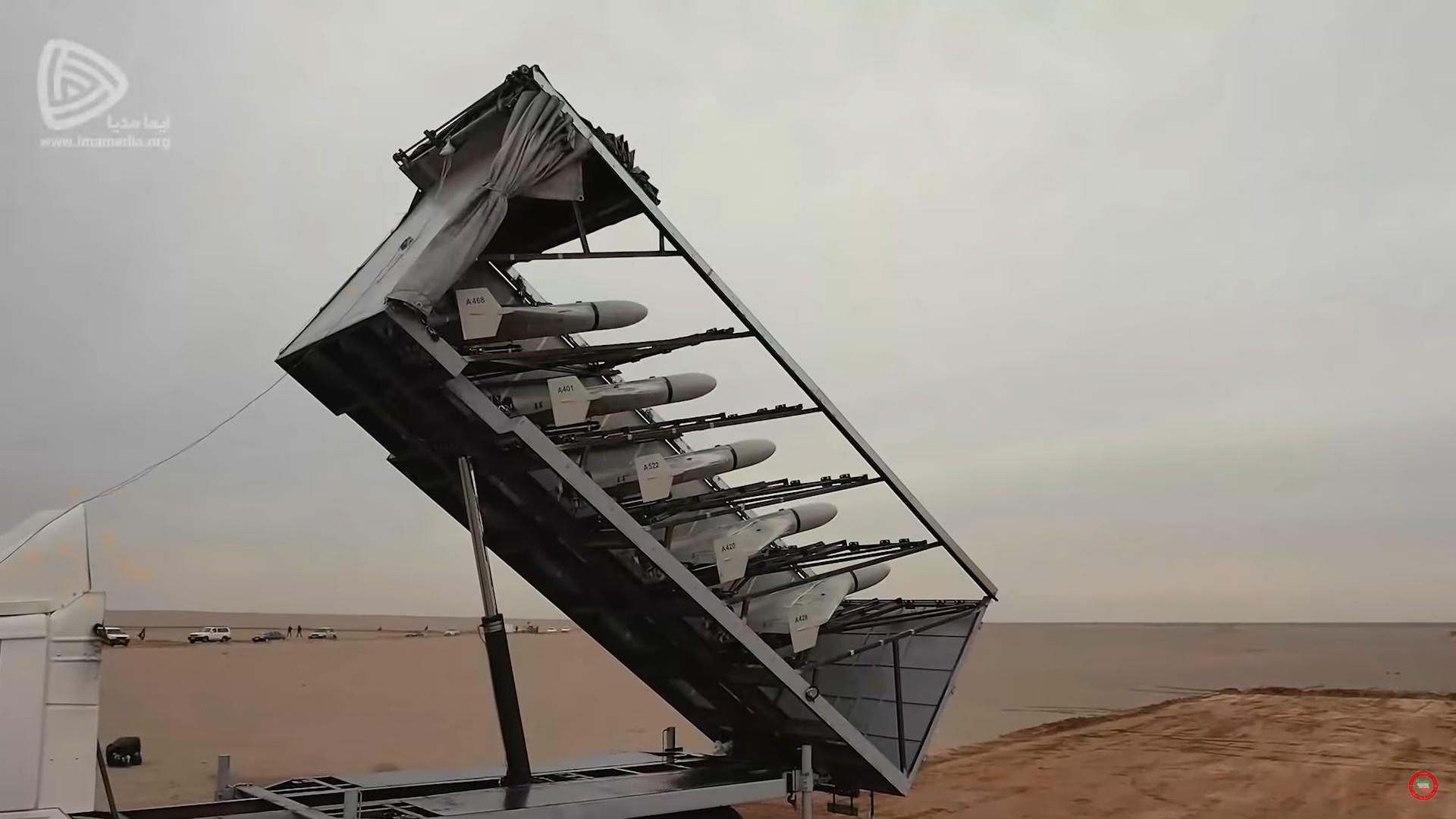
AP directly links this raid to a series of long-range strikes that have intensified in recent days, despite American diplomatic efforts. This is an important caveat. On the night of May 14-15, Russia had already delivered a heavy combined strike on Ukrainian cities; a residential building in Kyiv became a symbol of how Moscow is once again using missile-drone salvos not only against military infrastructure but also as a tool to pressure the political will of society. After this, on May 17, Ukraine, according to Russian data and Western reports, conducted one of the largest attacks on Russian territory, using 556 drones and additional long-range means. Now, the Russian response of 524 drones and 22 missiles shows that both sides have moved from a mode of singular demonstrative operations to a serial exchange of long-range strikes.
It is important to be precise here: this is not symmetry. The Russian army combines cheap strike UAVs like "Shahed"/"Geran" with more expensive cruise and ballistic missiles, trying to overwhelm air defenses with numbers, trajectories, and timing. Ukraine, on the other hand, primarily uses long-range drones against Russian oil refineries, pumping stations, microelectronics facilities, and military logistics. The Russian strike often has a greater explosive effect on cities; the Ukrainian strike more often creates an industrial and political effect in the rear of Russia. But the strategic logic has become common: each side is trying to prove that its long arm is longer than the opponent is willing to acknowledge.
Ukraine's Air Defense Becomes a Key Consumable Resource
The military objective of such a Russian raid is not limited to destroying a few targets in Dnipro. With 524 drones and 22 missiles, Moscow forces Ukraine to make an unpleasant choice: to spend expensive anti-aircraft missiles on relatively cheap targets, risk some drones breaking through to cities, or overload mobile fire groups to the limit. Even if a significant portion of the UAVs is shot down, the Russian calculation can be considered fulfilled if Ukrainian air defense units exhaust their ammunition, reveal their positions, and are forced to distribute their attention across eight regions simultaneously.
In the Soviet military school, this would be called not only fire defeat but also impact on the command system. The modern version is simpler and more cynical: night after night, the enemy must stay awake, turn on radars, redeploy groups with machine guns and MANPADS, expend Patriot, NASAMS, IRIS-T, or Soviet systems where the next strike may already be coming from a different route. Russia does not necessarily have to hit with every missile. It is enough for it to make Ukrainian defense expensive, nerve-wracking, and constantly incomplete.
Ceasefire Diplomacy Fails to Keep Pace with Escalation
The political backdrop makes the strike even more significant. American mediation has once again failed to create a sustainable ceasefire. In theory, Moscow could reduce the intensity of long-range strikes to show a willingness to negotiate. In practice, it does the opposite: it raises the stakes precisely when diplomacy calls for restraint. This is not random rigidity but an old Russian habit of negotiating under the noise of artillery, only now the artillery has been replaced by drones with ranges of hundreds of kilometers and missiles with varying flight times.
For the Kremlin, such a model is convenient. It allows for simultaneous talk of peace, punishing Ukraine for strikes on Russian territory, and demonstrating to the domestic audience that attacks on Moscow, Zelenograd, or energy facilities do not go unanswered. The problem is that the Ukrainian side is no longer limited to defensive patience. After the strike on May 17 against Russia, Kyiv showed that it can respond not symbolically but serially. Therefore, the diplomatic failure not only leaves the war in its previous state. It frees both sides from the need to at least simulate an operational pause.
Has a New Stage of the Spiral Begun?
My conclusion is cautious but firm: yes, we see signs of a new stage in the spiral of long-range strikes. Not because one night with 524 drones changes the war by itself. Such figures have already ceased to be incredible. The novelty lies elsewhere: large Russian strikes on Ukrainian cities, Ukrainian mass raids on Russian rear areas, and the failure of mediation now form a single cycle with a short reaction time. The sequence of May 14-15, May 17, and May 18 shows not a "response to a response" but the formation of a rhythm.
For Ukraine, the main risk is not only the destruction in Dnipro or Kharkiv but the arithmetic of air defense. If Russia is capable of regularly raising the bar to hundreds of drones per night and adding missiles for breakthroughs, Ukraine needs not individual batteries but an industrial flow of interceptors, radars, mobile fire groups, and repairs. For Russia, the risk is the opposite: each such strike legitimizes Ukrainian attacks on deeper and more sensitive targets in the Russian rear. The Kremlin has become accustomed to considering the depth of territory a strategic advantage. In 2026, this depth turns into a vast area that needs to be defended.
The war of long-range strikes is entering a phase where the question is no longer who can conduct a record night, but whose economy of air defense and drone production can withstand a month of such nights.
The next two weeks will be telling. If after the strike on Dnipro Russia maintains the pace, and Ukraine responds with new strikes on oil, electronic, or military infrastructure in the Russian Federation, May 2026 will go down in the history of the war as the moment when long-range strikes became not an exception but a regular language of strategic pressure. If, however, one of the sides takes a pause, it will not be a result of trust but a sign of a temporary consumable limit. In both cases, the ceasefire currently exists more in diplomatic formulations than in the night sky over Ukraine and Russia.
Sources
- Associated Press, May 18, 2026, Russia's drone and missile attack on Ukraine injures over 24 civilians.
- Associated Press Spanish service, May 18, 2026, Russia launches another drone and missile attack on Ukraine.
- The Guardian, May 17, 2026, reports of 556 Ukrainian drones over Russia and strikes on Russian infrastructure.
- Al Jazeera, May 15, 2026, reports on the heavy Russian strike on Kyiv and Zelensky's response.
- ISW Russian Offensive Campaign Assessment, May 17, 2026, context of long-range strikes and Ukrainian operations in the Russian rear.
On May 18, 2026, Russian Armed Forces launched a large-scale attack involving 524 drones and 22 missiles targeting Ukraine, particularly affecting Dnipro and Dnipropetrovsk Oblast. The assault resulted in injuries to over 24 civilians, including children, and is part of an ongoing series of escalated strikes between the two nations. This operation highlights the increasing pressure on Ukrainian air defense systems.
- Russia launched 524 drones and 22 missiles against Ukraine on May 18, 2026.
- The attack targeted eight regions, causing injuries to over 24 civilians, including children.
- Significant damage occurred in Dnipro and Dnipropetrovsk Oblast.
- This attack is part of a series of escalating long-range strikes between Russia and Ukraine.
- Ukrainian air defense systems are under significant strain due to the volume of attacks.