
PLA Southern Theater Command Upgrades Training Exercises on Huangyan Island: Air-Sea Coordination and Coast Guard Law Enforcement Form Dual-layer Control
 Li Minghui
PLA Southern Theater Command Upgrades Training Exercises Around Huangyan Island, Forming Dual Control with Air-Sea Coordination and Coast Guard Law Enforcement
On September 27, the PLA Southern Theater Command organized joint air-sea training exercises in the waters around Huangyan Island, with subjects including reconnaissance and early warning, rapid maneuvering, and joint search and rescue. On the same day, the China Coast Guard conducted law enforcement control drills in nearby waters, focusing on training for boarding inspections, interception of intrusions, and forced towing. The simultaneous emergence of these two pieces of news indicates that what is truly worth analyzing is not the "scale of the exercises," but rather the fact that military actions and coast guard law enforcement are placed within the same on-site control logic.
Shifting from Solely Cruising to Military-Police Coordination
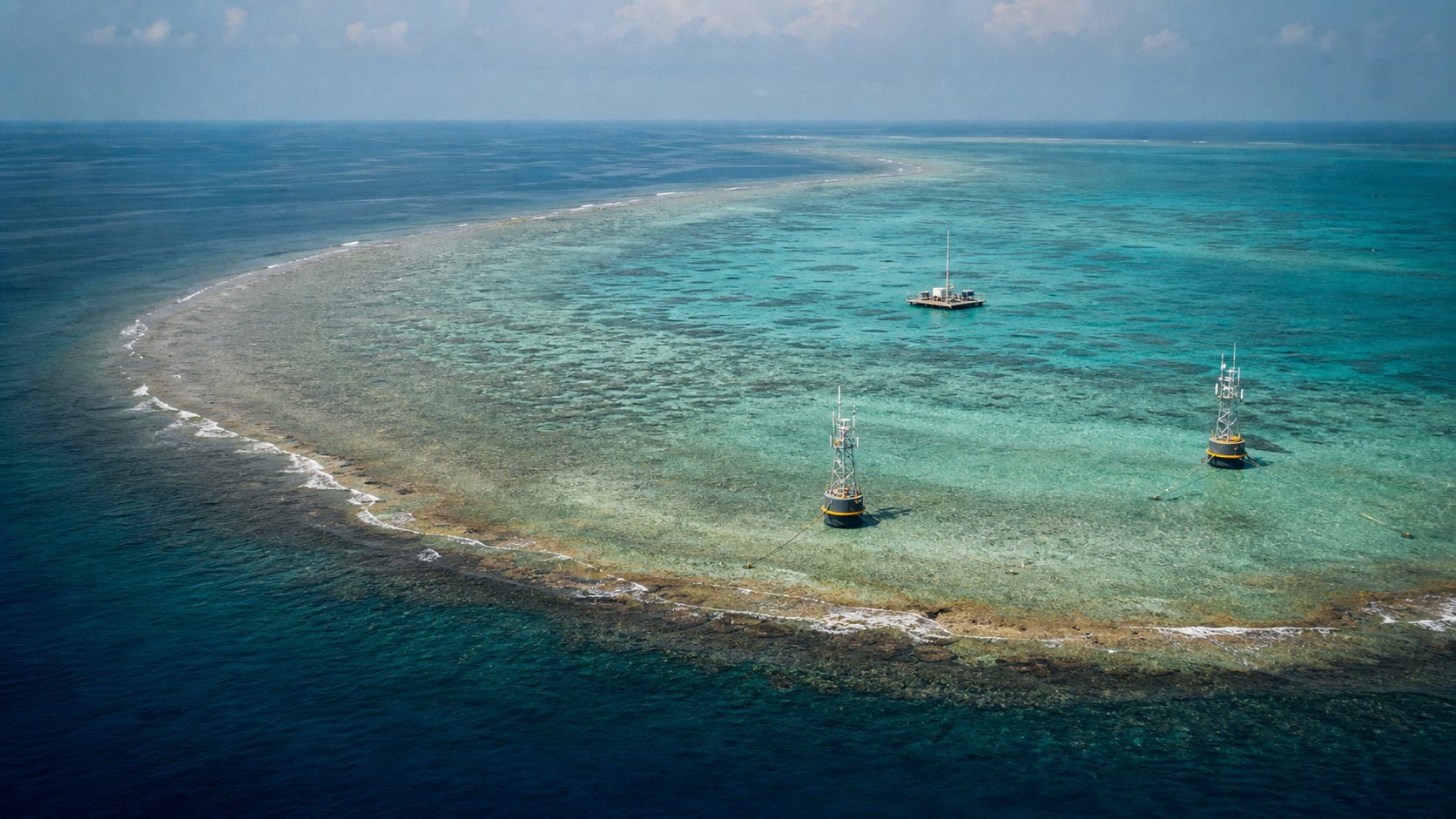
The public announcement did not disclose the number of participating ships and aircraft, specific maritime boundaries, or duration, so this activity cannot be simply packaged as a large-scale combat readiness operation. However, the subjects themselves have already revealed the training focus: reconnaissance and early warning address "who detects first," rapid maneuvering addresses "who can arrive first," and joint search and rescue provides a low-political-threshold collaborative subject. The coast guard's subsequent drills on boarding, interception, and towing imply that if a standoff occurs at the scene, the coast guard may take on frontline law enforcement, while the Southern Theater Command retains higher-level support and deterrence options.
Why Huangyan Island is Suitable for Testing This Mechanism
Huangyan Island is relatively close to the Philippines' Luzon Island and is located in a densely trafficked area for maritime routes and fishing activities, making it easy for law enforcement incidents to escalate from maritime collisions to diplomatic crises. Compared to directly deploying warships for high-intensity confrontations, coast guard leadership can frame actions as "law enforcement for rights protection"; however, the Southern Theater Command simultaneously maintains air and naval force activities, preventing adversaries from treating the incident as a routine coast guard dispute. In simple terms, this is a method of hiding military pressure behind a law enforcement facade, which is lower in cost and easier to sustain over time.
This arrangement resonates with the recent situation in the South China Sea. A report by the South China Morning Post in September mentioned that Chinese coast guard and navy vessels had previously prevented Philippine resupply operations near Ren'ai Reef; the Philippines is also promoting expanded maritime surveillance cooperation with the United States and other partners. Huangyan Island and Ren'ai Reef are not the same point of contention, but both locations illustrate one issue: the key to operations in the maritime gray zone has shifted from "whether there are ships" to "whether coast guard, naval aviation, shore-based command, and diplomatic narratives can be connected into a chain."
Three Limitations Beyond Capability Demonstration
- Limited Intelligence Transparency. The announcement did not specify what type of radar, drones, or vessels were used, making it impossible for outsiders to determine whether this was routine training or an impromptu exercise targeting specific objectives.
- Need to Control the Boundary Between Law Enforcement and Military Actions. Boarding inspections and forced towing are high-risk actions; if injuries or vessel damage occur, the speed of escalation at the scene may exceed the response speed of the command chain.
- Continuous Deployment Tests Logistics. There has long been a demand for maritime patrols, aerial vigilance, and resupply around Huangyan Island; short-term exercises do not equate to maintaining a high-intensity presence year-round. For the PLA, the real challenge is not deploying forces to the scene, but rather keeping them there stably.
The author believes that this exercise resembles a test of "regulated pressure" rather than a full mobilization before conflict. The Chinese side is demonstrating the ability to combine close control by the coast guard with long-range support from the theater command, while deliberately not disclosing excessive tactical details to retain flexibility for subsequent actions. The question is whether the Philippines will coordinate its next maritime resupply or patrol arrangements with allies, and whether both sides can establish a sufficiently reliable on-site communication mechanism. What truly needs to be observed is not how many ships appear near Huangyan Island next time, but which side first turns this collaborative mechanism into a routine rule.
Sources
- PLA Daily WeChat, reprinted by Tencent News, September 28, 2026, reporting on the Southern Theater Command's joint air-sea exercises around Huangyan Island and the China Coast Guard's law enforcement control drills.
- South China Morning Post Military Channel, September 27, 2026, and previous reports involving resupply operations at Ren'ai Reef, maritime standoffs in the South China Sea, and military communications between China and the U.S.
- China Military Network, the official military news portal and related public information.
The People's Liberation Army Southern Theater Command conducted joint military exercises near Huangyan Island on September 27, 2026, focusing on reconnaissance, rapid maneuvering, and search and rescue operations. Concurrently, the Chinese Coast Guard executed law enforcement drills in the same area, emphasizing a coordinated approach to maritime control. This dual-layered strategy aims to manage potential confrontations while maintaining military readiness in the South China Sea.
- PLA Southern Theater Command conducted joint military exercises near Huangyan Island.
- Chinese Coast Guard performed law enforcement drills in the same area.
- Exercises included reconnaissance, rapid maneuvering, and joint search and rescue operations.
- The activities indicate a shift towards military-police coordination in maritime operations.
- The report highlights the strategic significance of Huangyan Island in the South China Sea.