
NATO Eurofighter and F-35 Have Only 49 Days of Fuel Reserve — Europe's 2026 Energy Policy Endangers Air Power
 Dr. Klaus Weber
NATO Eurofighter and F-35 have only 49 days of fuel reserve — Europe's 2026 energy policy jeopardizes air power
The European air defense cannot be measured solely by the number of its Eurofighters, F-35s, and tanker aircraft. According to a study published on September 21 by the NATO Energy Security Centre of Excellence, NATO-Europe has only a fuel reserve of 49 days for the crucial aviation fuel. In a Article 5 scenario with significant North American reinforcements, military demand could exceed the available supply within the next decade. This is not a logistical detail, but a strategic limitation of alliance deterrence.
The invisible air power problem
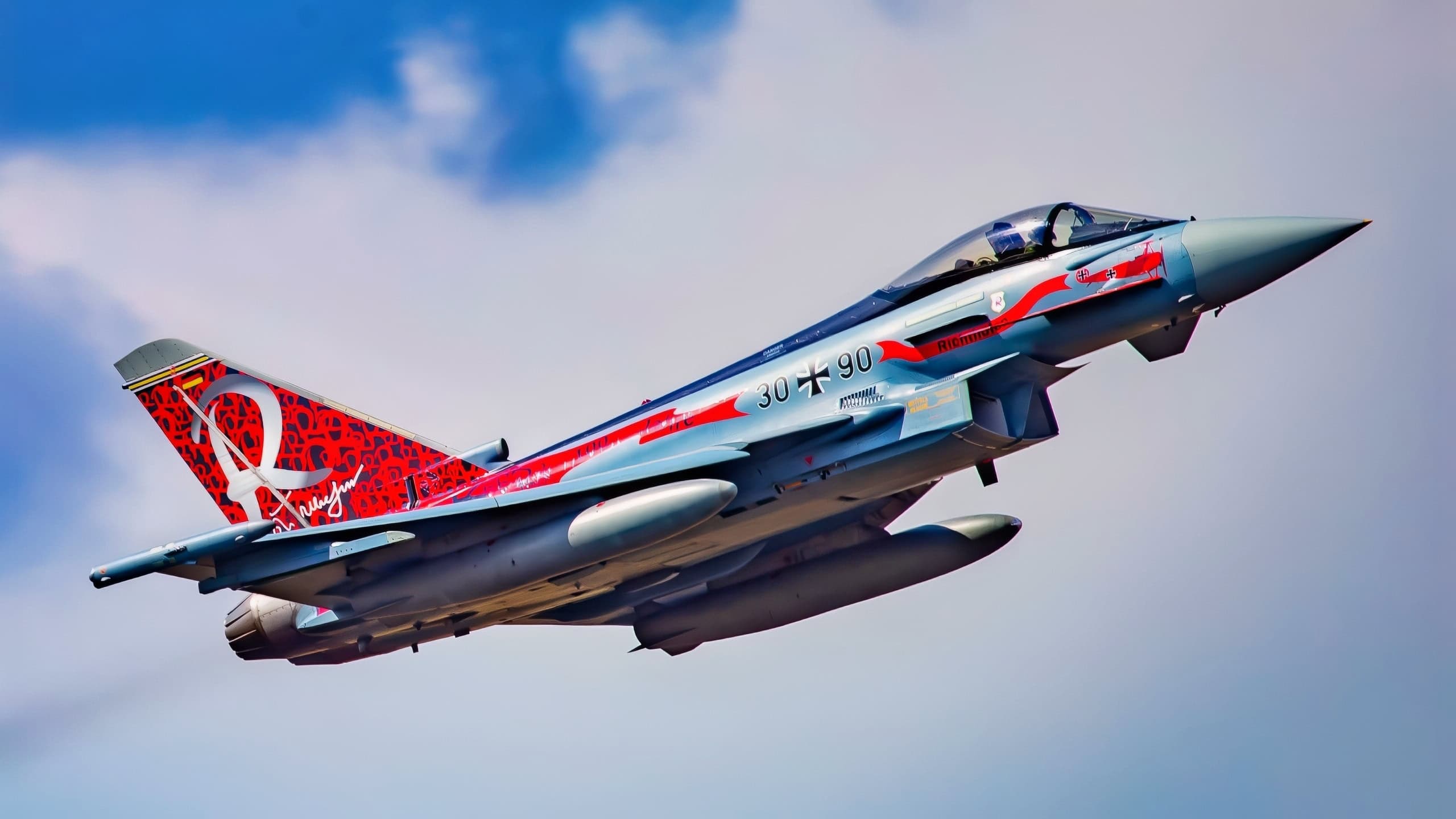
The study "Fuelling the Forces to 2050" examines 252 possible future scenarios and around 6,000 world years. Its result is nuanced: NATO-Europe can fundamentally supply its armed forces, but only under conditions that have not yet been politically fulfilled. Aviation fuel accounts for 60 to 72 percent of the military fuel mix in peacetime; in conflict, its share rises to 75 to 80 percent. This product is structurally scarce and has the shortest storage range.
The warning was sharpened publicly on November 11 by a report from Politico Europe. The crucial point is not that Europe's civilian aircraft and military jets will remain grounded tomorrow. Rather, the point is that today's industrial structure does not guarantee a longer high-intensity war. An air force can procure aircraft, train pilots, and modernize bases. However, without secured fuel quantities, this capability remains a line item in the defense budget.
The refinery disappears faster than demand
Europe's problem arises from the interplay of three trends. First, domestic refining capacity is declining, including complex facilities suitable for producing aviation fuel. Second, external suppliers have become more concentrated since the Russian invasion of Ukraine. Third, the civilian market is being reorganized by the energy transition, while military demand does not disappear at the same pace. The result is a paradoxical dependency: Europe's armed forces are supposed to become more resilient, but they are increasingly reliant on imports and civilian supply chains for the most critical air force fuel.
An analysis from the Hague Centre for Strategic Studies warns in the same direction. About half of the EU's aviation fuel imports come from the Middle East. This figure is not automatically a security risk; it becomes one as soon as maritime transport routes, refineries, or transshipment points come under pressure in a crisis. While the NATO Single Fuel Concept facilitates interoperability because many systems use the same fuel, it also amplifies the consequences of a shared bottleneck.
The energy transition is not the sole culprit
Nevertheless, the political debate threatens to go in the wrong direction. It would be analytically convenient to blame the energy transition for every military vulnerability. The NATO study describes a more complex picture. Alternative fuels can create additional production sources, thereby reducing dependence on fossil imports. The bottleneck lies in scaling: the available quantities are largely tied to civilian consumers in the long term, and European production does not automatically grow with military demand.
The real failure is therefore institutional. Defense ministries typically plan flight hours, procurement programs, and readiness separately from energy, industry, and transport ministries. The European Commission discusses supply security, NATO plans military mobility, and member states conclude national supply contracts. No one has sufficient jurisdiction over the entire chain from raw material through refinery to forward airfield. Increased defense spending does not automatically resolve this fragmentation.
What Europe needs to decide now
- The strategic fuel reserves must be measured not only according to civilian market rules but also according to Article 5 scenarios.
- Jet-capable refining capacities should be protected as critical defense infrastructure and, if necessary, temporarily stabilized through public procurement guarantees.
- Alternative fuels require military minimum quotas so that they are not completely bound by civilian contracts in a crisis.
- Imports must be geographically diversified, and NATO supply routes hardened against sabotage, cyberattacks, and blockades.
- The alliance states need coordinated protocols for a controlled reduction of civilian demand in wartime.
The European defense market has financing instruments with SAFE, EDF, and national rearmament programs. What is missing is the connection between these instruments and a binding fuel strategy. An Eurofighter without fuel is not an incomplete weapon system, but a decommissioned weapon system. That is precisely why fuel supply must be treated as a military capability and not as a downstream procurement issue.
Europe's air power may fail in a crisis not due to a lack of jets, but due to the infrastructure that allows them to take off at all.
The strategic consequence
The 49-day figure is not an exact countdown to the next war. It is a warning signal about the direction in which Europe's dependencies are moving. Those who only count platforms today underestimate NATO's operational reality. An F-35 squadron only enhances deterrence if fuel, spare parts, base protection, and supplies are available simultaneously. European defense policy has learned that money does not build factories. It must now learn that factories alone do not generate air power.
The question is therefore not whether Europe should abandon its energy policy in favor of defense. The question is whether it can institutionally bring both together. If not, Europe's "strategic autonomy" will end at an unremarkable point: not with a missing combat jet, but with an empty fuel depot.
Sources
- NATO Energy Security Centre of Excellence, Fuelling the Forces to 2050, September 21, 2026
- Politico Europe, “Europe risks running short of jet fuel in a major war”, November 11, 2026
- Hague Centre for Strategic Studies, Building Europe’s alternative fuels industry for military resilience, 2026
- Euronews, “EU defence chief warns of fuel crunch if Europe goes to war”, October 28, 2026
NATO Europe faces a critical fuel shortage, with only 49 days of jet fuel reserves available for military operations. The study indicates that military demand could surpass supply in the coming decade, jeopardizing operational readiness. Current dependencies on imports and political fragmentation complicate the situation, highlighting the need for a cohesive fuel strategy to support military capabilities.
- NATO Europe has only 49 days of jet fuel reserves.
- Military demand for fuel may exceed supply within the next decade.
- The study identifies a critical dependence on fuel imports for military operations in Europe.
- The current industrial structure does not guarantee sustained high-intensity warfare capabilities.
- Political and logistical fragmentation hinders effective fuel supply management.