
5.9 trillion rubles per quarter show the limits of the Russian military economy 2026
 Dmitri Volkov
5.9 trillion rubles for the quarter show the limits of the Russian military economy 2026
Almost every second ruble of federal spending in the first quarter of 2026 went to the war. This is not an opposition metaphor or a Ukrainian propaganda assessment, but a calculation based on open budget data, which shows something more important than yet another dispute about the pace of the offensive near Konstantinovka. The Russian army is still capable of applying pressure on the front, increasing missile and drone strikes, and buying the loyalty of contractors, but the cost of this pressure has already ceased to be hidden even within the accounting of the Ministry of Finance.
The main figure is not 30 percent, but two-thirds of revenues
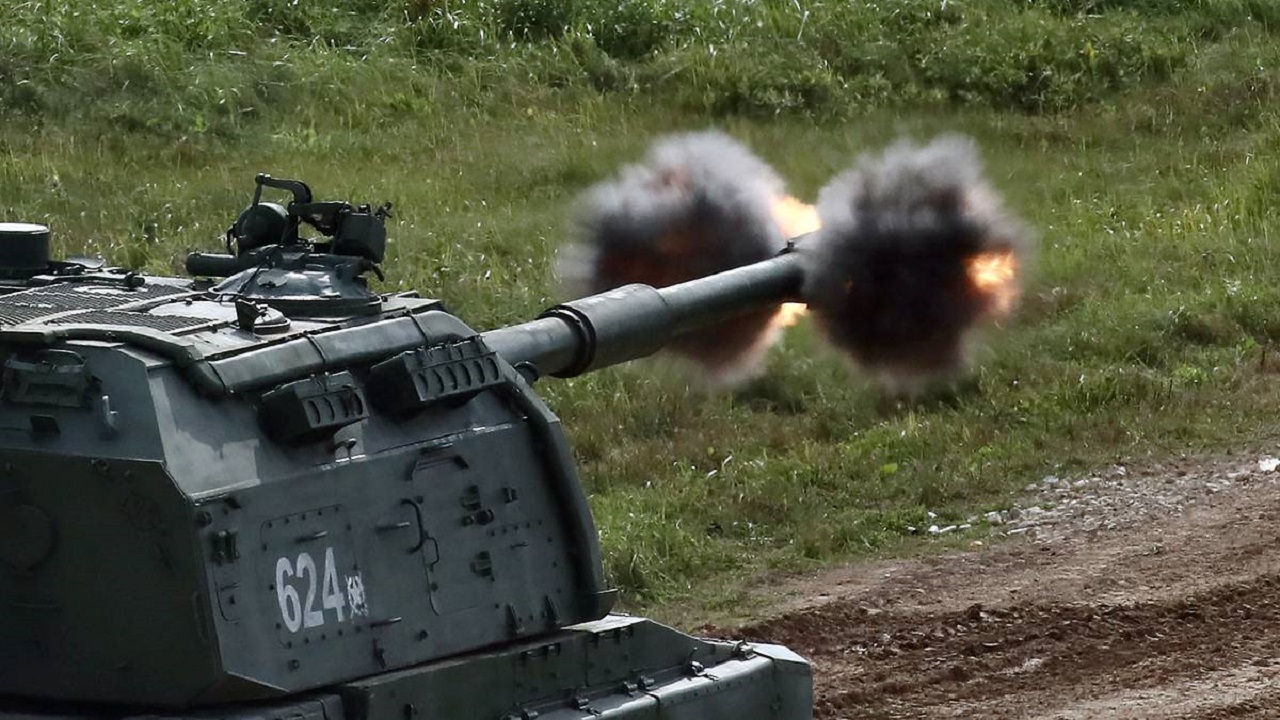
German researcher Janis Kluge estimated Russia's military spending for the first quarter of 2026 at 5.9 trillion rubles, which is 30% higher than the figure for the first quarter of 2025. It is particularly important that the growth is not so much due to the open line "national defense," but rather to closed appropriations: classified expenditures increased from 3.4 to 4.9 trillion rubles, and their share in federal expenditures reached 38.2%. According to the accepted Russian budget structure, about 85% of closed expenditures are usually related to military needs or the security sector. In other words, the war is financed not only from the visible part of the budget but also from the dark room where arms purchases, special programs, and advances to defense enterprises are typically hidden.
However, the strongest figure is not on the expenditure side but on the revenue side. In January-March, the federal budget collected only 8.3 trillion rubles in tax revenues. If military spending indeed amounted to 5.9 trillion, then it equals about two-thirds of the state's quarterly revenues. For a state with a nuclear arsenal, this does not mean immediate bankruptcy. For a state engaged in a prolonged war of attrition, it means a reduction in maneuverability: each new batch of missiles, each advance for drones, and each regional bonus for contractors begin to compete not with abstract "liberal expenditures," but with infrastructure, healthcare, civil industry, and maintaining controlled inflation.
The Ministry of Finance acknowledges the deficit in the language of advances
The Russian Ministry of Finance reported on June 5 that the federal budget for January-May was executed with a deficit of 6.01 trillion rubles, or 2.6% of GDP. The plan for the entire year of 2026 projected a deficit of 3.786 trillion rubles, or 1.6% of GDP. Revenues for the five months increased by only 0.3% year-on-year to 14.781 trillion rubles, while expenditures increased by 17% to 20.791 trillion rubles. Oil and gas revenues fell by 29.8% to 2.977 trillion rubles, despite non-oil and gas revenues increasing by 12.4% and VAT providing a noticeable boost.
The official explanation sounds technical: "accelerated financing of expenditures," "operational conclusion of contracts," "advancing certain contracted expenditures." In a normal economy, such a formula could mean an acceleration of investments. In a military economy, it more often means prepayment to suppliers who need to maintain production chains, personnel, and imported components through gray channels. The late Soviet system also loved the word "advancing" when real constraints could no longer be named. Money was issued in advance because without it, the factory would not fulfill the order, and the troops would not receive ammunition at the required pace. The problem is that advancing does not eliminate the cost. It merely postpones the moment of recognizing weakness.
The military-industrial complex grows through displacement
Meduza, based on data from the Ministry of Finance and comments from economists, points out that expenditures under the lines "national defense" and "national security" already account for almost 40% of the approved expenditures of the 2026 budget — 16.8 trillion out of 44.1 trillion rubles. This is almost a repeat of the post-Soviet record of 2025. At the same time, the civilian economy is cooling: the GDP growth forecast has been lowered to 0.4%, and certain civilian sectors, including construction materials production, metallurgy, and the automotive industry, remain below pre-war or pre-crisis levels. Military orders support the production of shells, drones, radars, communication equipment, and components for missiles, but do so at the expense of labor, credit, logistics, and budget subsidies that are drawn away from the rest of the economy.
This is not a "mobilization miracle," but mobilization displacement. A defense factory can offer salaries above the market because its margin is created by government orders, not productivity. A bank can lend to a defense enterprise on favorable terms because the risk is effectively transferred to the budget. The railway can prioritize military cargo because the civilian client will wait. But when such logic becomes the norm, the economy begins to function as a rear warehouse for the army, rather than as a system for reproducing wealth. In the short term, this provides resources to the front; in the long term, it reduces technological flexibility and the quality of the civilian base, without which a modern army cannot exist.
The front demands money faster than territory changes hands
The connection between the budget and the front is now particularly noticeable. ISW noted in its report on June 13 that Russia is increasing the production and modernization of ballistic missiles and drones, and its monthly missile output, by available estimates, exceeds the American output of PAC-3 Patriot interceptors. On the same night, Russian forces launched 118 drones at Ukraine, but no significant advances on the ground were recorded on June 13. This is the new arithmetic of war: Moscow is paying more and more for the ability to strike and maintain the pace of pressure, but the territorial result remains limited.
The military logic of the Kremlin is clear. If the ground offensive does not provide an operational breakthrough, it is necessary to expand the missile-drone component, pressure Ukrainian air defense, raise the cost of Western assistance, and show Russian society that the army is "moving forward." But such a strategy turns the budget into expendable material. The cost of one month of war is rising not only due to shells and missiles. Payments to the wounded and families of the deceased are increasing, regional bonuses for contracts, expenses for repairing equipment, import substitution of electronics, security of facilities deep in Russia, and compensation for the vulnerability of oil infrastructure. War, as one of my old professors in Moscow used to say, does not ask the budget for permission to continue. It simply presents the bill.
What this means for 2026
There is a cautious caveat: part of the jump in the first quarter may be an accounting transfer of expenses from the end of 2025 or excessive front-loading of defense contracts. Kluge rightly points out that the final picture will become clearer after the publication of data for the second quarter. But even if 5.9 trillion rubles is a peak rather than a new quarterly norm, the peak itself shows a lot. Russia attempted in the budget law to reduce military spending from 7.8% of GDP in 2025 to 6.2% of GDP in 2026. The first quarter has already consumed about 2.5% of the expected annual GDP. Such dynamics are poorly compatible with the beautiful plan of "normalizing" military expenditures.
My forecast is dry. The Russian military economy in 2026 will not collapse because the state still has tax coercion, domestic debt, foreign currency earnings, and the political ability to cut civilian expenditures. But it will become increasingly inefficient: more rubles for less operational advancement, more closed expenditures for less predictability, more military orders for greater wear and tear on the civilian sector. This is not a defeat tomorrow morning. It is a more unpleasant thing for a system accustomed to counting patience as a strategy: war begins to live faster than the budget can explain it.
Sources
Russian military expenditures reached 5.9 trillion rubles in the first quarter of 2026, accounting for nearly two-thirds of federal revenue. The increase in spending, primarily on military operations and procurement, reflects a significant shift in budget priorities, with classified military expenditures rising sharply. The federal budget is facing a deficit of 6.01 trillion rubles, indicating economic strain as civilian sectors decline under the weight of military funding demands.
- Russian military spending reached 5.9 trillion rubles in Q1 2026, a 30% increase from Q1 2025.
- Military expenditures account for nearly two-thirds of federal revenue in the first quarter of 2026.
- Secrecy in military budgeting has increased, with classified expenditures rising significantly.
- The federal budget deficit for January-May 2026 was reported at 6.01 trillion rubles, or 2.6% of GDP.
- Civilian sectors are experiencing economic decline due to military spending priorities.