
613 Drones Over Moscow and Strikes on Ships — Russian Air Defense Entered a New Mode of War
 Dmitri Volkov
613 drones over Moscow and strikes on vessels — Russian air defense has entered a new mode of warfare
The figure of 613, announced by the Russian side after the night attack on October 29, is more significant than individual reports of damage. Even if considered an upper estimate, this is no longer about a one-time raid, but an attempt to overload the capital's defense with the number of targets. According to Reuters and Al Jazeera, Russian authorities reported a massive launch of drones towards Moscow; Mayor Sergey Sobyanin stated that 231 drones were destroyed on approach to the city, while the rest, he claimed, were intercepted at distant borders. The Kyiv side has not publicly confirmed all the details of the operation, so the figures provided should be considered announced rather than definitively verified.
Saturation threshold for Russian air defense
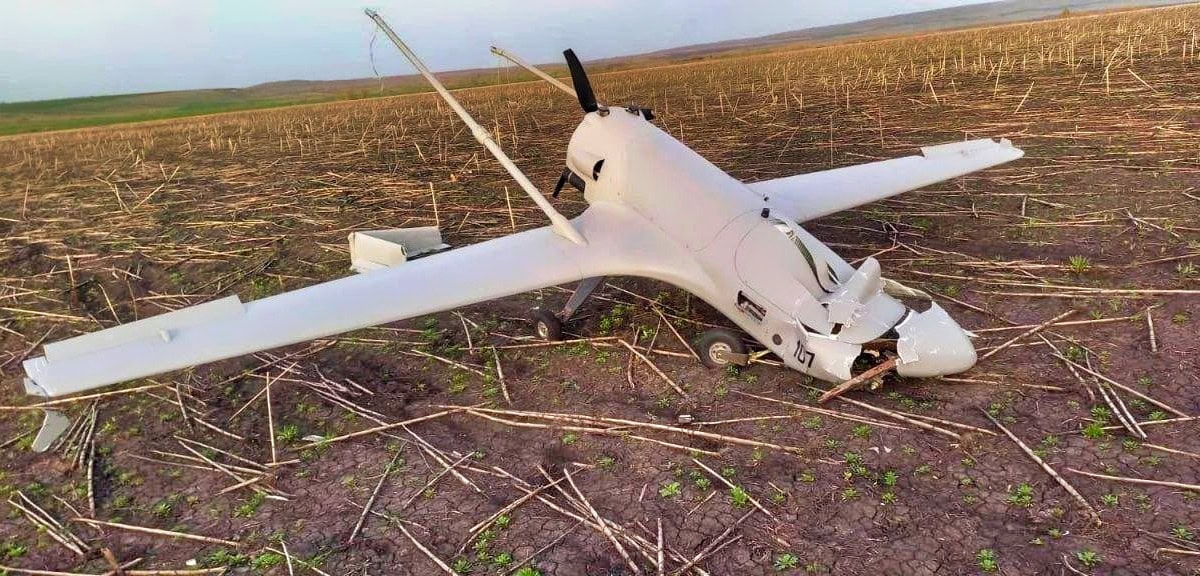
The Russian air defense system has traditionally been built around an echeloned architecture, where long-range systems protect command nodes, while medium and small assets cover the last kilometers. However, this scheme is designed for a limited number of high-value targets. A mass raid of cheap UAVs changes the interception economy: an expensive missile may be tactically justified against an aircraft, but becomes problematic if it has to be used against a device worth several tens of thousands of dollars. This is where the so-called "collapse of air defense," often discussed on social media, is not evident; rather, it is a structural overload.
Al Jazeera reminds us that in September, Russian authorities reported more than 1,600 drones shot down in one wave of attacks on the Moscow region. Comparing these two episodes shows a consistent trend: Ukraine is gradually turning long-range drones into a tool to compel Russian command to continuously expend munitions, alert fighter jets, electronic warfare assets, and security reserves. For Moscow, this means the need to defend not only the front but also the vast depth of the country.
From airfields to ports and trade routes
Almost simultaneously, the Russian Ministry of Defense announced a strike in the Black Sea on a cargo ship that allegedly carried supplies for the Armed Forces of Ukraine. Independent confirmation of the nature of the cargo was not available at the time of publication. However, the mere fact of such a statement holds military significance. After drone attacks on commercial vessels and Turkey's warnings against further strikes on shipping, the Black Sea is increasingly transforming from a theater of coastal warfare into a zone of constant risk for civilian logistics (Reuters, October 28, 2026).
This expands Russia's strategy of pressure. Strikes on energy and railway nodes are aimed at the Ukrainian military economy, while demonstrating the ability to strike vessels should increase the cost of imports and military supplies through ports. However, such tactics have their limits. Moscow itself depends on the freedom of navigation, grain exports, and the operation of ports in the Sea of Azov: The Moscow Times reported the issuance of the first permits for grain vessels to depart after months of stoppage. In other words, Russia is simultaneously trying to use the sea as a weapon and restore its function as an economic corridor. These goals are poorly compatible.
Why this is happening before negotiations
The Kremlin announced that consultations between Russia, the USA, and Ukraine could take place in Abu Dhabi after November 4, with presidential aide Yuri Ushakov linking their prospects to the situation on the front (Meduza, October 28; New Voice of Ukraine, October 29). In Russian military logic, this is not a diplomatic pause but a period of raising the stakes. The side that hopes to improve the outcome of negotiations tries to enter them demonstrating the ability to inflict damage at a distance.
However, the massive raid on Moscow and attacks on vessels create a dual effect. They reveal the vulnerability of the Russian depth while simultaneously providing the Kremlin with an argument for tightening rhetoric. In response, Moscow demonstrates strikes on Kharkiv, energy facilities, and maritime logistics. This forms a spiral in which each side views escalation as a way to improve its negotiating position, even as it effectively reduces the space for compromise.
Military conclusion
The main result of October 29 is not how many drones were shot down. What matters more is that Ukraine was able to force the Russian defense system to operate simultaneously across multiple fronts — over the capital region, near industrial sites, and around maritime routes. Russia retains significant resources and can cover the most important targets, but can no longer provide equally dense coverage across all territory. This is a classic problem for a great power in a protracted war: geography becomes not an advantage but a cost for each new object of defense.
In the coming weeks, Moscow will likely intensify electronic warfare, fighter jet readiness, and pressure on port infrastructure. Kyiv, on the other hand, will strive to maintain the pace of long-range launches without turning them into symbolic raids without military effect. If negotiations take place after November 4, the parties will enter the room not from a position of achieved truce but after testing the opponent's ability to overload its defense. Russian air defense will endure, but the cost of its resilience will rise faster than official reports are ready to acknowledge.
Sources: Reuters (October 28–29, 2026), Al Jazeera (October 29, 2026), Meduza (October 28, 2026), The Moscow Times (October 28, 2026), New Voice of Ukraine (October 29, 2026), statements from the Ministry of Defense of the Russian Federation and Mayor of Moscow Sergey Sobyanin.
On October 29, 2026, Russian air defense forces engaged in a mass drone attack involving 613 drones targeting Moscow, with 231 intercepted. Concurrently, Russia struck a cargo ship in the Black Sea, allegedly transporting supplies for Ukraine. These actions reflect a strategic shift in Ukraine's approach to overwhelming Russian defenses and highlight vulnerabilities in Russia's military posture. Upcoming negotiations between Russia, the US, and Ukraine are anticipated to be influenced by these developments.
- 613 drones were launched towards Moscow during the attack.
- 231 drones were reportedly destroyed by Russian air defenses.
- Russia conducted strikes on a cargo ship in the Black Sea.
- The attacks indicate a shift in Ukraine's strategy to pressure Russian defenses.
- Negotiations between Russia, the US, and Ukraine are expected after November 4.