
73 missiles and 656 drones from Russia against Ukraine show the limits of the 2026 offensive
 Dmitri Volkov
73 missiles and 656 drones from Russia against Ukraine show the limits of the 2026 offensive
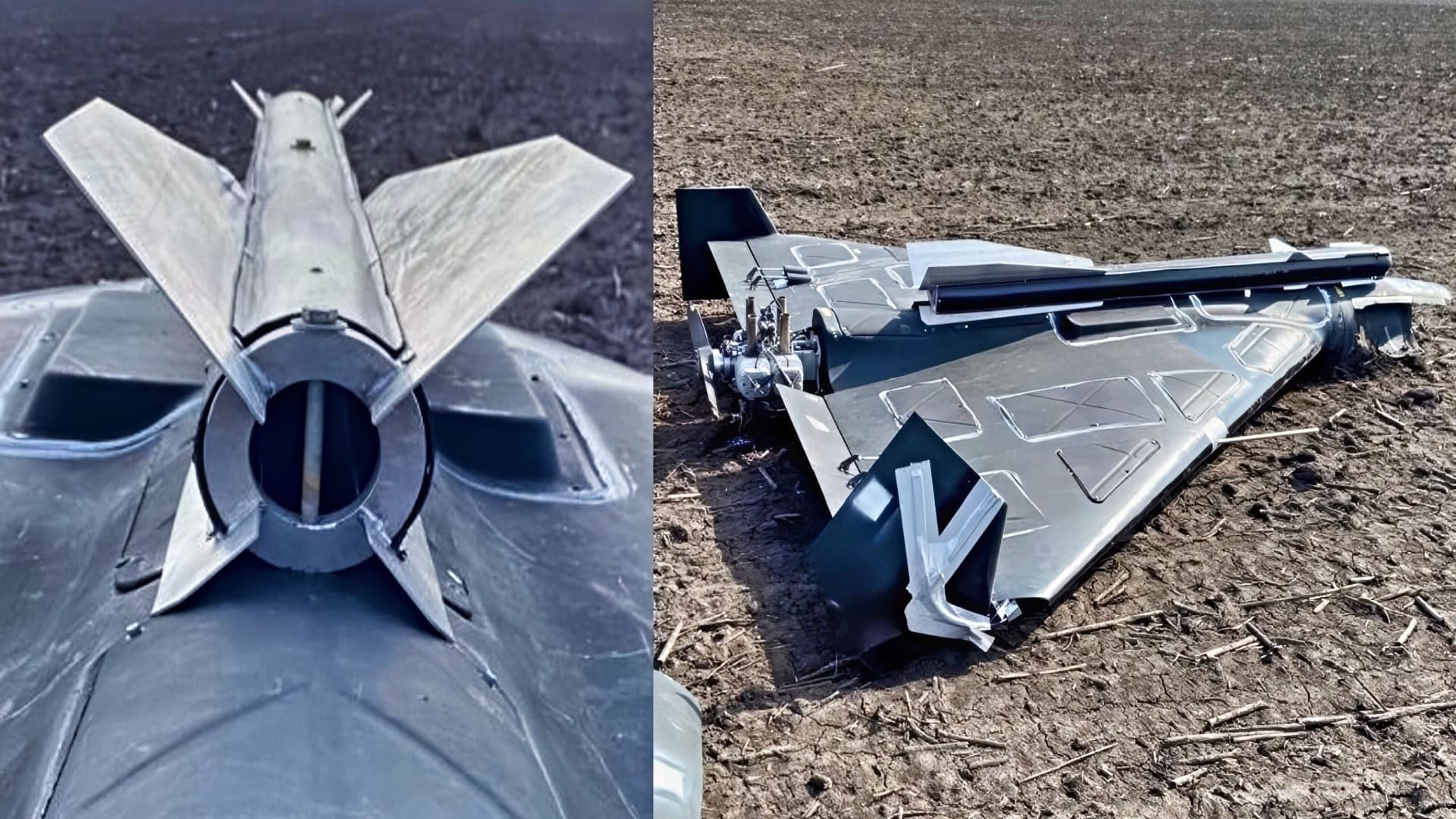
729 air attack assets in one night is not a sign of confidence from an army that is successfully advancing. It is rather a symptom of an army whose ground operation is stalled, while the political leadership demands a demonstration of strength. On the night of June 2, Russia used 73 missiles and 656 drones against Ukraine, including 33 Iskander-M ballistic missiles, eight 3M22 Zircon missiles, 27 X-101s, five Kalibrs, as well as Shaheds, Gerbirs, Italmas, Banderois, and decoy targets of the Parody type (data from the Ukrainian Air Force, published by Hromadske and Interfax-Ukraine, June 2, 2026). Ukrainian air defense reported intercepting or suppressing 642 targets, but the structure of the strike itself is more important than the interception percentage: Moscow gathered in one package cheap mass, ballistic speed, and a political signal.
Combined strike instead of maneuver
The classic Soviet school of operational art assumed that fire damage opens the way for maneuver. In June 2026, we see the reverse sequence: when maneuver does not yield results, fire damage becomes a standalone political-military product. The Guardian, citing an assessment from ISW and data from DeepState, notes that Russian troops in May made minimal monthly territorial gains since October 2023 — about 14 square kilometers, despite a 37.5% increase in assaults. If this figure is correct at least in order of magnitude, it shows an extremely poor "attack-result" ratio. The Russian army retains the ability to apply pressure, but is increasingly failing to convert that pressure into territory.
Hence the logic of the night of June 2. The Iskander-M with a quasi-ballistic trajectory, the Zircon with high speed, and the X-101 cruise missiles work not only against targets but also against the stock of Ukrainian interceptors. Le Monde directly links the strike to the shortage of Patriot PAC-3: among the systems supplied to Ukraine, the PAC-3 remains the main means against the Iskander-M and Zircon. Eight Zircons, according to Ukrainian reports, were not shot down; all were launched in two salvos from the directions of Crimea and the Kursk region. This is not a wonder weapon, as is often claimed in Russian talk shows. It is an attempt to find a weak spot in the enemy's defense and strike precisely where the cost of interception is higher than the cost of the political effect.
The economy of mass drones
The second part of the strike — 656 drones and decoy targets — explains why the Russian defense industry today appears heterogeneous. Tank and heavy armored vehicle production is constrained by metal, engines, optics, repair capacities, and old Soviet stockpiles. Drone production is growing differently: it is cheaper, more modular, and easier to scale through a network of enterprises, workshops, and contractors. Ukrainian News, citing Bloomberg, reports that the production of drones and related aviation systems in Russia increased by 117% year-on-year in April 2026, and plans for the year include 7.3 million FPV drones and 7.8 million combat units for unmanned systems. These figures should likely be read cautiously: a plan in Russian bureaucracy is often not a forecast but a form of political loyalty. But even if actual production is lower, the direction of resources is clear.
Here, the Kremlin acts rationally, albeit brutally. One Shahed or its Russian version does not replace an X-101 missile in terms of range, accuracy, and warhead mass, but it forces Ukrainian air defense to expend time, ammunition, and attention. Decoy targets of the Parody type add another layer: they do not need to destroy a target; they need to cause the radar and crew to make mistakes. In Soviet textbooks, this would be called the struggle for the resilience of the control system. In modern Russia, it is called more cheaply: saturation.
Why the strike is linked to St. Petersburg
The day after the massive Russian strike, Ukrainian drones hit an oil terminal in St. Petersburg and, according to Ukrainian claims, targets in the Kronstadt area, including infrastructure of the Baltic Fleet. AP reports that the drones traveled over 1000 kilometers, and the strike coincided with the opening of the St. Petersburg International Economic Forum. The Guardian also reports a fire on the Russian missile corvette Boykiy in the Kronstadt base area, although such information should be separated from confirmed satellite or independent data. In any case, the political effect has already been achieved: the war has returned to a city that the Russian authorities have become accustomed to presenting as a showcase of normalcy.
Peskov's formula about "systemic responses" after the strike on St. Petersburg sounds ominous, but in fact describes an already existing practice. Russia is not transitioning to a new strategy; it is tightening the old cycle: Ukrainian long-range strikes on oil and military infrastructure, Russian mass strikes on Ukrainian cities and targets, followed by a new wave of mutual exhaustion. The difference in 2026 is that Ukrainian long-range capabilities have become politically visible to the Russian elite. When smoke hangs over St. Petersburg during the forum, even the most disciplined television cannot fully manage the task.
The limits of Russian escalation
The main conclusion is unpleasant for both sides. Russia is still capable of delivering large combined strikes, and underestimating this capability would be a professional mistake. 33 Iskander-Ms in one night is a serious expenditure, but not a desperate last gasp. At the same time, such an attack shows limits: if a ground offensive yields 14 square kilometers in a month, air terror becomes a way to compensate for the lack of operational breakthrough. It destroys houses, warehouses, substations, and psychological resilience, but does not, by itself, capture the Donbas.
The Russian military machine, like the late Soviet one, knows how to create mass where technology allows for serial simplification. Drones are ideal material for such bureaucracy: they can be counted in millions, distributed through contracts, and shown in reports as growth. But war is not reduced to the schedule of Rosstat. If Ukraine retains the ability to strike at Russian oil logistics and simultaneously acquires a sufficient stock of anti-ballistic interceptors, the Russian strategy of "missile-drone pressure" will remain painful but not decisive. However, if the shortage of Patriot and other systems continues, the June salvo will become not an exception but a new norm of the summer campaign of 2026.
The history of the Russian army knows many examples when firepower was mistaken for strategy. This usually happened at moments when the command was afraid to admit that maneuver had exhausted itself.
Sources used
- Hromadske, June 2, 2026 — data from the Ukrainian Air Force on 73 missiles and 656 drones.
- Interfax-Ukraine, June 2, 2026 — structure of launches and data on 642 intercepted or suppressed targets.
- Le Monde, June 3, 2026 — analysis of the use of Iskander-M and Zircon against the backdrop of the Patriot PAC-3 shortage.
- Guardian, June 4, 2026 — assessments from ISW, DeepState, and information on the slowdown of Russian advances.
- AP, June 3-4, 2026 — strike by Ukrainian drones on St. Petersburg and the political context of the SPIEF.
- Ukrainian News citing Bloomberg, June 3, 2026 — growth of Russian drone production.
On June 2, 2026, the Russian Armed Forces launched a massive airstrike against Ukraine, deploying 73 missiles and 656 drones. The attack included Iskander-M and Zircon missiles, with Ukrainian air defense reportedly intercepting 642 targets. This strike coincided with a Ukrainian drone attack on Saint Petersburg, targeting oil infrastructure. The report highlights the ongoing military capabilities of Russia despite limited territorial gains.
- Russia launched 73 missiles and 656 drones against Ukraine on June 2, 2026.
- Ukrainian air defense intercepted or suppressed 642 targets during the attack.
- The strike included Iskander-M and Zircon missiles, targeting both military and psychological objectives.
- The attack coincided with a Ukrainian drone strike on Saint Petersburg, impacting oil infrastructure.
- Russian drone production has increased significantly, with plans for millions of units in 2026.