
74 missiles and 496 drones over Kyiv show the limits of Russia's pressure strategy
 Dmitri Volkov
74 missiles and 496 drones over Kyiv show the limits of the Russian pressure strategy
The figure of 496 looks impressive only until it is placed next to another figure: according to Ukrainian data, 476 long-range drones were shot down or suppressed by electronic warfare means on the night of July 2. This does not negate the severity of the strike on Kyiv, where, according to reports from city authorities and rescuers, at least dozens of people were killed and facilities were damaged in all districts of the capital. But for military analysis, this paradox is crucial: Russia throws almost five hundred drones and 74 missiles into a single night operation, yet still tries to achieve a decisive effect not with a mass of cheap "Geran" drones, but with those means that remain scarce, expensive, and politically significant — ballistic missiles and, likely, individual hypersonic items.
Mathematics of saturation
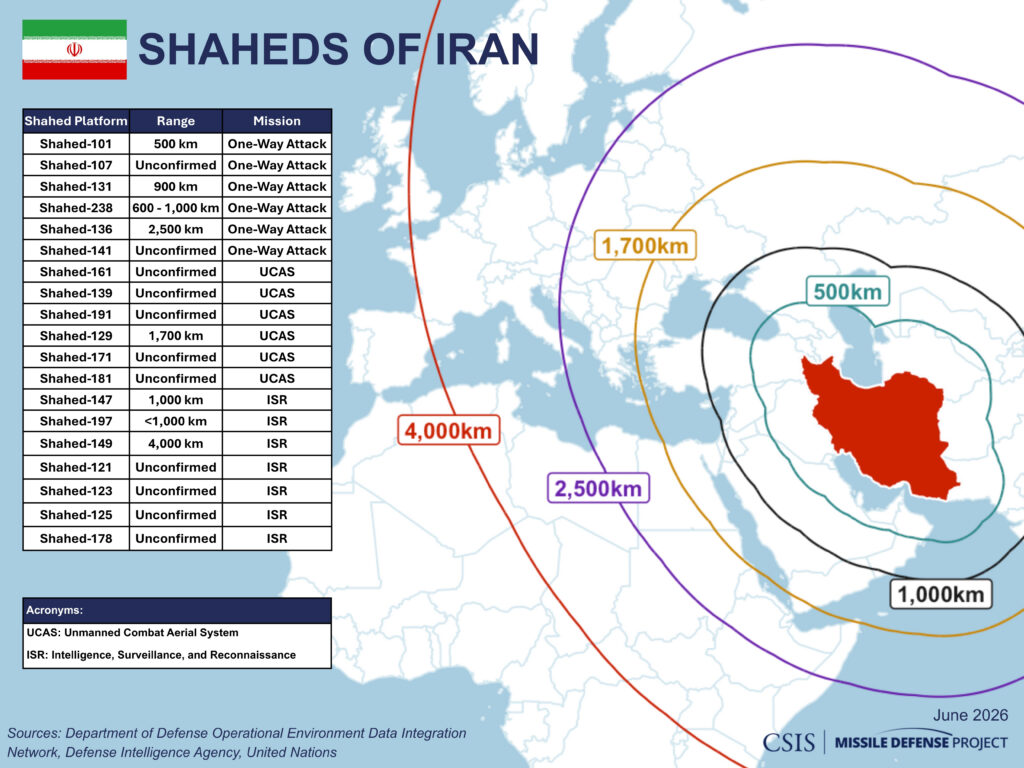
The Ukrainian Air Force reported that Russia used 74 missiles and 496 long-range drones; 48 missiles and 476 drones were shot down or suppressed, but 25 ballistic missiles and 12 drones hit 33 targets. A representative of the Ukrainian Air Force, Yuriy Ignat, separately noted that 28 ballistic missiles were launched at Kyiv — a record number for a single attack on the capital (Kyiv Independent, July 2, 2026). Here, we see not just escalation, but a well-rehearsed scheme: cheap and relatively mass-produced drones force the enemy to expend attention, guidance channels, mobile fire groups, and anti-aircraft missiles, after which the ballistic component tests the most expensive and narrow layer of defense.
In Soviet military terminology, this would be called creating a favorable breakthrough mode for air defense. In modern Russian practice, it looks less elegant and more accounting-like: if the probability of hitting a target with one expensive missile is insufficient, a cloud of cheaper decoy and strike carriers is built around it. A "Shahed" or Russian "Geran" does not have to destroy the target itself; it must force the Ukrainian air defense system to operate all night, revealing positions, expending resources, and making decisions under overload conditions. In this sense, almost 500 drones are not an independent weapon of victory, but expendable material for servicing a ballistic strike.
Why Peskov speaks of military targets
The official Russian version was predictable. Dmitry Peskov stated that the strike was retaliatory and was aimed only at military and military-related facilities; according to him, Moscow will continue to increase pressure on Kyiv to achieve its goals (TASS, July 2, 2026). The Russian Ministry of Defense, as reported by CNBC, described the operation as a massive strike with long-range precision weapons from air, ground, and naval platforms, as well as strike drones against defense industry enterprises, fuel and energy infrastructure, and military airfields.
The problem is not that military facilities in Kyiv and the region are absent. In a large warring capital, they certainly exist. The problem lies elsewhere: when using dozens of ballistic missiles and hundreds of drones against an urban agglomeration with dense residential construction, the assertion of "only military targets" turns into a formula for legal self-justification, rather than a description of the actual targeting process. Damaged residential buildings, hotels, institutes, energy infrastructure, and internet nodes reported by Ukrainian authorities show the cost of such a formula. It is familiar from the late Soviet language of Afghanistan: the less controllable the effect becomes, the more confidently the bureaucracy pronounces the word "precise."
Connection to Ukrainian strikes on oil refining
The Russian strike cannot be viewed separately from the Ukrainian campaign of long-range drone attacks on oil refineries and fuel infrastructure. The Associated Press counted over 50 attacks since late March on oil refineries, terminals, warehouses, and other oil facilities in Russia and occupied Crimea; oil processing in June, according to Energy Intelligence, fell by 25% year-on-year to 3.95 million barrels per day, while gasoline production decreased by 17%. About a third of Russian refining capacity, according to Macro-Advisory, is out of operation or working under restrictions.
This is why the word "retaliatory" in Kremlin rhetoric deserves attention. If the Russian army is indeed responding to strikes on oil infrastructure with a massive strike on Kyiv, then this is an acknowledgment of an unpleasant strategic dependency. Ukraine does not destroy the Russian war machine in one blow, but shifts the war into the realm of logistics, repair, fuel distribution, and political perception within Russia. Moscow responds where it retains an advantage — in missile stocks, long-range drones, and the readiness to strike capitals. This is not so much symmetry as it is compensation.
The cost for the Russian military machine
From a military perspective, such an operation has two limitations. The first is production-related. Over the past two years, Russia has increased the production of "Geran" drones, cruise and ballistic missiles, but each record strike consumes stockpiles that then need to be replenished under conditions of sanctions, shortages of precision components, and competition between the front, air defense, and long-range strikes. Official Russian production data is likely inflated or, more accurately, presented without indicating cost and bottlenecks. In military economics, not only the fact of product release matters, but also the price at which it appears in stock.
The second limitation is operational. If almost five hundred drones and seventy missiles lead to heavy destruction but do not break Ukrainian command, do not halt the capital's operations, and do not force Western governments to stop assistance, then the question arises about the effectiveness of the pressure. Poland raised its aviation, Finland temporarily imposed restrictions in its airspace, and European leaders again spoke of sanctions and strengthening Ukraine's air defense. In other words, the strike produces horror, but at the same time expands the political contour of the war. The Kremlin wants to demonstrate controlled power, but receives an additional argument for European militarization, which it then calls a threat.
What comes next
Most likely, Russia will continue such combined strikes in the summer: drone masses will be used as a screen, ballistic missiles as a breakthrough tool, and official rhetoric will speak of "military targets" regardless of the actual picture of destruction. Ukraine, in turn, will seek to expedite the delivery of Patriot and other interceptors; Zelensky has already stated that to repel an attack with approximately 70 ballistic missiles, at least 140 Patriot missiles are needed. This may be an inflated political formula, but it accurately describes the bottleneck of Ukrainian defense: not radars or will, but the availability of expensive interceptors at the right moment.
My cold forecast is simple. The Russian pressure strategy will continue as long as its industrial and political cost remains lower for the Kremlin than the cost of acknowledging the limitations of the war's objectives. But with each such strike, Moscow becomes increasingly dependent on the arithmetic of expenditure: how many drones can be gathered, how many ballistic missiles can be produced, how many components can be smuggled through gray channels, and how much destruction can be labeled as "military targets" before it stops convincing even its own bureaucracy.
On July 2, 2026, Russian forces conducted a massive strike on Kyiv, launching 74 missiles and 496 drones. Ukrainian Air Force reported intercepting 48 missiles and 476 drones, but 25 ballistic missiles and 12 drones hit 33 targets, resulting in civilian casualties and infrastructure damage. This operation reflects a strategic approach to overwhelm Ukrainian defenses while targeting military and civilian sites.
- Russia launched 74 missiles and 496 drones against Kyiv.
- Ukrainian forces intercepted 48 missiles and 476 drones.
- 28 ballistic missiles were fired at Kyiv, a record number for a single attack.
- The strike resulted in significant civilian casualties and damage to infrastructure.
- The operation is part of a broader strategy to pressure Ukraine.