
74 missiles and 496 drones over Kyiv show the new economy of Russian coercion
 Dmitri Volkov
74 missiles and 496 drones over Kyiv demonstrate the new economy of Russian coercion
The most important figure in the night strike on Kyiv on July 2 is not 496 drones and not even 74 missiles. What matters more is this: according to Ukrainian data, 25 ballistic missiles did reach their targets or impact areas, despite the interception of 48 missiles and the suppression or destruction of 476 drones. For military planning, this means unpleasant arithmetic. The Russian side is no longer required to achieve a breakthrough with the entire mass of strike assets; it is enough to overload the Ukrainian air defense system to the point where a few expensive and fast munitions can pass through a saturated, fatigued, and forced-to-choose defensive field.
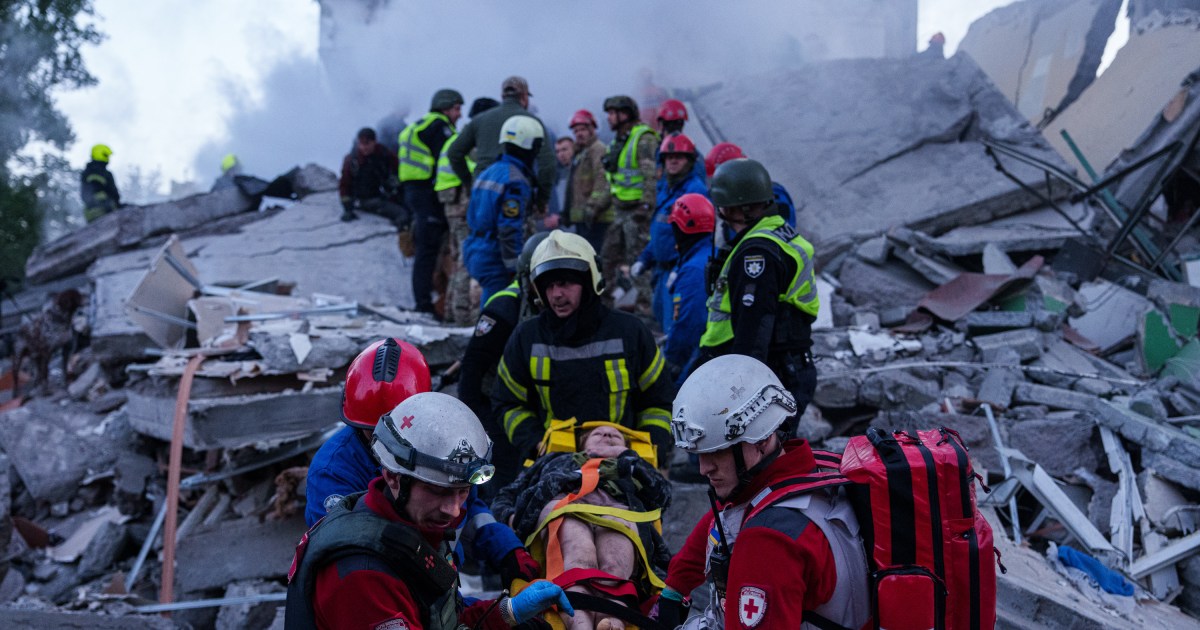
According to reports from Ukrainian authorities and Western agencies, the attack lasted more than 11 hours and unfolded in waves: first strike drones, then ballistic and cruise missiles, followed by a new wave of drones until dawn. The Kyiv Independent, citing the Ukrainian Air Force, provided the structure of the strike: 74 missiles and 496 long-range drones, of which 48 missiles and 476 drones were shot down or suppressed, but 25 ballistic missiles and 12 drones hit 33 locations. The BBC separately noted that 52,500 people, including 4,500 children, took shelter in the metro, and the strike also affected civilian infrastructure. The Russian Ministry of Defense, on the other hand, announced a massive strike on defense industry enterprises, fuel and energy facilities, and military airfields. This gap between the official narrative and urban reality has long been part of the war, but now the operational significance of such a gap is just as important as the moral one.
Cheap noise and expensive breakthroughs
The Russian scheme increasingly resembles not a classic missile operation of the Soviet type, where the emphasis was on a massive volley of high-precision or conditionally high-precision means, but an industrial model of exhausting air defense. The "Geran" and its derivatives do not have to be technologically advanced. Their task is to occupy radars, force crews to work for hours, reveal interception routes, burn resources of mobile groups, and provoke the expenditure of more expensive means where cheap interception is impossible. In this scheme, ballistic missiles become not just weapons of destruction, but a premium component of the package: they are launched when the system is already under pressure, and the reaction time is reduced to seconds.
If we take the Ukrainian estimate of 28 ballistic missiles aimed at Kyiv as a benchmark, then President Volodymyr Zelensky's political statement about the need for approximately 140 Patriot missiles to repel an attack of this class ceases to be rhetoric. This is a rough but useful ratio: against one large wave, a reserve is required that is measured not in units, but in hundreds of modern interceptors, because no air defense commander can know in advance which mark on the screen will pose a real threat to a residential area, airfield, or energy facility. The Russian General Staff understands this. The Soviet military school spoke of suppressing the enemy's command and fire systems; the modern Russian version does the same, but through the accounting of scarcity.
Why the June lull was not a pause
The ISW assessment for July 2-3 noted a metric that is easy to overlook: the frequency of major Russian missile and drone strikes in June decreased for unclear reasons, but Russia likely retained the capability for massive series. This is more important than daily reports of hits. The decrease in frequency could indicate the accumulation of munitions, a reconfiguration of routes, waiting for a political moment, or a combination of all three factors. In Russian practice, there is rarely a purely military solution without a political calendar. The strike on Kyiv followed against the backdrop of Ukrainian long-range strikes on Russian oil and military infrastructure, and the Kremlin immediately framed it as a "response." This formula is convenient: it explains the escalation to the domestic audience without revealing the real production limitations and operational goals.
There is no evidence here that the Russian missile arsenal is inexhaustible. On the contrary, the very composition of the strike shows the economy of expensive means through the mass use of drones. But it would be a mistake to draw a conclusion about weakness from this. The Russian defense industry, under sanctions, has not become a high-tech machine of the Western type; it has become a crude, costly, and sufficiently resilient machine of serial pressure. This is not the army that was advertised in the parades of the 2010s, but that is why it is dangerous: it relies less on beautiful models and more on repeatability, stockpiles, night shifts, and the ability to endure low efficiency for the sake of overall attrition of the enemy.
European strike contour
The reaction of Poland and Finland shows that the operation against Kyiv is no longer just a Ukrainian event. CNBC reported that Poland scrambled fighter jets and put ground air defense and radar reconnaissance on alert, while Finland temporarily restricted airspace in the eastern part of the Gulf of Finland. These actions do not mean an immediate expansion of the war, but they show the cost of the Russian strategy for NATO: each major strike forces neighboring states to expend resources of standby forces, check procedures, and live in a mode of potential error. For Moscow, this is also a form of pressure, especially if accompanied by hints of "provocations" and demonstrative uncertainty of trajectories.
In this war, Moscow increasingly buys not accuracy, but uncertainty. A drone that misses its target can still cause a radar to activate, a mobile group to deploy, and a night to be spent waiting for the next mark.
From a military-political perspective, the strike on July 2 was addressed to three audiences at once. For Ukraine, it demonstrated that the shortage of Patriot and other interceptors remains the main limiting factor for the defense of the capital. For the West, it reminded that delays in supplies turn into not an abstract risk, but into destroyed homes and overloaded metro stations. For the Russian audience, it was sold as retribution and as proof that the war is still under the control of the Kremlin. In this sense, the Russian information line does not cover the operation but is part of it.
What this changes for the coming weeks
Most likely, Russia will continue to alternate periods of accumulation with sharp massive waves. The targets will not only be defense industry enterprises, as Moscow claims, but also the very architecture of Ukrainian resilience: energy, logistics, communications, the morale of major cities, and the political nervous system of Western capitals. The more Ukraine strikes at Russian oil refineries and military facilities deep within the territory, the more the Kremlin will strive to demonstrate its ability for asymmetric response. But the asymmetry here is not in inventiveness, but in the scale of expenditure: Russia is willing to burn hundreds of drones for the sake of a few ballistic missiles getting through.
The Ukrainian response will depend not on the heroism of air defense crews — that has already been proven at too high a cost — but on the industrial discipline of allies. If interceptors, radars, and mobile counter-drone systems arrive late, the Russian "economy of coercion" works. However, if Ukraine gains the ability to build layered defense without constantly choosing between a city, an airfield, and a power plant, the effectiveness of Russian massive strikes will begin to decline. The Russian military machine survives on repetition. Its weakness will not manifest when one strike is successfully repelled, but when each repetition becomes more costly for Moscow than the last.
On July 2, 2023, Russian forces launched a massive airstrike on Kyiv, deploying 74 missiles and 496 drones. Despite Ukrainian air defenses intercepting 48 missiles and 476 drones, 25 ballistic missiles and 12 drones successfully struck 33 locations. The attack lasted over 11 hours, with civilians taking shelter in the metro as a precaution against the strikes.
- 74 missiles and 496 drones were launched at Kyiv.
- 25 ballistic missiles and 12 drones hit 33 locations.
- The attack lasted over 11 hours and occurred in waves.
- Ukrainian air defense intercepted 48 missiles and 476 drones.
- 52,500 people took shelter in the metro during the attack.