

Summary and Key Points: “Never tell people how to do things. Tell them what to do, and they will surprise you with their ingenuity.” George S. Patton put the rule in War As I Knew It, published in 1947, and Steve Balestrieri shows where it came from: the December 1944 pivot of Third Army 90 degrees across its own supply lines, with Patton promising Eisenhower three divisions in 48 hours at Verdun and then handing the how to his staff and division commanders, who put the 4th Armored, 80th and 26th on iced roads and reached Bastogne on December 26. The Army later wrote it into doctrine as mission command, and Netflix rediscovered it in 2009 as “context, not control.”
Never Tell People How: Patton’s Rule for Commanders and CEOs
US Army General George S. Patton never ran a company. However, he wrote one of the best management rules ever put on paper.
“Never tell people how to do things. Tell them what to do, and they will surprise you with their ingenuity.”
The line comes from the “Reflections and Suggestions” section of War As I Knew It, published in 1947, two years after Patton died following a car crash in Germany. It reads like something you’d find on a corporate break-room poster.
However, Patton wasn’t talking about team-building retreats. He was talking about leading and moving armies.
Say what you will about Patton’s temper, his profanity, or his conduct in Sicily. On how to get the most out of the people under you, he was decades ahead of the Army’s own doctrine. He’s still ahead of a lot of boardrooms.
Bastogne Was The Proof
The best example came in December 1944. When the Germans hit the Ardennes on December 16, Third Army was pointed east toward the Saar, preparing its own offensive. Patton read the situation early and had his staff start drafting contingency plans to halt that attack, pivot the army ninety degrees, and drive north into Luxembourg.
At the Verdun conference on December 19, Eisenhower asked how fast he could move. Patton told the room, “I can attack with three divisions in forty-eight hours.” Some in the room laughed. Nobody believed that he could disengage his Army in the Saar and move on the Germans that quickly.
Patton didn’t sit down and plot every road march, fuel point, and traffic control post himself. He gave his staff and division commanders the mission and trusted them to figure out the how.
They swung the 4th Armored, 80th Infantry, and 26th Infantry divisions north over iced, jammed roads in one of the coldest winters in memory. On December 26, Creighton Abrams’s 37th Tank Battalion broke through to the 101st Airborne Division at Bastogne.
A ninety-degree turn across your own lines of communication is about the hardest thing an army can do. It was among the finest pieces of staff work the US Army produced in any war. No micromanagement required.
The Army Wrote It Down Later
The Army eventually adopted what Patton practiced. Today it’s called mission command, and the updated ADP 6-0 rests on seven principles: competence, trust, shared understanding, mission orders, commander’s intent, disciplined initiative, and risk acceptance.
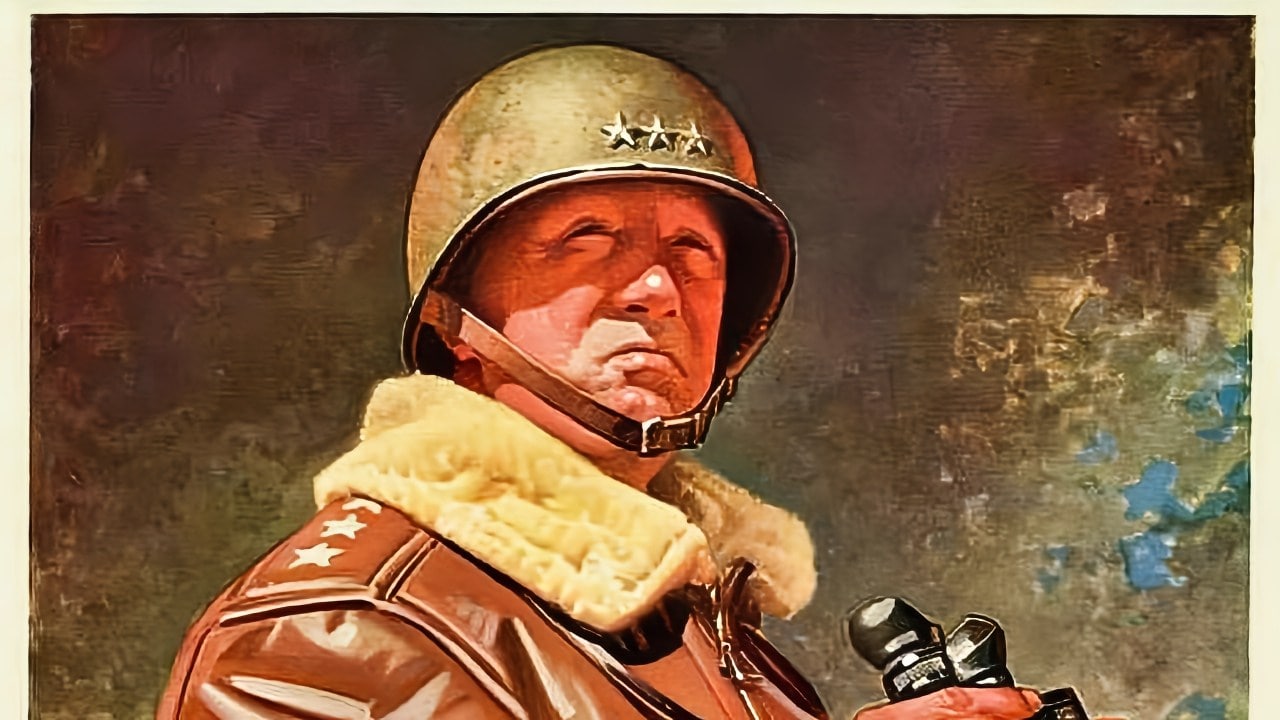
General George Patton. Image Credit: Creative Commons.
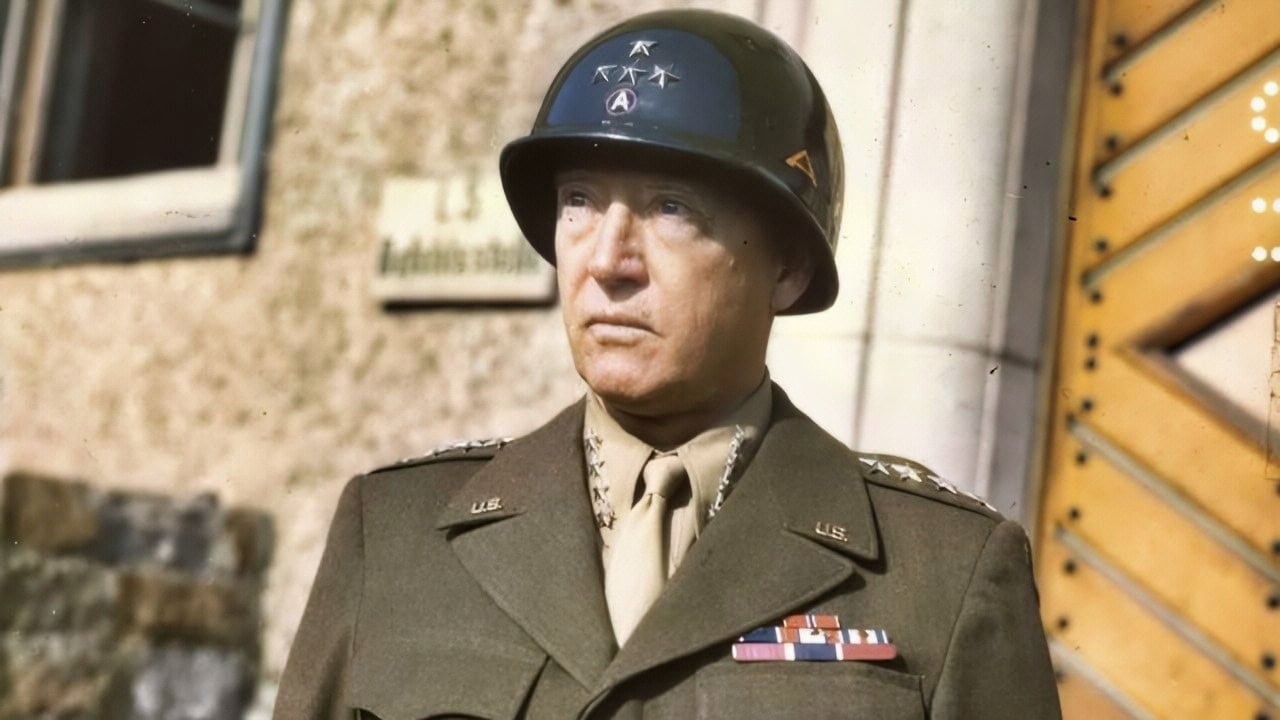
General George Patton U.S. Army Photo
At its heart is commander’s intent. The leader must tell his subordinates the purpose and the end state, then let them figure out the best way to accomplish the mission. When the plan falls apart, and it always does, a soldier who understands the intent can still get the job done.
This is the bread and butter of any operational plan at any level. The commander writes the plan. The unit can’t call headquarters for permission every time the situation shifts. The commander who tries to run an operation with a joystick gets one of two things. Paralysis, or a unit that quietly ignores him.
However, mission command only works if the leader has done the harder work up front. The commander has to train his people, know them, and trust them. Without that, “disciplined initiative” is just a phrase on a slide.
Silicon Valley Found Patton Without Knowing It
Corporate America took its time catching up. Netflix may be the best-known example. In 2009, Reed Hastings and Patty McCord put out the Netflix culture deck, and one of its core ideas was “context, not control.”

World War II Warplane 19FortyFive Photo Archive.
The current Netflix culture memo still expects managers to give their teams the context and clarity to make good decisions instead of trying to control everything themselves.
Swap “context” for “commander’s intent” and you could hand that memo to a battalion staff.
In No Rules Rules, Hastings and Erin Meyer walk through a case where Hastings set international growth as the priority, his content chief added that Netflix should take big risks in key markets, and a content acquisition manager decided on his own to buy an Indian animated series. Nobody upstairs signed off. That’s mission orders in a hoodie.

P-51 from WWII. 19FortyFive photo.
Stanley McChrystal, who ran JSOC during the worst of Iraq, brought the same lesson to the business world with Team of Teams. He called his approach “eyes on, hands off” and pushed authority down through what he termed empowered execution.
His rule of thumb was simple. If it advances the task force’s effort and it’s moral and legal, do it.
Patton Kept Tabs On Progress Without Micromanaging
None of this means letting people run wild and walking away. Netflix’s own memo says context should not be confused with hands-off management, and leaders still step in during a crisis or when someone is about to do real damage.
Patton was the same way. He was famous for showing up at the front and raising hell when standards slipped. My father served in a tank destroyer battalion in the Third Army and said Patton would frequently show up on the front lines, check on progress, encourage, and occasionally kick some rear ends.
The difference is what he inspected. He checked results and readiness. He didn’t dictate how a division commander moved his battalions.

M4 Sherman. 19FortyFive Image.
That’s the trade-off. Telling people what to do and trusting them with the how requires competent people and a leader willing to accept that they’ll do it differently than he would.
Sometimes it will be better. Sometimes worse. A leader who can’t abide by that ends up with a company full of people paralyzed by doubt, waiting for instructions.
Patton figured it out with tanks and infantry in the snow. The best companies are figuring it out with spreadsheets and software. The principle hasn’t changed in 80 years.
Tell them what to do. Then get out of the way.
About the Author: Steve Balestrieri
Steve Balestrieri is a National Security Columnist. He served as a US Army Special Forces NCO and Warrant Officer.