
Algeria deploys its troops to Niger — a security turning point against jihadist groups
 Marie Dubois
Algeria Deploys Troops to Niger — A Security Turning Point Against Jihadist Groups
In Niamey, the Algerian decision went almost unnoticed amid the junta's announcements. However, it could alter the military balance in the central Sahel. Algeria has obtained permission to send units into Nigerien territory to protect economic interests and support security, according to Reuters, the BBC, France 24, and the Associated Press. This would be Algeria's first military deployment abroad since 1973.
The important word is units, not expeditionary force. The available information does not yet allow for establishing the number of troops, duration, or rules of engagement. Therefore, it is necessary to avoid speaking of an Algerian intervention in the classical sense. But the strategic signal is clear. A state that has long made non-intervention a doctrine is now willing to cross its southern border.
A Border That Is No Longer a Hinterland
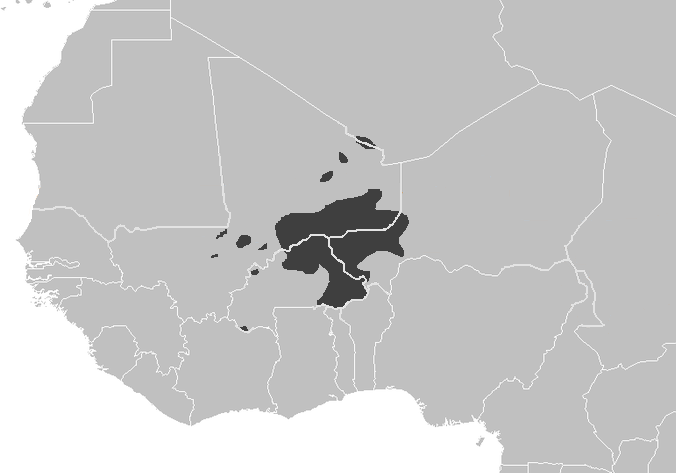
The border between Algeria and Niger stretches for nearly 950 kilometers, from the Hoggar massif to the approaches of the Aïr. It is a challenging operational theater, made up of tracks, rocky plateaus, and sparse water points. A force that wants to hold this area must first solve logistical issues. Vehicles not only lack roads, but they also lack maintenance, fuel, and human intelligence.
The northern Niger connects several transit areas. Smuggling routes, trafficking networks, and armed groups can bypass a fixed post in a matter of hours. A limited Algerian presence around economic axes or energy sites will not eliminate the threat. However, it can secure specific nodes and free up Nigerien units for other missions.
Algeria Does Not Want to Become Niger's New Partner
Since the departure of French forces and the break with several regional mechanisms, Niamey has been seeking support capable of providing visible security without Western political conditions. Russia has occupied part of this space, but its resources are not unlimited. Its presence does not replace local knowledge or neighborhood agreements.
Algeria offers something different. The Algerian army knows the Saharan routes, has logistical depth in the north, and can cooperate with Nigerien forces without officially reintroducing a European power. For the junta, this is a diplomatic victory. For Algeria, it is a way to defend its interests and contain instability before it reaches national territory.
This convergence remains fragile. Algeria has no interest in being absorbed by Niger's internal war, nor in covering its neighbor's operational mistakes. It will likely seek a limited mission, with specific geographical and political objectives. If Niamey asks for more, disagreement will quickly arise.
The Jihadist Calculation Will Be More Important Than the Statement
For groups linked to Al-Qaeda or the Islamic State, the arrival of a foreign force is an immediate narrative resource. They can present Algeria as a power that protects the junta and extractive infrastructures. The risk is not only an attack against Algerian soldiers. It also includes the extension of ambushes towards convoys, transmission relays, and workers associated with economic projects.
On the ground, the question will be one of intelligence. An Algerian unit may be better equipped than an isolated garrison, but it does not automatically see the networks that live in villages, markets, and transhumance corridors. Without reliable sharing with local authorities, drones and armored vehicles will only shift the problem. From experience, a patrol can dominate a track for six hours and lose the initiative as soon as it returns to its base.
A Message Also Addressed to Moscow and Paris
The Algerian decision redraws the external competition in the Sahel. It reduces the political space for a French presence, but it does not constitute an automatic Russian victory. Algeria intends to maintain its autonomy and remind that Saharan security will not be organized solely from Moscow, Paris, or Washington.
For France, the paradox is severe. After Barkhane, Paris lost the political access that allowed it to monitor and strike in this depth. A Maghreb neighbor is taking on part of the lock function, but on its own terms. This is the concrete consequence of a withdrawal that did not eliminate the geographical problem.
Public sources confirm the decision and its unprecedented nature, but not yet the number of troops deployed, the exact sector, or the rules of engagement. These elements are crucial for assessing the actual scope of the operation.
The Test Will Be the First Attack
The Algerian presence will not be judged by the arrival ceremony, but by its reaction to the first ambush or the first incident with an armed group. If Algeria limits its deployment to the protection of sites and corridors, it can create a useful buffer. If its units are drawn into sweeping operations without a local network, they will become a costly target and a recruitment argument.
The sector to watch is the interface between northern Niger, the Aïr, and the routes leading up to Mali. A foreign force only gains if it controls mobility, not if it piles up posts. The next phase of the conflict will be less about staff maps and more about the ability to know who is moving before vehicles leave the track.
Sources Reuters, BBC, France 24, Associated Press, October 25–27, 2026.
Algeria is deploying military units to Niger to bolster security and protect economic interests amid rising jihadist threats. This marks Algeria's first military action abroad since 1973, with the deployment aimed at securing key economic areas while avoiding deeper involvement in Niger's internal conflicts. The strategic move reflects a shift in Algeria's long-standing non-intervention policy and is seen as a response to the changing security dynamics in the Sahel region.
- Algeria has received authorization to send military units to Niger.
- This is Algeria's first military projection abroad since 1973.
- The deployment aims to protect economic interests and support local security against jihadist threats.
- Algeria's presence may secure specific economic nodes but does not eliminate the threat from jihadist groups.
- The situation remains fragile, with Algeria seeking limited engagement to avoid deeper involvement in Niger's internal conflicts.