
9 Nations Back Ukraine's Freyja Missile Defence Bet in 2026
 Alexandra Reeves
9 Nations Back Ukraine's Freyja Missile Defence Bet in 2026
Europe keeps saying it wants to learn from Ukraine. This week it went a step further: it put Ukraine in charge of building part of Europe's future missile shield.
That is the real story behind the new anti-ballistic coalition announced in Paris. According to Defense News, nine European countries joined Ukraine as founding members: Denmark, France, Germany, Italy, the Netherlands, Norway, Spain, Sweden and the United Kingdom. Reuters reported on July 13 that Ukraine and key Western allies announced the air-defence coalition in Paris, including joint development of a new anti-ballistic missile system intended as an alternative to Patriot.
The system is called Freyja, or Freya in some earlier reporting. The spelling matters less than the politics. Ukraine is no longer just asking for batteries, interceptors and emergency replenishment. Kyiv is offering Europe a battlefield-tested requirement, a Ukrainian interceptor and a way out of the Patriot bottleneck that has defined the war's air-defence crisis.
Freyja Is a Political Weapon Before It Is a Missile
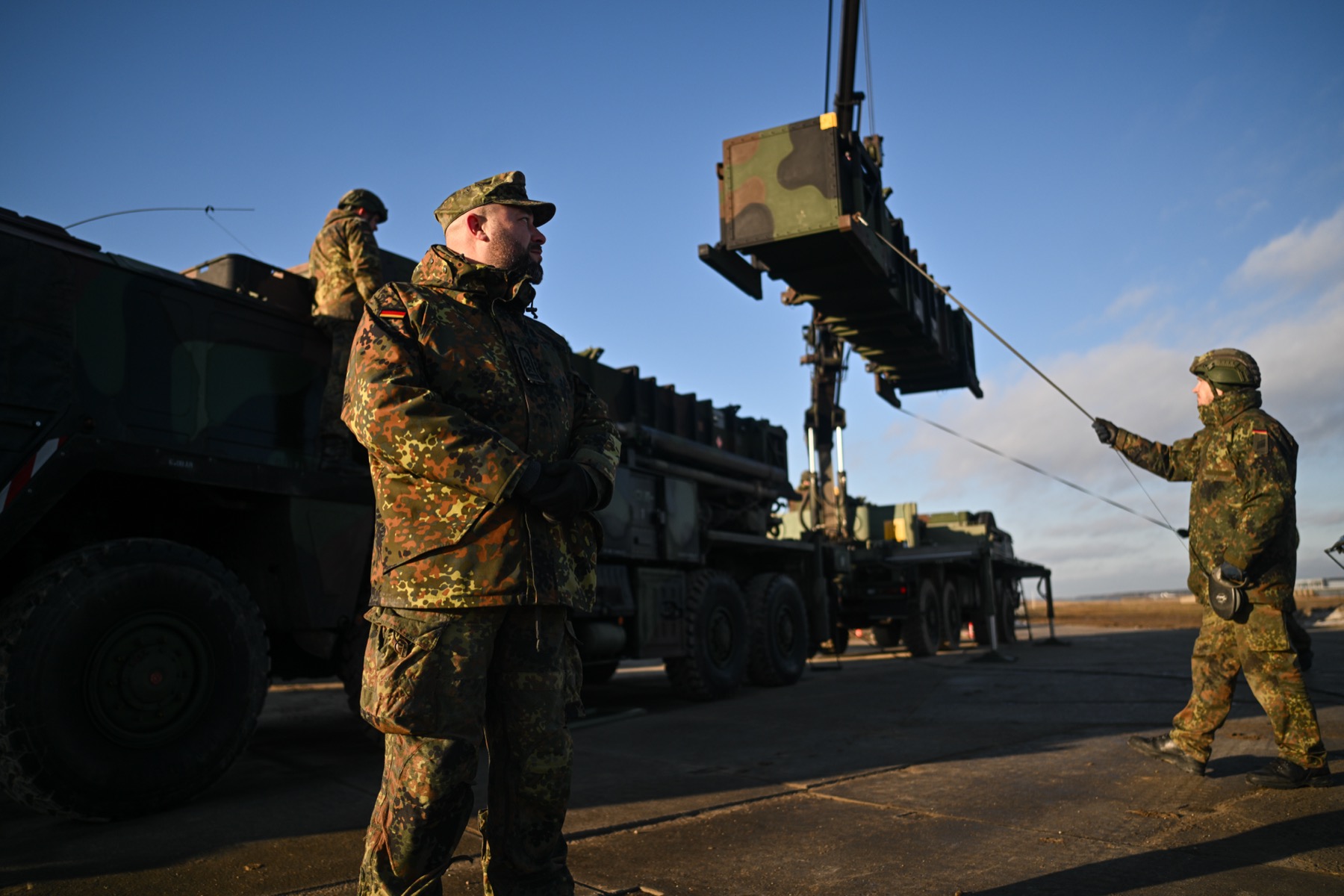
The coalition's statement, quoted by Defense News, said the goal is an integrated missile-defence architecture for Europe built through collective effort, technological openness and trusted industrial cooperation. That sounds like normal summit language until you look at who is meant to lead the practical work.
President Volodymyr Zelenskyy said Ukraine has the missile, while European partners have the radar, tracking, command-and-control and industrial depth Ukraine still lacks. That division of labour is blunt and useful. Ukraine brings the war problem. Europe brings the pieces of a system. The gamble is whether they can assemble those pieces fast enough to matter.
The headline target is aggressive. Zelenskyy wants Freyja to become operational within twelve months. Defense News reported that the system centres on Fire Point's FP-7.X interceptor, designed to hit a ballistic target at roughly 15 miles altitude. Earlier reporting said Fire Point has been targeting a per-shot cost near $700,000, compared with roughly $3.8 million for a Patriot PAC-3 interceptor.
Those figures should not be treated as a procurement miracle. Early cost estimates almost always look better before mass production, integration testing and reliability demands arrive. But the direction is important. If Europe is serious about defending cities against ballistic missiles, it cannot build a strategy around exquisite interceptors that are too scarce to fire at scale.
The Patriot Shortage Is Now a Strategic Fact
The uncomfortable assumption in many Western capitals has been that the Patriot problem is temporary. Produce more missiles, shift a few launchers, fund another package, and the gap will close. The short answer is no.
Patriot remains one of the most capable systems available against ballistic missiles, and Ukraine still needs it badly. But the war has exposed a deeper issue: the United States, Europe and partners in the Middle East and Asia are all drawing from a limited pool of high-end interceptors. Defense News linked the Paris initiative to a global shortage of anti-ballistic weapons, aggravated by demand from multiple regions as states rush to rebuild their own stocks.
Russia understands this. Its strikes increasingly combine drones, cruise missiles and ballistic missiles not just to hit targets, but to force Ukraine into miserable arithmetic. A Shahed can be cheap. A ballistic missile is hard to stop. The defender must decide what to protect, what to risk and how many precious interceptors can be spent tonight without leaving tomorrow exposed.
According to Defense News, a July 10 report cited a U.N. assessment that long-range missile and drone strikes caused 45% of Ukraine's civilian casualties in May, the worst monthly toll since April 2022. That number explains why Kyiv is pushing for a sovereign anti-ballistic option. It is not industrial vanity. It is survival under a strike campaign built to exhaust donated systems faster than allies can replace them.
Europe Gets a Discount and a Dilemma
For Europe, Freyja is attractive because it offers three things at once: help for Ukraine, a cheaper path toward missile defence, and access to operational knowledge no European test range can replicate. That is the bargain. The dilemma is governance.
Nine countries, Ukraine, NATO leaders, the European Union's top institutions and firms including Diehl Defence, Eurosam, HENSOLDT, Kongsberg, Leonardo, MBDA, Saab, Safran, Thales and Weibel Scientific were present or named around the Paris push, according to Defense News. That is an impressive room. It is also the kind of room where good ideas can go to die slowly.
European defence collaboration has a habit of producing elegant governance and late hardware. Freyja cannot afford that. A missile-defence system is not just an interceptor in a tube. It needs sensors, battle management, launchers, software, command authorities, test ranges, certification rules and political decisions about where the first systems sit. Every one of those pieces can become a veto point.
Zelenskyy appears to know this, which is why his language has been unusually direct. Ukraine can do some of this alone, he said earlier, but years would pass. The point of the coalition is speed. If the Europeans turn Freyja into another procedural trophy, Moscow will not wait politely for the working groups to finish.
This Is Not a Patriot Replacement Yet
The easiest mistake is to call Freyja a Patriot replacement. It is not, at least not yet. Patriot is a mature combat system with a deep, if strained, logistics and training ecosystem. Freyja is an emerging project whose most ambitious promises still have to survive engineering reality.
But that does not make it marginal. The better comparison is not Freyja versus Patriot today. It is Freyja versus a Europe that still has no affordable mass answer to ballistic-missile pressure. If Ukraine and its partners can build even a limited operational capability, they will have changed the procurement conversation. European air defence would no longer mean only buying more American systems, waiting for SAMP/T expansion, or hoping Russia's missile inventory becomes someone else's problem.
There is also a NATO politics angle that Washington should not miss. A Ukrainian-led European missile-defence project is not anti-American by default. It may actually reduce pressure on U.S. stocks if it works. But it does mean Europe is edging toward a harder truth: the continent cannot outsource every layer of its air defence and then complain when the queue gets long.
What to Watch Next
The next useful indicators are practical, not rhetorical. Watch whether the coalition publishes common operational requirements, identifies a lead integrator, funds radar and command-and-control work, and sets test milestones that can be checked. Watch whether Fire Point's production claims survive contact with quality control. Watch whether Germany, France, Italy and Norway put real industrial capacity behind the project rather than just logos on a declaration.
The key finding is simple: Freyja is Europe's first serious attempt to turn Ukraine's battlefield urgency into a shared anti-ballistic production programme. The prediction is less comfortable. If the coalition moves fast, Ukraine may help Europe build the missile shield it should have started years ago. If it moves at normal European speed, Freyja will become another reminder that Russia fires in wartime while Europe coordinates in peacetime.
Ukraine leads a coalition with nine European nations to develop the Freyja missile defense system, announced in Paris. The coalition aims for operational capability within twelve months, addressing the urgent need for effective missile defense amid a global shortage of anti-ballistic weapons. Key partners include Denmark, France, Germany, Italy, the Netherlands, Norway, Spain, Sweden, and the United Kingdom, alongside various defense firms.
- Nine European nations have joined Ukraine to form an anti-ballistic missile defense coalition.
- The coalition aims to develop the Freyja missile system as an alternative to the Patriot system.
- President Zelenskyy emphasized the need for rapid development and operational capability within twelve months.
- The coalition includes significant industrial partners and aims for integrated missile defense architecture.
- The initiative addresses a global shortage of anti-ballistic weapons.