

On a sunny, crisp early-fall New England morning, I strolled across the leafy central quad in the middle of campus. I had to register for classes in person, and to avoid the crowds, I got there right as the doors opened. After completing that task, I met a friend and fellow cadet setting up the Reserve Officer Training Corps recruiting booth for a student activity fair later that day. He’s the person who told me that a plane had just hit the World Trade Center. I rushed back to my dorm and unpacked my television. As I saw the video of the planes hitting the towers, I knew that I was going to war.
A quarter century after the most significant attack on American soil since Pearl Harbor, the national security lessons from 9/11 are still unsettled — a debate that has defined much of my professional life.
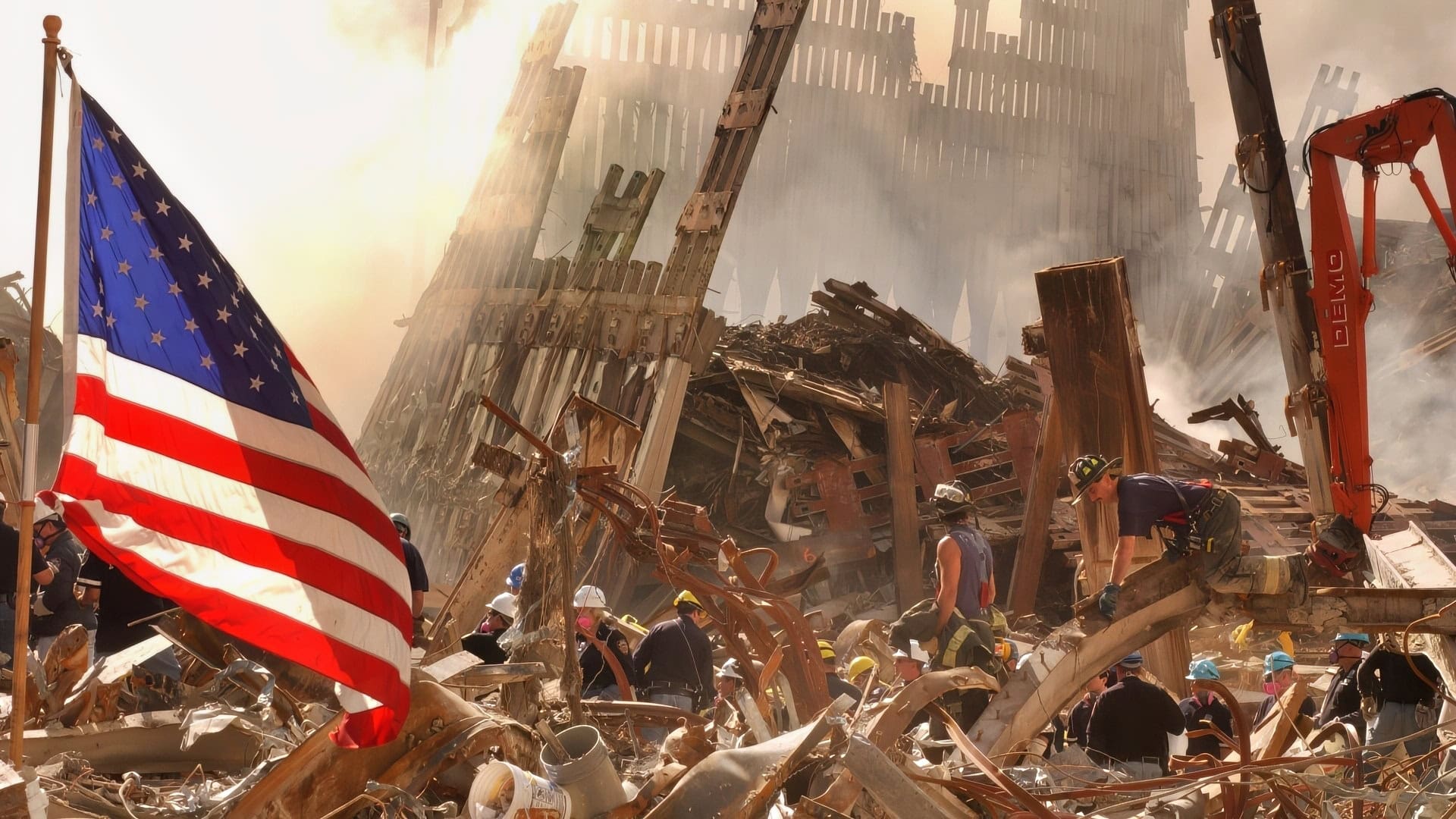
9/11 Attack Creative Commons Photo
But to me, the lesson from 9/11 that I worry we overlook is simple: the perils of mistaking quiet for peace.
The failure to identify and stop the 9/11 terrorist attacks triggered a wave of internal institutional reforms in the United States. Believing that the intelligence community failed to connect the dots, Congress created the Office of the Director of National Intelligence to encourage greater information sharing. It also created the Department of Homeland Security to counter terrorist threats and the Transportation Security Administration to make the government—not private companies—responsible for airport security.
The rationale behind these new entities is no longer accepted wisdom, however. Some in the Trump administration have questioned the utility of an additional layer of management in the Office of the Director of National Intelligence and moved to dramatically downsize it. Others have questioned the costs of TSA and proposed reprivatizing security in smaller airports. Some Democrats have proposed dismantling the Department of Homeland Security as debates about the department’s role in immigration enforcement have heated up.
Unsurprisingly, 9-11 also touched off a vigorous debate over what we should have learned about American posture in the Middle East, the utility of regime change as a strategy, and the United States’ role in the world. There is even less consensus about these grander questions.
For some, the central lesson of the Global War on Terrorism’s $8 trillion price tag and 900,000 casualties is that the United States needs to avoid such wars in the first place. In practice, that means restraining U.S. ambitions and constraining its ability to fight. And yet, even after the formal ends of the Iraq and Afghanistan wars, and despite sporadic attempts to repeal it over the years, the blanket Congressional authorization for the use of force that opened the door to military action after 9-11 remains in place. The United States hasn’t withdrawn from the Middle East either, because the region’s problems—and the reasons the country has remained actively engaged there—persist.
Finally, as problematic as regime change is as a strategy, it’s not always clear what the alternative is. Even after the Iraq and Afghanistan wars, every successive American administration—both Republican and Democrat—has called for regime change somewhere in the world—whether in Libya, Syria, Russia, Venezuela, or Iran.
The most straightforward and least contentious lesson of 9/11 is also the one that gets the least attention: the price of complacency. After all, 9/11 was not a true bolt out of the blue. The United States had been tracking Osama bin Laden. It knew that al Qaeda had attacked the Americans in Africa and the Middle East with ever greater lethality. It even experienced an attack, albeit on a smaller scale, on the eventual target of 9-11 hijackers—the World Trade Center. At that point, though, the United States could not fathom that al Qaeda could strike with such ferocity that it would upend the comparatively benign environment of the post-Cold War world. The United States paid a terrible price for mistaking serenity for security.
The United States risks a similar error today. After all, the United States has talked openly about the growing threat from the same list of foreign adversaries—China, Russia, Iran, North Korea, and violent nonstate actors—since the Obama administration. Multiple experts from both inside and outside of government over a period of more than a decade have raised the alarm about the growing threat of major war. The United States has glimpsed what the future of war holds in Ukraine and now Iran.
Despite these increasingly dire warnings, the United States remains woefully underprepared. China dwarfs the United States in shipbuilding. Wars in Ukraine and the Middle East have strained the American supplies of key munitions. The Iran War underscored the vulnerability of fixed bases on land and the logistical challenges of protracted operations at sea. And the United States finds itself struggling to adapt its military to technologies—from drones to artificial intelligence—that are upending modern warfare.
The drumbeats are growing louder. In the Middle East, both China and Russia have increased support for Iran as the war has dragged on. In Europe, Russia has targeted NATO allies as its military fortunes in Ukraine have stalled, with potentially even more aggressive moves yet to come. And in Asia, China continues its military build-up and has stepped up its drills to potentially blockade Taiwan. Any one of these situations, if mishandled, is enough to spark not just another Global War on Terrorism, but a global war more akin to those of the first half of the 20th century rather than the first decade of the 21st, full stop.
Reading the headlines coming out of Washington these days, you wouldn’t know that the United States and the world at large sit on such a precipice. We are more comfortable continuing to debate the other unresolved lessons of 9/11 than face the one right in front of us.
We are still that proverbial college student strolling through the quad enjoying the lovely fall day.
About the Author: Raphael S. Cohen
Raphael S. Cohen is the director of RAND School of Public Policy Masters of National Security and Masters of Technology Policy programs and the director of RAND Project Air Force’s Strategy and Doctrine Program.