

Summary and Key Points: The Royal Netherlands Navy’s three Walrus-class diesel-electric submarines, built by RDM in Rotterdam, displace 2,450 tons, run 21 knots submerged, dive to 300 meters, and carry Mk 48 torpedoes in four 533 mm tubes with a crew of 49. Despite shipyard bankruptcy, a 1-meter hull stretch and a command-center fire, Walrus ‘sank’ aircraft carrier USS Theodore Roosevelt and seven escorts from 4,000 yards in a 1999 drill. They serve until the Orka-class arrives around 2033.
How a US Navy Aircraft Carrier Was Beaten By A NATO Ally in a Wargame
The Royal Netherlands Navy (RNN) maintains a small submarine force of three Walrus-class submarines. The Walrus-class submarines are moderately small, diesel-electric attack submarines, manufactured by Rotterdamsche Droogdok Maatschappij (Rotterdam Dockyard, or RDM). Although the lead ship, Walrus (S802), had many construction problems, she was considered one of the most advanced conventionally powered attack submarines in the world when she finally entered service.
The Walrus-class remains the cornerstone of the RNN’s humble submarine fleet. The service life of the three remaining ships has been extended to the 2030s, while their replacement, the Orka-class, is under development.
Development and Construction Problems
In the 1970s, the Netherlands operated a force of 1950s-era Dolfijn-class and more modern Zwaardvis-class submarines.
As far back as the 60s, the Dutch Ministry of Defense had been studying a suitable replacement. Originally, the RNN wanted a nuclear attack submarine, but the cost of developing the technology and U.S. proliferation concerns quickly dashed those ambitions.
At the time, only the U.S., France, and the UK could build and maintain nuclear submarines.
The new submarine would therefore receive a conventional diesel-electric propulsion system.
The ship featured an innovative design, with high-strength steel from France allowing it to reach deeper depths than the Zwaardvis-class.
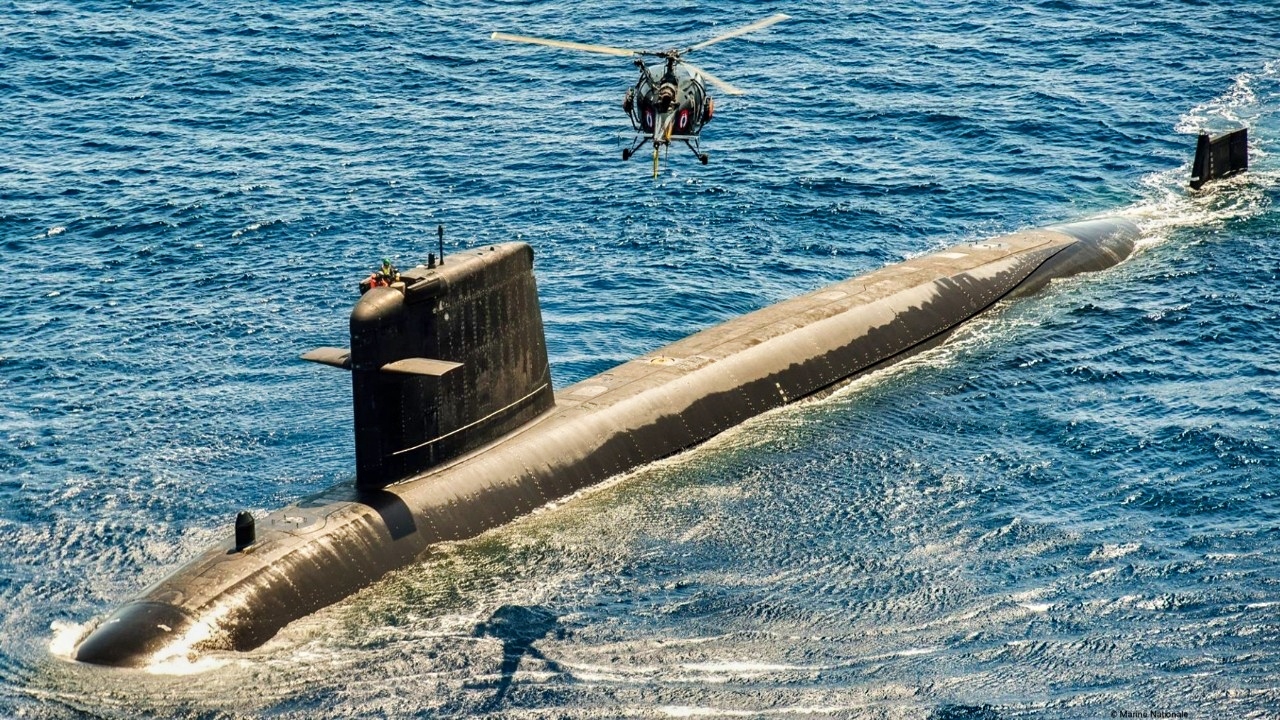
Rubis-Class French Navy Submarine. Image Credit: Creative Commons.
Construction on the Walrus-class quickly hit a rut when RDM’s parent company, Rijn-Schelde-Verolme, suddenly declared bankruptcy.
To keep the project going, RDM became an independent company, and the government increased its order from two to four ships to support it financially.
Another problem was that the Walrus-class design had not been finalized when the first two ships were laid down.
As a result, the ships needed to be lengthened by 1 meter, costing 10 million Dutch guilders per boat.
More problems arose when a fire broke out in Walrus’ command center, causing immense damage. Most of the onboard equipment was destroyed or heavily damaged, delaying the ship’s original delivery date.
The repairs took so long that the second ship of the class, Zeeleeuw (S803), entered service first in 1990, with Walrus following in 1992.
The Netherlands’ Advanced Attack Submarines
Despite their rocky development, the Walrus-class is a well-designed ship. It was one of the first to introduce an X-shaped rudder and driving plane configuration, in contrast to the more traditional cross-shaped layout.
Although the U.S. Navy experimented with a similar configuration on the USS Albacore (AGSS-569), the Dutch were the first to implement it across an entire class.
The Walrus-class shares a similar hull design and layout with the Zwaardvis-class, featuring a twin-hull configuration and a teardrop shape for better performance and a lower acoustic signature.
With a surface displacement of 2,450 tons, the Walrus-class weighs about as much as its predecessors and measures around 222 feet long.
The Walrus-class placed greater emphasis on automation.
The ships can accommodate a crew of around 49 to 52 sailors, compared to the Zwaardvis-class, which requires a crew of 67.
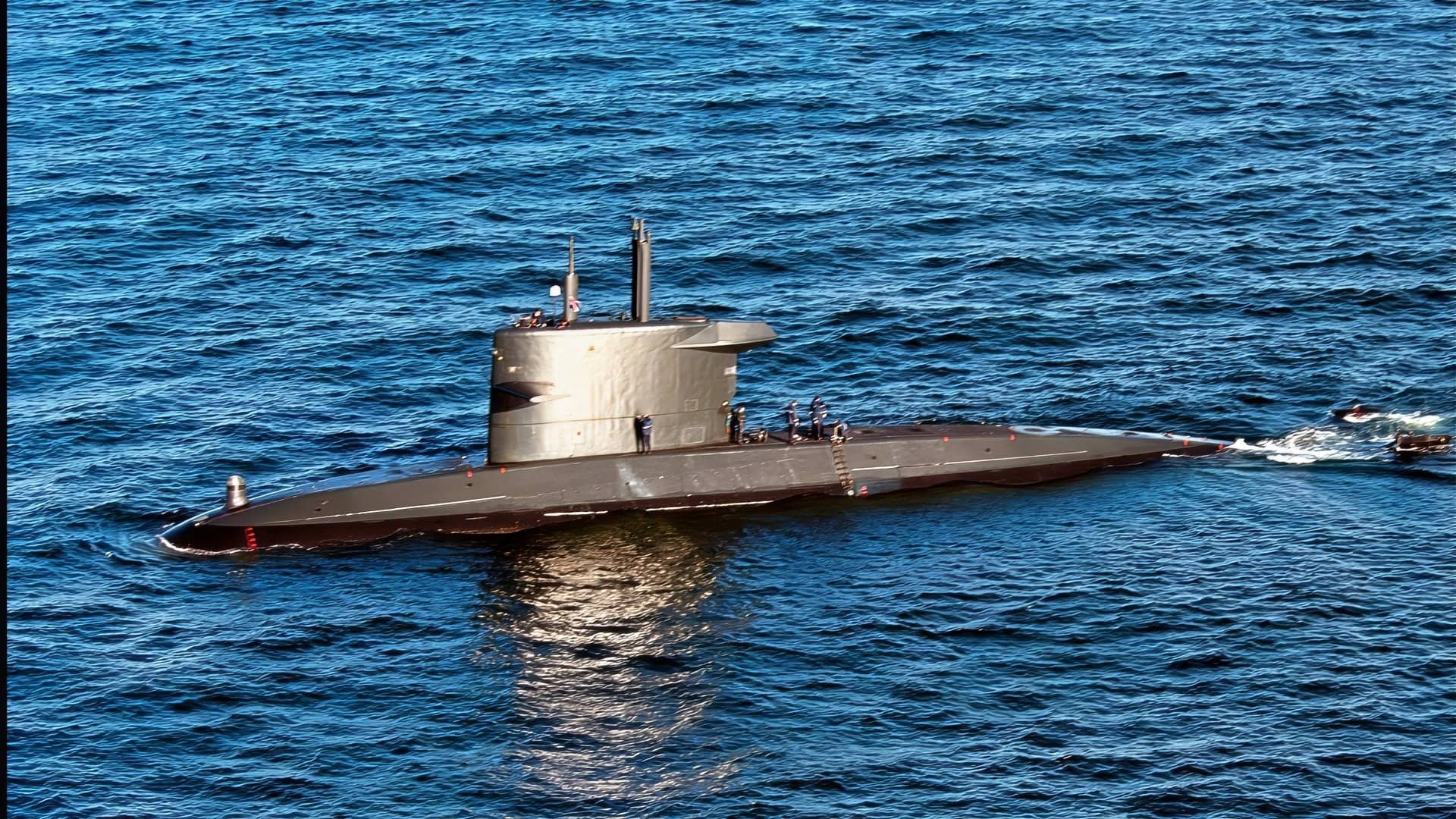
Walrus-Class Submarine NATO Image
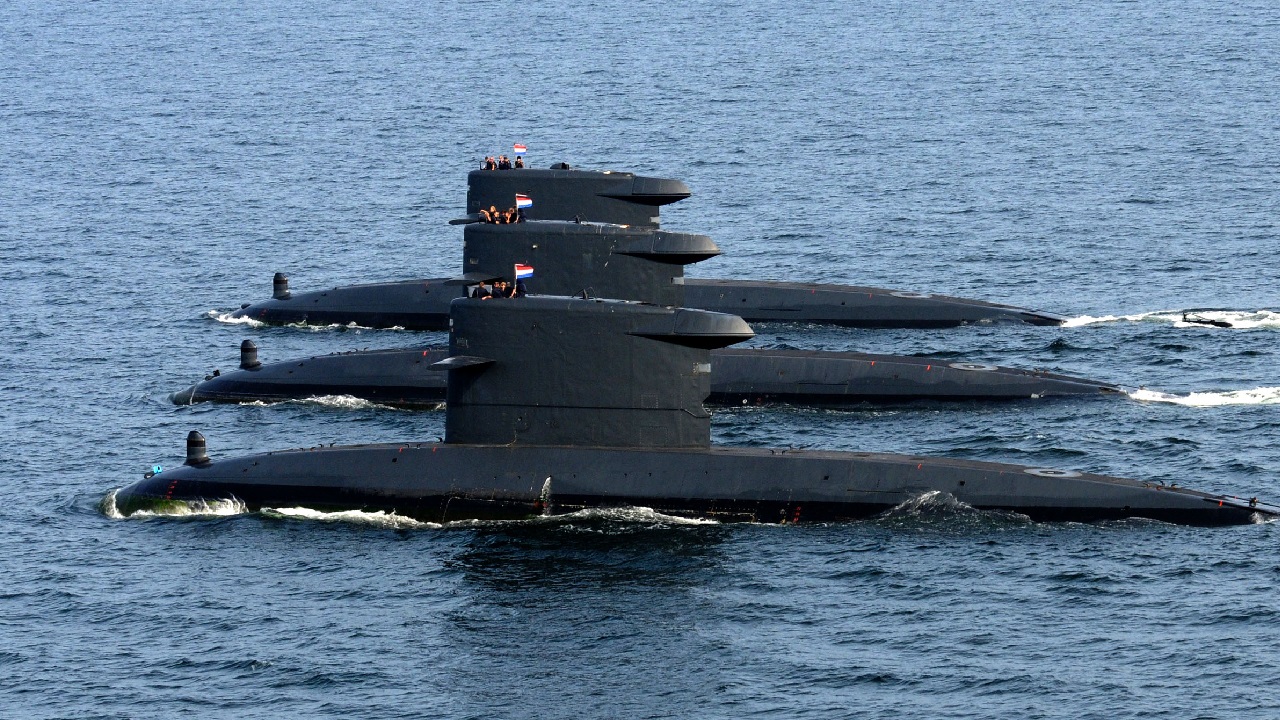
Walrus-Class Submarine. Image Credit: Creative Commons.
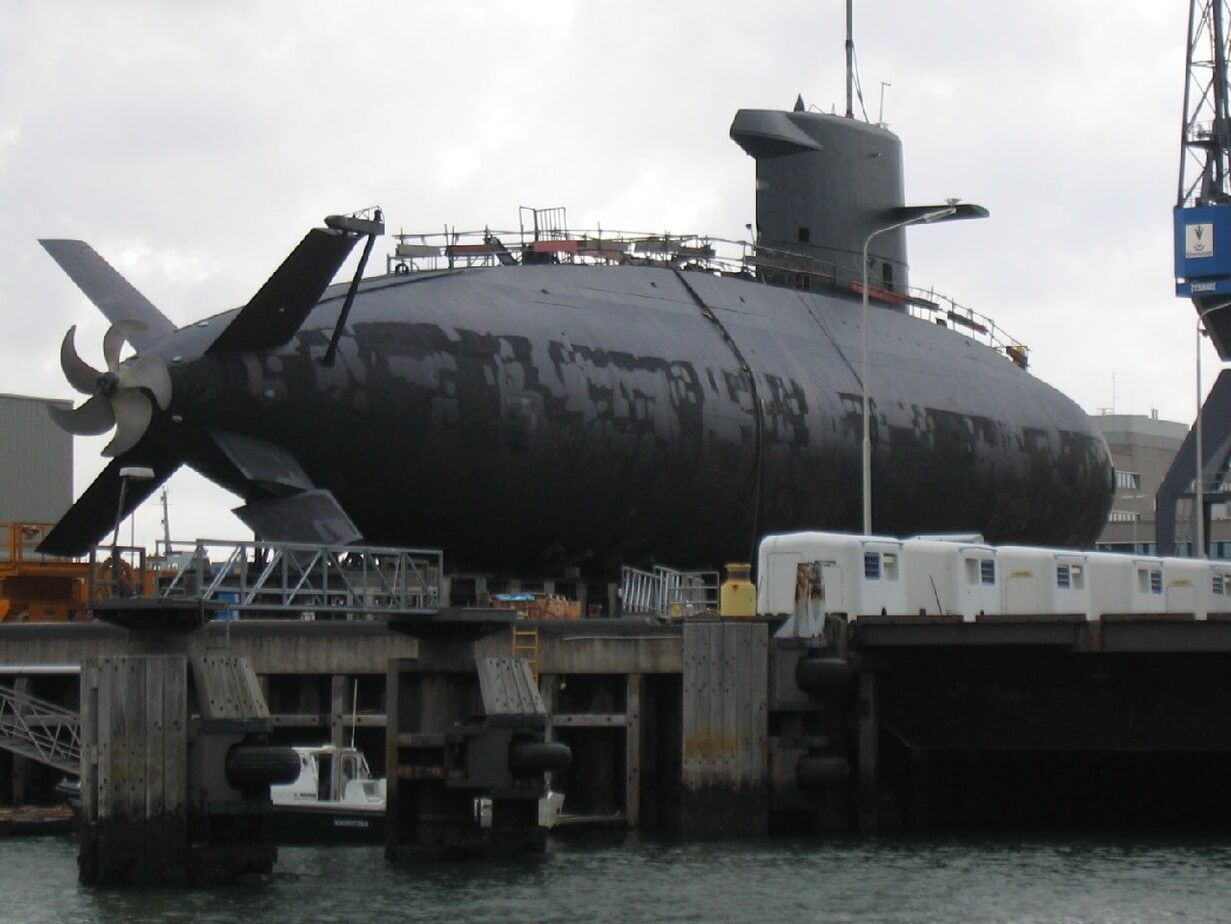
Walrus-Class Submarine. Image Credit: Creative Commons.
The ships carry a complex suite of active and passive sonar systems and an integrated sensor, weapon, and command (SEWACO) system.
They run on three diesel engines and a single HOLEC electric motor using 420-cell VARTA batteries.
The Walrus-class has a top speed of 21 knots when submerged, an estimated range of 10,000 nautical miles, and a stated depth of around 300 meters (most manufacturers deliberately obscure their true diving depth for security purposes).
The class carries four 533 mm torpedo tubes, which can launch Mk 48 torpedoes and, in theory, Harpoon and Tomahawk anti-ship missiles, although the Dutch have not purchased either.
That Aircraft Carrier ‘Sinking’ Back in 1999 During a Drill:
As we noted a few weeks ago, during a drill, the Walrus-class proved its worth:
“Running submerged on battery power, the boat exploited the ocean’s thermal layers, the bands of differing temperature and salinity that bend and trap sound, to hide from the strike group’s sonar while working into the formation.
A diesel-electric submarine on batteries generates no reactor pumps, no continuous machinery signature, almost nothing for a passive sonar operator to hold, and the Walrus used that silence to pass through an anti-submarine screen built around the assumption that submarines make noise.
Inside the screen, the boat conducted simulated torpedo attacks from about 4,000 yards and was credited with killing the Theodore Roosevelt and, in the commander’s telling, seven escorts besides, a toll that would have decapitated the entire formation had the torpedoes been real.”
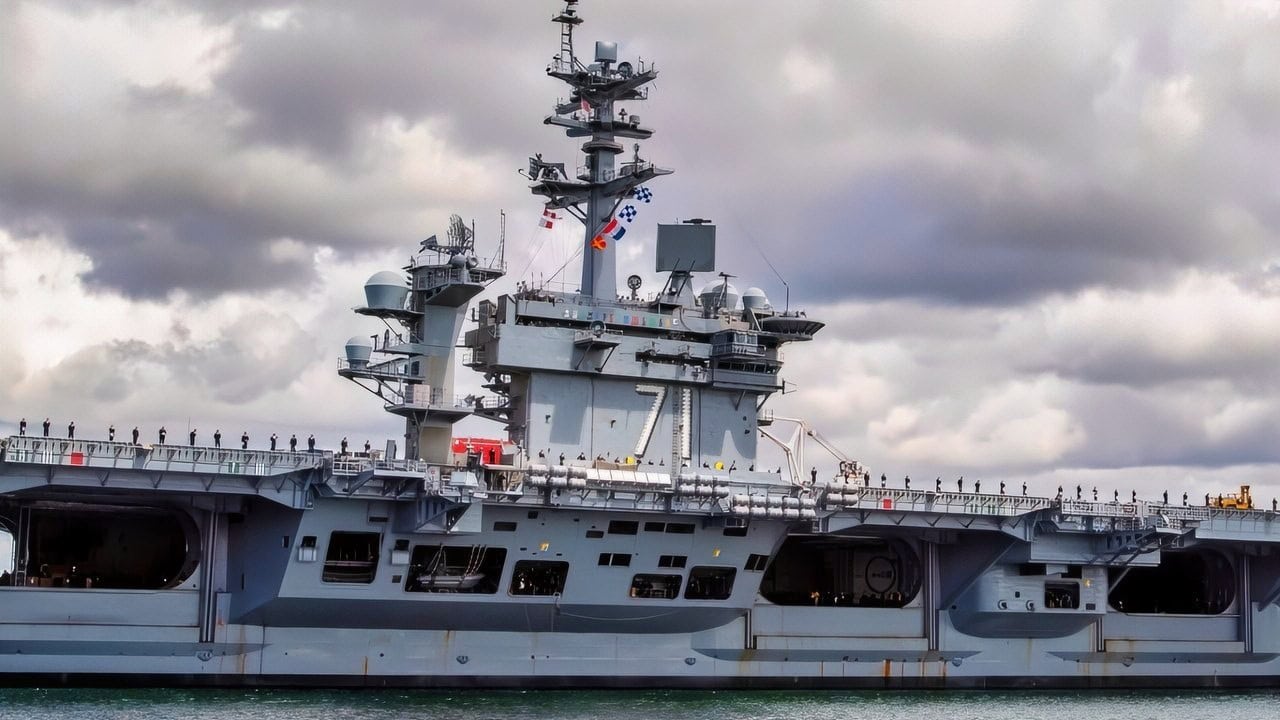
(March 23, 2023) Nimitz-class aircraft carrier USS Theodore Roosevelt (CVN 71) returns to Naval Air Station North Island following a regularly-scheduled maintenance availability and completion of sea trials, March 23. The ship changed its homeport from Bremerton to San Diego after completing an 18-month docking planned incremental availability in Bremerton, Washington, during which the ship received extensive restorations and upgrades to support the F-35C Lightning II, E-2D Advanced Hawkeye, and CMV-22B Osprey, as well as future platforms such as the MQ-25 Stingray unmanned aircraft system. (U.S. Navy photo by Mass Communication Specialist 2nd Class Keenan Daniels)
Service and Planned Replacement
The Walrus-class was originally designed to hunt Soviet submarines, though the USSR collapsed shortly after the first ship was introduced.
Regardless, the ships have become a mainstay of the RNN and are generally well-loved by their crews.
The submarines have a wide range of missions, from anti-submarine warfare to intelligence gathering and special operations support.
The Walrus-class stealth systems are highly classified, but by all accounts, the ships are extremely quiet when submerged despite their somewhat outdated design by today’s standards.
Thanks to a steady stream of upgrade packages, the Dutch have kept the subs going long after their original retirement timeline.
However, after 30 years of service, the Walrus-class is aging and cannot remain in service indefinitely.
The Dutch government originally intended to have a replacement ready by 2025, but constant political disagreements have delayed the replacement program to the 2030s.
As a result, the Walrus-class will receive yet another upgrade package while the Orka-class continues development.
The contract for components for the lead ship, Orka, was finally issued in 2024, and the ship is expected to reach operational capacity by 2033. Once the new ships come online, the Walrus-class will finally retire.
About the Author: Isaac Seitz
Isaac Seitz, a Defense Columnist, graduated from Patrick Henry College’s Strategic Intelligence and National Security program. He has also studied Russian at Middlebury Language Schools and has worked as an intelligence Analyst in the private sector.