
A Strike on the S-300 and S-400 in Crimea Shows the Cost of Russian Air Defense in 2026
 Dmitri Volkov
Strike on S-300 and S-400 in Crimea Shows the Cost of Russian Air Defense in 2026
One fire at the S-300/S-400 position near Kerch and another fire at the 220/35 kV substation in Maryanovka say more about Crimea than another victory report. On the night of June 29, Ukrainian drones, according to Militarnyi citing Falcon Insight, Crimean Wind, and NASA FIRMS satellite thermal signatures, struck simultaneously at a Russian air defense element and an energy supply node in the north-central part of the peninsula. Formally, these are two different objects. In military terms, they are the same nerve: Russia's ability to keep Crimea as a protected rear base rather than as a frontline zone with expensive infrastructure that needs to be covered anew every night.
What Was Hit on the Night of June 29
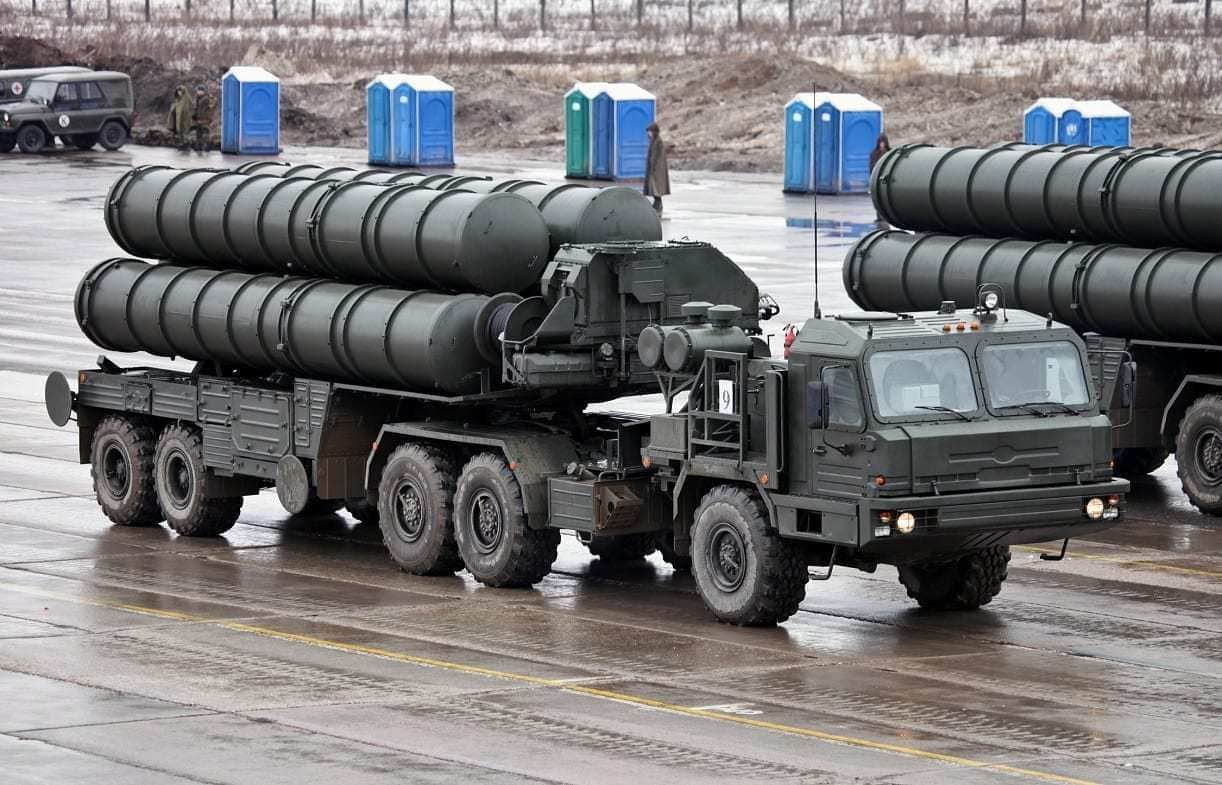
Militarnyi reports a thermal anomaly around 02:20 at the prepared position of the S-300/S-400 surface-to-air missile systems near Kerch. This is important not because each such episode automatically means the destruction of a launch system. A satellite fire records an event but does not always show whether the equipment itself, ammunition, auxiliary property, or camouflage structures were burning. However, the geography of the strike is indicative: the Kerch direction connects the Russian grouping in Crimea with Kuban, ferry routes, bridge logistics, and the southern air defense system. If S-300 or S-400 systems have to be kept in combat position there, it means the area has already ceased to be a regular rear.
The second object is the Maryanovka 220/35 kV substation. According to Crimean Wind, it is part of the corridor Simferopol TPP — Elevator — Maryanovka — Dzhankoy — Krasnoperekopsk. For a civilian reader, this looks like boring electrical engineering. For the command, it is the power supply for communications, repair facilities, railway infrastructure, warehouses, and radar nodes. The Soviet military school always taught: destroy not only the gun but also the system that allows the gun to fire. In this case, the Ukrainian logic looks exactly like that.
Why the S-400 Does Not Solve the Drone Problem
The S-400 was created as a layered long-range system against aircraft, cruise missiles, and some ballistic targets. In export catalogs and official Russian materials, the interception range is often presented as a symbol of technological superiority. But the war of 2022-2026 has once again shown the old truth: greater range does not equal omniscience, and an expensive missile is not an economical response to a cheap drone. A system that theoretically should form a dome over hundreds of kilometers practically needs a radar field, camouflage discipline, false positions, close cover, and stable power supply.
Here, an unpleasant arithmetic arises for Moscow. One S-400 division is not just launchers. It includes radars, a command post, transport-loading vehicles, missiles, crews, engineering positions, and security. The more Ukrainian strikes stretch Russian air defense between oil refineries, Crimea, airfields, bridges, ports, and border cities, the less coverage density there is at each specific site. ISW noted in its assessment from June 28 that the Ukrainian campaign of long-range strikes forces the Kremlin to acknowledge the problem, even though Putin publicly tries to present it as not affecting the front.
Crimea as a Test of Russian Depth Doctrine
For Russian military thought, Crimea after 2014 was not only a territory but also a platform for access denial: aviation, coastal missile systems, the Black Sea Fleet, S-300, S-400, radar, warehouses, and airfields. It was supposed to be a zone from which Russia projects power over the Black Sea and southern Ukraine. By mid-2026, the role is changing. Crimea still remains a military platform, but increasingly behaves like a large base under constant pressure.
This transformation did not happen overnight. First, Ukraine systematically struck at ships and headquarters of the Black Sea Fleet, then at airfields, crossings, fuel infrastructure, and radar facilities. On June 28, there were reports of a fire at the Saki TPP after an attack by strike drones. On June 29, Kerch and Maryanovka appeared in the same logic. If these episodes are considered separately, they resemble an ordinary chronicle of fires. If lined up, they create a map of rear exhaustion.
The Russian response is predictable: strengthen air defense, increase production of necessary systems, publicly deny the impact of strikes. This is also what Putin said, according to Al Jazeera, rejecting the idea of mutual restrictions on long-range strikes and stating that Russia must quickly increase the production of the most in-demand air defense means. But this acknowledgment is stronger than the propaganda shell. If air defense production needs to be urgently increased, it means the existing density is already insufficient.
The Cost of Exchange Becomes Unfavorable for Russia
The main problem for Russia here is not that the S-400 is bad. On the contrary, it is a complex and dangerous system. The problem is that even a good system becomes vulnerable when used as a fire brigade over too large a theater. A Ukrainian drone can force Russia to turn on radar, redeploy a battery, expend expensive missiles, change supply routes, and repair an energy node. Even if the drone is shot down, it sometimes has already accomplished part of its task: it has shown the position, overloaded the crew, forced resource expenditure.
The Soviet General Staff loved the term management resilience. In late Soviet textbooks, it sounded almost like a spell. Today, the resilience of the Russian grouping in Crimea is determined not by the beautiful range of missiles but by how many nights in a row the air defense, energy, and logistics networks can operate under the pressure of cheap and mass-produced means of destruction. Here, the Ukrainian bet is rational: it is not necessary to destroy a division every time. It is enough to force the enemy to defend everything at once.
What This Changes in the Coming Months
The strike on the S-300/S-400 position and the Maryanovka substation does not mean an immediate collapse of Russian defense in Crimea. Such an assessment would be journalism, not analysis. But it shows the direction of the war in 2026: Ukraine is shifting pressure from the line of contact to the infrastructure that makes the Russian line of contact possible. For Moscow, this is particularly painful because Crimea was a showcase of control but is becoming a showcase of costs.
In Russian tradition, there is an old phrase: war tests not the parade formation but the economy of the army. Crimea is now testing precisely the economy — electricity, repairs, camouflage, spare positions, and the ability of air defense to live in a state of constant hunting.
My forecast is cautious. Russia will retain a significant part of the Crimean air defense system and will increase coverage of the most valuable objects. But the cost of this retention will grow faster than the Kremlin is willing to publicly acknowledge. If Ukraine maintains the pace of long-range strikes on energy, crossings, oil logistics, and radar positions, by the fall of 2026, Russian air defense in Crimea will be less of a shield and more of an expensive patchwork network that has to be moved after each new night.
Ukrainian drones struck S-300 and S-400 air defense systems near Kerch and an energy substation in Maryanovka on June 29, 2026. This action reflects a strategic shift in the conflict, as Ukraine applies pressure on Russian logistics and air defense capabilities. The attacks reveal vulnerabilities in the Russian military's ability to protect critical infrastructure in Crimea.
- Ukrainian drones attacked S-300 and S-400 positions near Kerch and an energy substation in Maryanovka on June 29, 2026.
- The strikes indicate a shift in the conflict, with Ukraine targeting Russian logistics and air defense capabilities.
- The attacks highlight vulnerabilities in Russian air defense systems and the need for increased protection and resources.