

Summary and Key Points: Brandon J. Weichert, Senior National Security Editor at 19FortyFive, evaluates the “indispensable” role of Ohio-class SSGNs in Operation Epic Fury.
-As the U.S. Navy faces a depletion of Tomahawk cruise missiles following the Iran war, these submarines provide unmatched magazine depth with 154 missiles per hull.
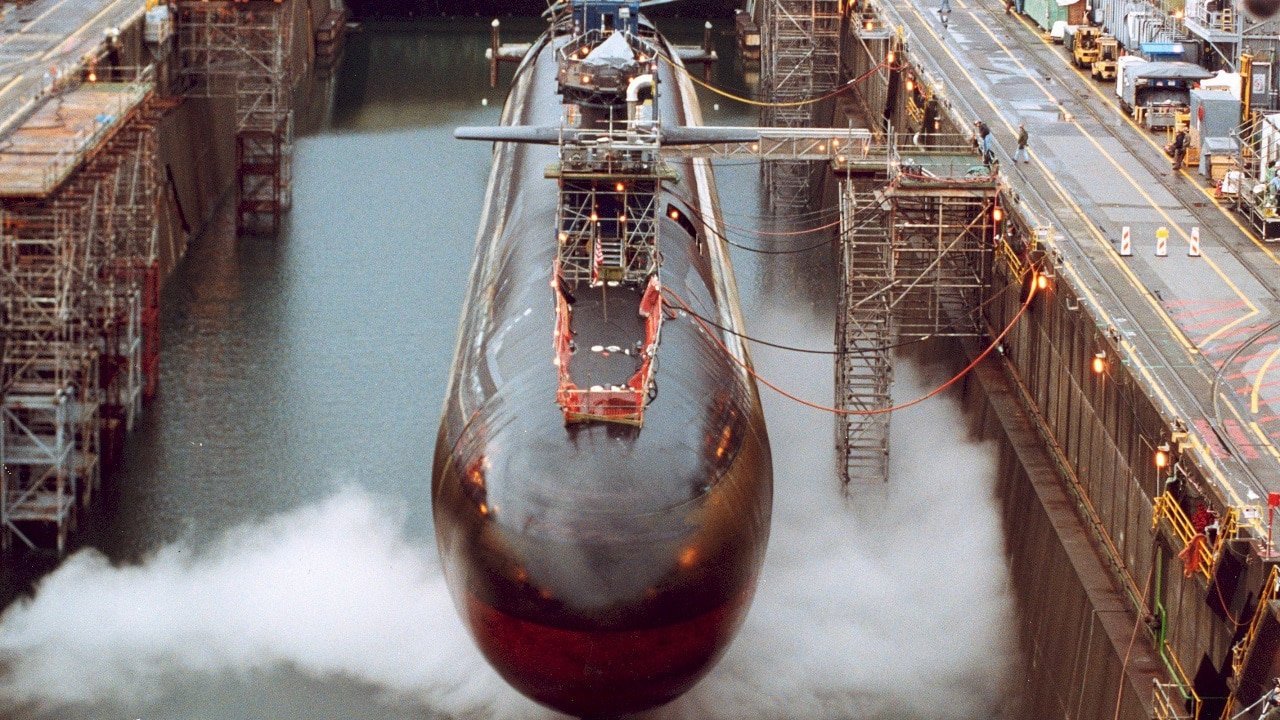
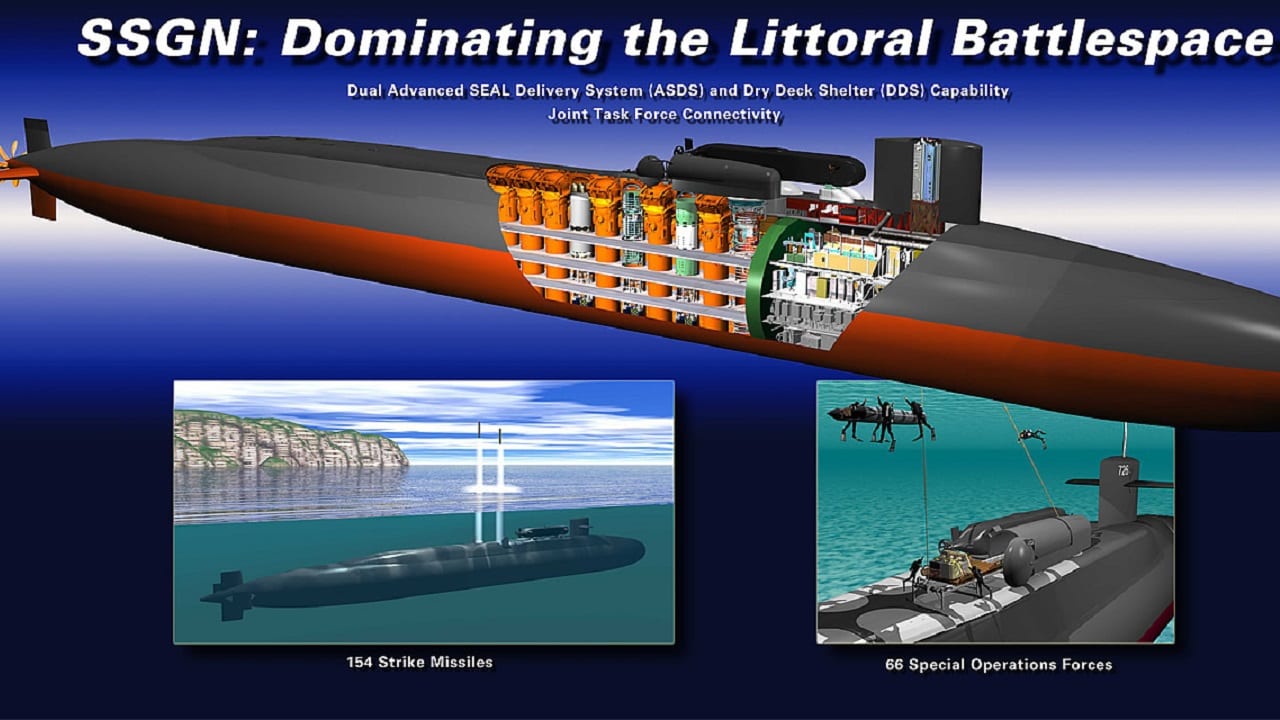
Puget Sound Naval Shipyard, Wash. (Aug. 14, 2003) — USS Ohio (SSGN 726) is in dry dock undergoing a conversion from a Ballistic Missile Submarine (SSBN) to a Guided Missile Submarine (SSGN) designation. Ohio has been out of service since Oct. 29, 2002 for conversion to SSGN at Puget Sound Naval Shipyard. Four Ohio-class strategic missile submarines, USS Ohio (SSBN 726), USS Michigan (SSBN 727) USS Florida (SSBN 728), and USS Georgia (SSBN 729) have been selected for transformation into a new platform, designated SSGN. The SSGNs will have the capability to support and launch up to 154 Tomahawk missiles, a significant increase in capacity compared to other platforms. The 22 missile tubes also will provide the capability to carry other payloads, such as unmanned underwater vehicles (UUVs), unmanned aerial vehicles (UAVs) and Special Forces equipment. This new platform will also have the capability to carry and support more than 66 Navy SEALs (Sea, Air and Land) and insert them clandestinely into potential conflict areas. U.S. Navy file photo. (RELEASED)
-This report analyzes the looming “capability gap” as the Navy prepares to retire the four SSGNs starting in 2028.
-Weichert concludes that the Virginia-class Block V, carrying only 40 Tomahawks, cannot offset the loss of the Ohio-class’s massive, stealthy strike potential against Iran’s hardened infrastructure.
The 154-Missile Hammer: Why the Ohio-Class SSGN is the Unsung Hero of the 2026 Iran War
The ongoing Iran War between the US and Israel alliance and the Islamic Republic of Iran is showing the weaknesses of the United States’ arsenal. One of those is the fact that the country’s erstwhile Tomahawk cruise missile stockpiles are drastically depleting as a result of the Iran War and the previous 12-Day War.
They are the Navy’s Largest Conventional Strike Mag
What’s more, as Washington relies heavily on Tomahawks as a primary strike weapon, it has relied heavily on using submarines as launching pads.
Specifically, the Ohio-class guided-missile submarines, which can carry up to 154 Tomahawks, make these subs the single-largest conventional strike platform in the US military outside of America’s bomber fleet.
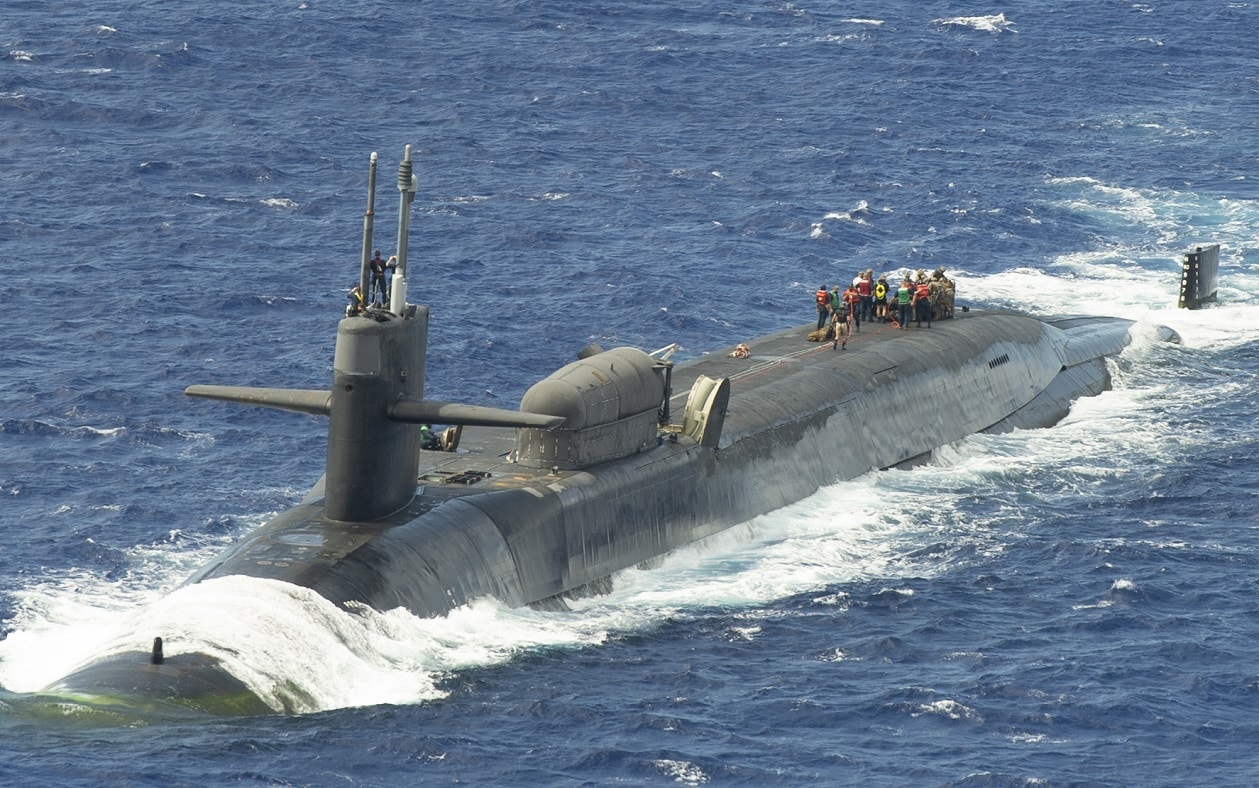
PACIFIC OCEAN (Feb. 9, 2021) Marines assigned to the 1st Force Reconnaissance Company, III Marine Expeditionary Force, assemble a combat rubber raiding craft during a scheduled exercise aboard the guided-missile submarine USS Ohio (SSGN 726). The exercise is part of ongoing III MEF and U.S. 7th Fleet efforts to provide flexible, forward-postured and quick-response options to regional commanders. (U.S. Navy photo by Mass Communication Specialist 1st Class Juan Antoine King) 210209-N-LD174-1006
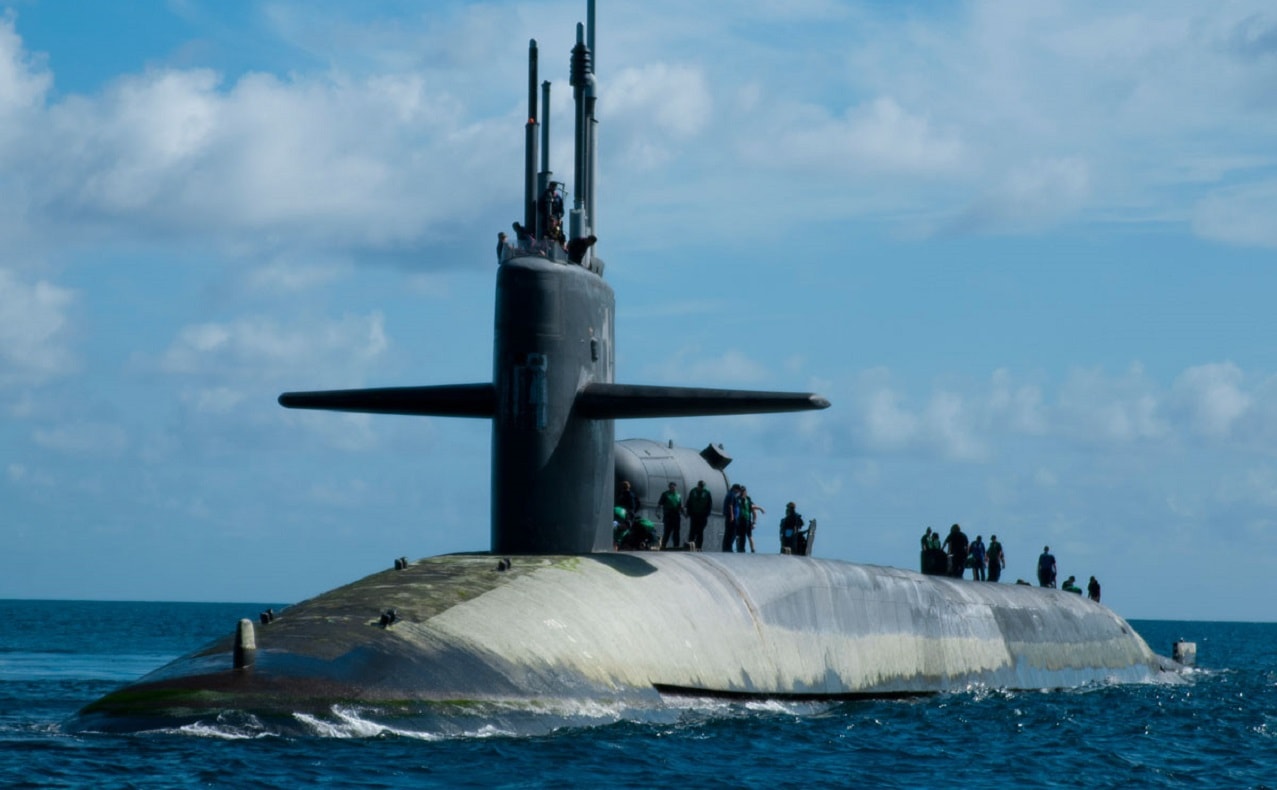
Ohio-class SSGN Submarine. Image Credit: US Navy.
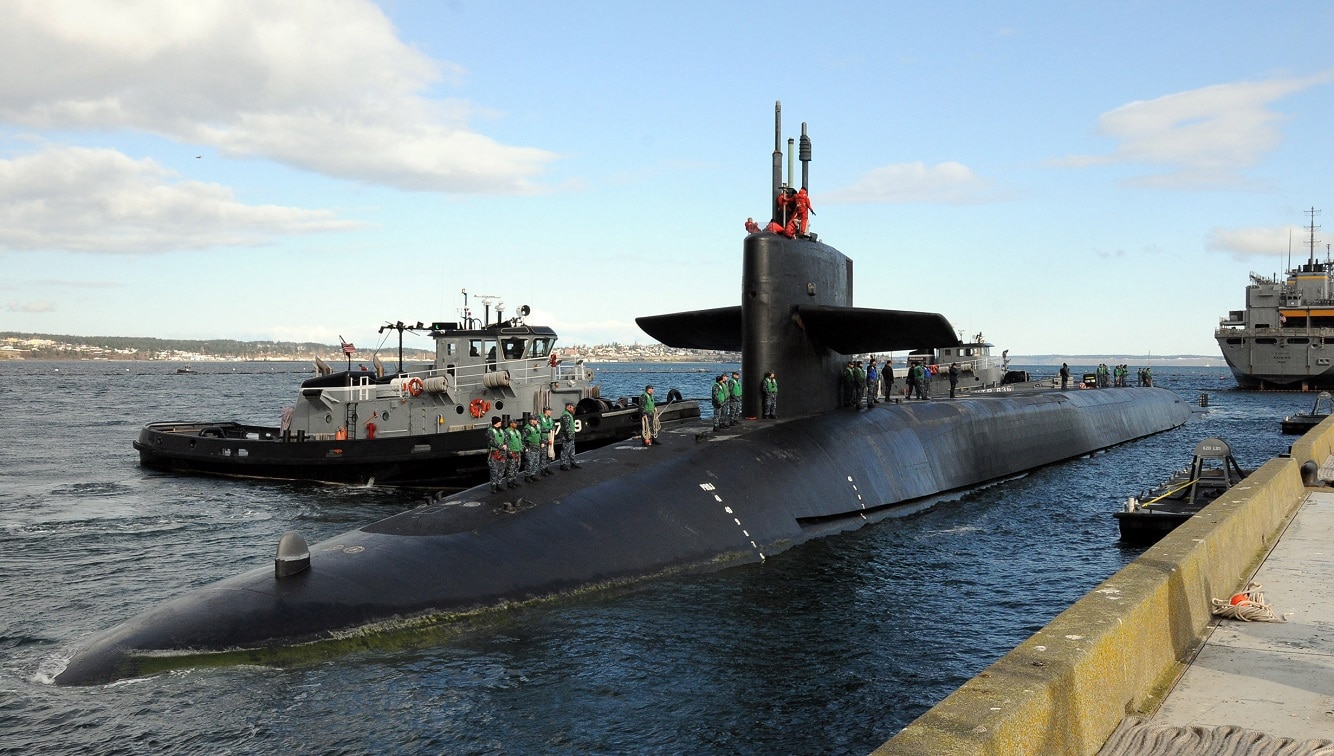
The guided-missile submarine USS Ohio (SSGN 726) prepares to moor at Naval Magazine Indian Island. Ohio recently completed a 14-month forward deployment to the U.S. 7th Fleet area of responsibility.
Ohio-class SSGN. Image Credit: US Military.
Iran’s military infrastructure—impressive, hardened missile facilities and nuclear weapons development facilities, naval bases, and command bunkers—are widely dispersed and heavily defended. So, destroying these key targets requires massive salvos of precision weapons in the opening phases of the war.
That’s why the Trump administration has relied upon the aging Ohio-class SSGNs.
America’s Ohio-class SSGNs can launch dozens of missiles at once, strike targets deep inland, and do so without ever exposing surface ships or aircraft to enemy air defenses or ant-ship defensive systems. It’s an invaluable service these submarines provide to America’s warfighters.
The Replacement Subs Carry Far Fewer Missiles
Until recently, the Navy was doing its best to phase out its Ohio-class SSGNs. They’re older. And the Navy wants to shift to newer submarine classes. There are only four operating today, and they are to be retired in the next few years.
While the Navy wants to replace these submarines with newer boats, there is no replacement ready. And there is no other submarine in the fleet that serves in this strike role as effectively as does the Ohio-class SSGN.
The Navy is trying to phase the Ohio-class SSGNs out at a time when the United States Navy finds itself in a major regional war (of America’s own choosing) in the Middle East. This conflict demands the availability of large numbers of standoff weapons, such as the Tomahawk. America’s Ohio-class SSGBNs are needed for launching these weapons.
As for the Ohio-class SSGNs’ replacement, the closest approximation would be the Virginia-class Block V submarines. But these are pale comparisons to the potency of the Ohio-class SSGN. After all, the Virginia-class carries only around 40 Tomahawks each.
So, one Ohio-class SSGN equals four Virginia-class submarines when it comes to strike potential.
Shipbuilding Delays Mean There Will Be a Capability Gap
In a Mideast war of the kind that America today finds itself mired in, the region tends to eat strike capacity. Therefore, retiring the Ohio-class submarine is very irresponsible,
Of course, US shipbuilding problems are delaying submarine programs across the board. Even if the Navy continues with their retirement planes, the replacement submarines will arrive years late. Overall, submarine missile capacity will decline until the mid-2030s. In other words, those replacement submarines will be years late.
Retiring the Ohio-class SSGNs at this crucial time for the United States Navy is a blunder. They provide three important functions: mass cruise-missile firepower, stealthy strike access near hostile coastlines, and large-scale special-operations deployment. Until a replacement exists, the Ohio-class SSGNs remain the most powerful conventional strike submarines ever built.
In the war with Iran—where the US must destroy hardened infrastructure quickly—those submarines are not obsolete.
They are indispensable.
About the Author: Brandon J. Weichert
Brandon J. Weichert is the Senior National Security Editor at 19FortyFive.com. He was previously the senior national security editor at The National Interest. Weichert is the host of The National Security Hour on iHeartRadio, where he discusses national security policy every Wednesday at 8pm Eastern. He hosts a companion show on Rumble entitled “National Security Talk.” Weichert consults regularly with various government institutions and private organizations on geopolitical issues. His writings have appeared in numerous publications, among them Popular Mechanics, National Review, MSN, and The American Spectator. And his books include Winning Space: How America Remains a Superpower, Biohacked: China’s Race to Control Life, and The Shadow War: Iran’s Quest for Supremacy. Weichert’s newest book, A Disaster of Our Own Making: How the West Lost Ukraine, is available for purchase wherever books are sold. He can be followed via Twitter/X @WeTheBrandon.