
ADNOC's Striking Move After the Mecca Agreement Tests the First Sunni Collective Defense in the Gulf
 Ahmed Al-Rashid
ADNOC Tanker Strike After Mecca Agreement Tests First Sunni Collective Defense in the Gulf
Less than forty-eight hours after Mohammed bin Salman, Recep Tayyip Erdoğan, and Shahbaz Sharif signed the joint defense agreement in Mecca, Abu Dhabi announced that a tanker linked to ADNOC was hit by a missile while transiting the Strait of Hormuz on the morning of August 8. There were no casualties, but the most important statement was not in the company's announcement but in the language of the UAE's Ministry of Foreign Affairs, which described the attack as an Iranian hostile act and "acts of piracy" and a blatant violation of UN Security Council Resolution 2817.
From a military perspective, this strike does not come as a separate maritime incident. It is the first test of the practical meaning of the Mecca Agreement: Can a Saudi-Pakistani-Turkish alliance, described in several reports as close to the logic of NATO's Article 5, deter Tehran and its proxies when the war shifts from missiles over Israel, Iraq, and Yemen to the energy artery itself?
The Mecca Agreement Did Not Emerge in a Vacuum

Reports from Reuters, CNN, Al Arabiya, Breaking Defense, and the Atlantic Council converged on August 7, stating that Saudi Arabia, Turkey, and Pakistan signed a joint defense agreement in Mecca that treats an attack on one as an attack on all. This is not a symbolic exercise among three major Islamic capitals, but a rearrangement of a security equation that has relied on Washington as an external guarantor since the Gulf War, and on each Gulf state as a separate defensive island.
The timing reveals much. Hours before the signing, Saudi officials were quoted as saying they were preparing for attacks from Iran-linked proxies in Yemen and Iraq if the U.S.-Iranian war expanded. Then came the Hormuz attack on an Emirati tanker. Any military personnel who has served in the region knows that the message is not just in the extent of the damage, but in the choice of location, target, and timing. The strait does not need to be completely closed to become a weapon; it is enough for every tanker to be required to account for one additional missile and a higher insurance premium and a longer alternative route.
Why Did Iran or Its Representatives Choose the Sea?
Iran does not have air parity with the United States and cannot engage in a prolonged direct confrontation with the combined U.S. and Gulf navies. However, it possesses the geography of the Strait of Hormuz, coastal missiles, drones, fast boats, and a network of proxies that can raise the cost without declaring a conventional war. Therefore, striking an ADNOC tanker becomes a calculated act: no casualties, no complete sinking, but enough shock for the markets and Gulf capitals.
This has been the logic of Iranian pressure for years, but it is now operating in a more dangerous environment. The U.S.-Iranian war has entered its 161st day, and CNN reported that U.S. Chairman of the Joint Chiefs of Staff General Dan Caine is looking for an "off-ramp" because air power has not produced a political end. Concurrently, Tehran claims that an understanding with Oman regarding the management of Hormuz is close, but it ties it to U.S. concessions first. In other words, Iran is negotiating with one hand while hinting with the other at its ability to control the maritime faucet.
The Impact on Oil and Shipping Exceeds the Extent of the Damage
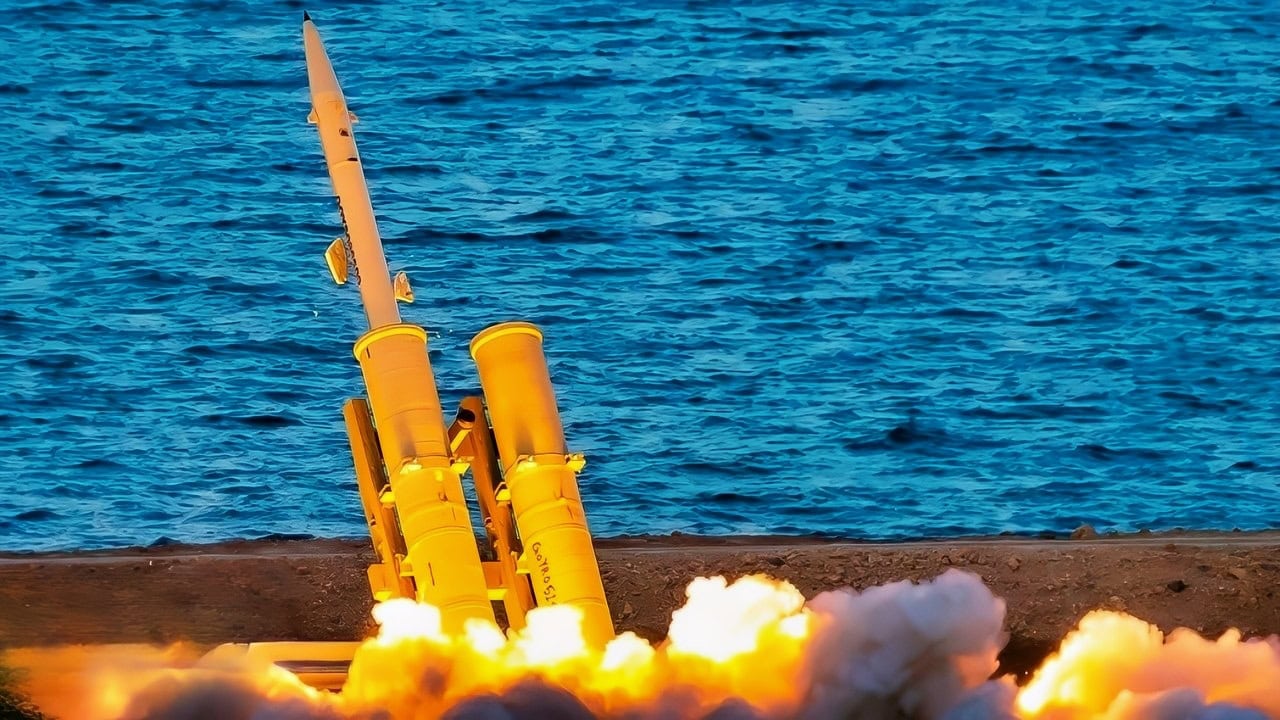
Nearly one-fifth of global seaborne oil trade passes through Hormuz, along with most of Qatar's liquefied natural gas exports, and a critical portion of shipments from Saudi Arabia, the UAE, Kuwait, and Iraq. Therefore, the market does not wait for the strait to close to react. The risk premium begins to rise with the first documented hit on an Emirati national tanker, especially when Abu Dhabi describes the incident as piracy rather than a vague security incident.
Maritime companies will ask three practical questions: Do tankers need naval escorts? Will insurance premiums rise to wartime levels? Can the UAE and Saudi Arabia transport enough through alternative pipelines to alleviate the pressure? The answer is uncomfortable. Pipelines help but do not eliminate Hormuz. Naval escorts reduce risk but create friction opportunities. Meanwhile, insurance turns a single missile into a daily tax on every barrel.
The New Sunni Alliance Between Deterrence and Capability
The Mecca Agreement is politically significant because it brings together three capabilities that do not usually unite under one framework. Saudi Arabia has the money, location, and need for military depth. Turkey has an active defense industry, drones, missiles, and a naval force expanding in the Eastern Mediterranean and the Red Sea. Pakistan has a large army, operational experience, and nuclear deterrence that the statement does not say is part of the agreement, but is present in the mind of every adversary and ally.
However, from a practical standpoint, the agreement does not become collective defense merely by signing. The difficult question is who leads the operations room? Are there common rules of engagement to protect Emirati or Saudi tankers? Will the Saudis allow a permanent Turkish or Pakistani presence on their territory or in their ports? Can the Pakistanis send a meaningful naval force to the Gulf quickly? And does Ankara want to shift from an industrial partner to a direct party in the Hormuz conflict? Here lies the difference between the political statement and military capability.
Nevertheless, the impact of the signal should not be underestimated. For the first time in decades, Tehran sees before it the possibility of a response from a large Sunni bloc that does not rely entirely on the mood of the White House. It is true that the United States remains the decisive naval power in the Gulf, but Riyadh is practically saying that U.S. guarantees are necessary but not sufficient. This is a turning point in thinking, even if it has not yet transformed into a complete command and control structure.
The Gulf Response Must Be Naval, Not Verbal
If the three capitals are content with statements, Tehran will read the Mecca Agreement as a public relations document. A more serious response does not mean immediate bombing, but measurable actions: a joint maritime warning center in the Gulf, sharing reconnaissance and drone imagery, mixed patrols in the corridors near Hormuz, and exercises on evacuating an injured tanker and keeping the corridor open under missile threat. This is where the alliance is tested, not in the image of leaders inside Mecca.
The UAE, although not a declared party to the Mecca Agreement, will be the first country to monitor the results. If the new system protects it, even through undeclared Saudi-Turkish-Pakistani coordination with the United States, the appeal of the agreement will grow. If it remains alone in front of a new missile, it will revert to the old calculation: buying more air and naval defense from Washington, Paris, and London, and then waiting for the U.S. decision in every crisis.
Conclusion
The ADNOC strike does not prove that the Mecca Agreement succeeded, but it does demonstrate why it was signed. Iran or those operating within its sphere understood that announcing a Sunni collective defense needs a quick test at the most sensitive point for the global economy. Meanwhile, Saudi Arabia, Turkey, and Pakistan now face the dilemma known to every military: deterrence is not what you write in the agreement, but what the adversary believes after the first shot.
In the Gulf, there is an old saying that the sea does not hide fear for long. Hormuz has revealed fear and also the beginning of a new answer. But this answer remains between paper and operations, and between the Arabs' desire for independent security and the reality that the American umbrella has not yet left the water.
An ADNOC tanker was struck by a missile while passing through the Strait of Hormuz on August 8. The UAE condemned the attack as an Iranian act of piracy, coinciding with a new defense agreement among Saudi Arabia, Turkey, and Pakistan. This incident raises significant concerns regarding maritime security and the implications for oil shipping in the region.
- An ADNOC tanker was hit by a missile in the Strait of Hormuz on August 8.
- The UAE described the attack as an Iranian hostile act and piracy.
- This incident tests the newly signed defense agreement among Saudi Arabia, Turkey, and Pakistan.
- The attack raises concerns about maritime security and oil shipping in the region.
- Iran's strategy involves using proxies to exert pressure without direct confrontation.