
Africa Corps makes Ouagadougou the hub of the Sahel — 75 Russian flights reveal the security deadlock of 2026
 Marie Dubois
Africa Corps makes Ouagadougou the hub of the Sahel — 75 Russian flights reveal the security deadlock of 2026
Ouagadougou does not resemble a front. This is precisely why the Russian choice is logical. According to a study published this week by C4ADS based on ADS-B trajectories recorded between January 1, 2025, and July 31, 2026, aircraft linked to the Russian military apparatus conducted 75 identified flights between Mali, Burkina Faso, and Niger, with one highlight: Burkina Faso appears as the busiest air hub of the entire region. On the ground, this means that Ouagadougou serves less as a political showcase than as a forward depot, a technical stop, and a redistribution point to theaters where Bamako and Niamey can no longer maintain depth.
Burkina Faso becomes the logistical crossroads
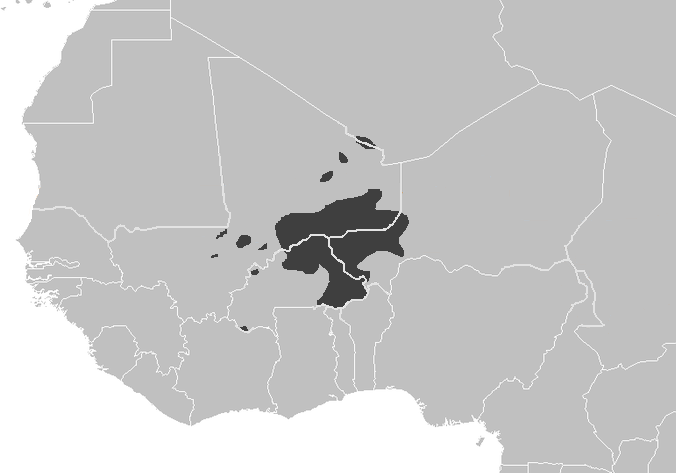
The raw number matters, but geography matters more. Burkina Faso is situated between Mali and Niger, with short air routes to the capitals and much more degraded land margins. C4ADS notes that aircraft linked to the Africa Corps and its associated carriers have visited Burkina Faso more often than Mali, while Niger recorded only a small number of identified flights. This imbalance is not insignificant. When an external actor chooses Ouagadougou as a pivot, it implicitly states that direct resupply to other theaters is either riskier or less effective.
The observed aircraft are mainly heavy Soviet models, including Il-76TD and An-124-100. These are not planes chosen for their symbolism. They are used to transport personnel, munitions, spare parts, light vehicles, and everything needed to support a sustainable campaign far from Russia. The fact that Burkina Faso is also used as an intermediate stopover to Mali and Niger reinforces the impression of a central hub, not just another destination among others.
A more state-centric Russian architecture, not more effective
The official break between Wagner and the Africa Corps has often been presented as a takeover by the Russian Ministry of Defense. This is true on paper. In practice, the continuity is glaring: same host countries, same needs for junta protection, same approach routes, same dependence on aviation to compensate for Sahelian landlockedness. Reuters already noted on July 9 that Moscow and the Sahel States Alliance wanted to deepen their military cooperation despite the persistence of insurgent attacks. The air bridge mapped by C4ADS shows what this cooperation means in operational terms: more logistical rotation, not necessarily more control of the ground.
This is the essential point. From Bamako to northern Burkina Faso, the juntas have purchased regime insurance, not a counterinsurgency solution. Ground convoys remain vulnerable, remote garrisons remain isolated, and jihadist violence continues to shift to areas where the state has only intermittent presence. If air logistics are increasing, it is also because the road is becoming less secure. A power confident in its land routes does not need to multiply air bridges to this extent.
Stopovers reveal the true fragilities of the apparatus
The most interesting detail of the report is not just the number of flights, but their support points. Russian state aircraft pass through bases controlled by Moscow in Syria and Libya; private carriers make more stops at commercial hubs in the United Arab Emirates, Algeria, or Turkey. In other words, the Russian presence in the Sahel is not autonomous. It depends on a long supply chain, sometimes visible, and vulnerable to a few diplomatic and technical bottlenecks.
From the perspective of Paris or Brussels, the reasoning is often in terms of influence. From the theater, one must reason in terms of rotation time, fuel, maintenance, and overflight permissions. A cargo plane immobilized outside the Sahel sometimes weighs more heavily than a political statement in Moscow. This is where the Russian architecture shows its limit: it impresses with its footprint, but it remains costly to sustain in three landlocked countries where every ton transported must then survive the last mile.
Why this discovery matters now
It matters because it contradicts the narrative of restored sovereignty sold by the juntas. The more dependence on Russian aviation increases, the more the local security system resembles an external crutch. It also matters because Burkina Faso is currently the most exposed link. C4ADS reminds us that the country recorded the highest volume of flights during the studied period, but also the largest number of deaths related to extremist violence among the three central Sahel states. In short, the Russian logistical center is consolidating where the front continues to deteriorate.
However, one must maintain basic caution. ADS-B data does not show everything, and some military aircraft cut or manipulate their signals. The picture is therefore not exhaustive. But even incomplete, it confirms a consistent trend with what has been observed for months: Moscow is densifying its support circuits while armed groups maintain the initiative in several rural areas.
The next test will play out around Ouagadougou
The real test is not whether Russia can still land Ilyushins in the Sahel. It can. The test is whether this logistics can prevent the widening of gray areas between eastern Burkina Faso, northern Mali, and the Nigerien approaches. For now, nothing indicates that this is the case. On the contrary, the more indispensable Ouagadougou becomes, the more its saturation or disruption will become a strategic risk. In such a vast theater, a hub that is too visible often ends up becoming a target, or at a minimum, a point of compression. This is where the Russian gamble may backfire: not for lack of planes, but for lack of ground depth.
Russian military aircraft conducted 75 flights between Mali, Burkina Faso, and Niger from January 2025 to July 2026, establishing Ouagadougou as a key logistical hub. The majority of these flights involved heavy Soviet models, indicating a focus on military logistics. Burkina Faso, facing significant extremist violence, has become increasingly reliant on Russian aviation support, highlighting vulnerabilities in local security operations.
- 75 Russian military flights identified between Mali, Burkina Faso, and Niger.
- Ouagadougou is established as a central logistical hub for Russian operations.
- The majority of aircraft observed are heavy Soviet models, indicating military logistics.
- Burkina Faso has the highest volume of flights and the most extremist violence among the three states.
- The report highlights the dependency of local security on Russian aviation support.