
Africa Corps trains Malian paratroopers — 7 helicopters showcase the Russian bet of 2026
 Marie Dubois
Africa Corps trains Malian paratroopers — 7 helicopters showcase the Russian bet for 2026
In Bamako, on the tarmac of Modibo-Keïta International Airport, about twenty Malian soldiers from the 33rd Parachute Regiment practiced maneuvers that the Malian army can hardly execute on a large scale anymore. Instructors from the Russian Africa Corps, now under the authority of the Russian Ministry of Defense, trained them with D-6 parachutes provided by Moscow and a Russian Mi-8AMTSh helicopter, according to images broadcast by Malian television and details reported by Janes and then Defense Express.
This is not just a simple military cooperation sequence. It is a promise of mobility in a country where operational mobility is precisely the bottleneck. Mali has, according to estimates cited by Defense Express, five Mi-8/Mi-171Sh helicopters suitable for transport and two Mi-24 attack helicopters in service. Three other Mi-8s, two An-26s, and one An-24 are reportedly in storage. In short, the actual capacity to deploy or parachute a force remains that of one or two platoons, not that of a battalion.
A Russian showcase in a pressured theater
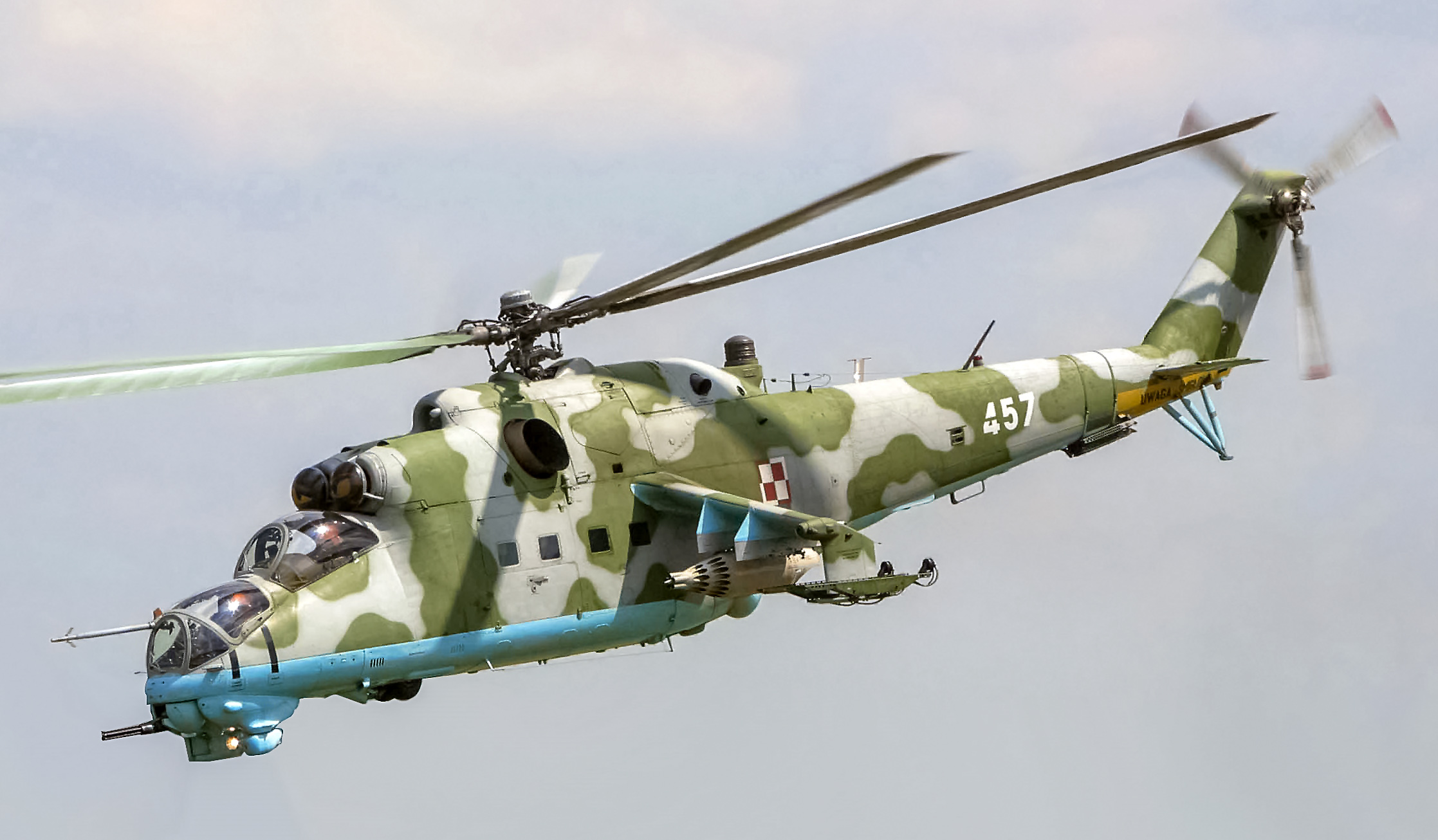
The timing matters. The training comes as northern and central Mali suffered a new series of attacks against several localities on July 4, reported by Reuters via Free Malaysia Today. The keywords in this dispatch already say a lot about the current operational map: Anefis, Bamako, explosions, gunfire, insurgent group, Tuareg faction. The Malian state is not facing a single front line. It is facing pockets of pressure, threatened road axes, and symbolic cities that insurgents use as political messages as much as tactical objectives.
On the ground, a useful airborne force must address three very concrete problems: quickly reach an isolated point, hold it long enough, and then be resupplied or extracted. The first step is already difficult with seven truly relevant aircraft, including two Mi-24s that are not transport platforms. The second depends on intelligence, artillery, drones, and ground relays. The third is often the one that derails beautifully laid plans. A parachuted platoon without a logistics chain becomes an isolated patrol.
The 33rd Parachute Regiment as a political symbol
The choice of the 33rd Parachute Regiment is not neutral. This formation is the only airborne unit identified in a Malian army of about 19,000 men. It therefore carries a symbolic value greater than its numerical weight. When Moscow trains it, the goal is not just to produce a tactical capability. It is to show that Russia is replacing, with its codes and myths, the old French military cooperation architectures.
The Russian reference to airborne troops remains powerful. The VDV has lost some of its aura in Ukraine, where its overly ambitious employment has come at a high cost. But in Russian military culture, the paratrooper remains the image of the elite unit, fast, offensive, capable of appearing where the adversary does not expect it. Exporting this model to Mali allows Moscow to sell a military grammar: verticality, shock, prestige, political loyalty.
However, it is necessary to distinguish image from capability. From experience, an airborne capability does not exist because twenty men know how to fold a parachute or jump under supervision. It exists when the aircraft, mechanics, crews, medical teams, fuels, communications, and forward posts form a system that can be repeated without being improvised at each sortie. At this stage, the available public information does not allow us to assert that Bamako possesses this system.
The moral problem that Moscow cannot erase
Another element weighs on this cooperation. Defense Express recalls that personnel from the 33rd Parachute Regiment, alongside Russian mercenaries, were involved in atrocities against civilians in March 2022. This point remains sensitive, as the Malian war is also won or lost in villages, markets, and secondary roads. A mobile unit that instills fear in civilians can produce an immediate effect, but it also feeds the intelligence networks of armed groups.
This is where the Russian calculation becomes dangerous for Bamako. The Africa Corps inherits from Wagner while claiming to institutionalize it. The logo changes, the chain of command appears more official, but the methods perceived locally remain associated with brutal operations. Le Monde described at the end of June a continuity of abuses since the replacement of Wagner by the Africa Corps. Human Rights Watch has documented the deterioration of civilian protection in recent violence in Mali. These sources do not all recount the same episode, but they outline the same environment: Russian coercion does not automatically stabilize the theater.
A tactical response to a war of distances
Mali is not a small battlefield. From Bamako to Gao, it is about 950 kilometers by road. From Bamako to Timbuktu, it is more than 900 kilometers depending on the route. In between, the axes pass through areas where state presence is measured less by administrative posts than by the ability to escort a convoy without losing two vehicles to an improvised explosive device. In this context, wanting more mobility makes sense.
But parachuting is not necessarily the right answer. Armed groups in the Sahel know how to absorb sporadic blows. They disperse, wait, return to the axes and villages where the state does not remain. An airborne operation can surprise a camp, recover a post, evacuate the wounded, or strike a cell. It does not replace continuous presence, human intelligence, and securing the roads between two garrisons.
The paradox is therefore clear: the Africa Corps offers a spectacular capability to an army that mainly lacks territorial endurance. The T-72B3s, armored vehicles, BM-21 Grads, FPV drones, and now parachutes tell a story of material upgrade. They do not, alone, solve the political problem of a Malian center that no longer sufficiently convinces certain peripheries that it protects better than it punishes.
What to watch for now
The next important indication will not be a new training video. It will be the actual deployment of the 33rd Parachute Regiment after an attack: what is the reaction time, how many men are inserted, with what support, and above all how long they remain on site. If Bamako and Moscow use this unit as a limited raid force, it can produce local effects. If they sell it as a strategic solution, they are preparing for disappointment.
The immediate risk lies around the logistical nodes in the center and north, where an insurgent attack forces the army to choose between sending a vulnerable column or showing an air response. In the coming weeks, Anefis, the outskirts of Gao, and the axes towards Mopti will be more serious indicators than the ceremonies on the tarmac in Bamako. An airborne force is not valued by the jump. It is valued by what it can hold the next morning.
Sources
- Defense Express, July 4, 2026, reporting Janes on the training of the Malian 33rd Parachute Regiment by the Russian Africa Corps.
- Reuters via Free Malaysia Today, July 4, 2026, on the attacks against several localities in northern and central Mali.
- Le Monde, June 27, 2026, on the continuity of abuses attributed to the Africa Corps after Wagner in Mali.
- Human Rights Watch, July 2026, on the worsening violence against civilians in Mali.
The Africa Corps trained 20 Malian paratroopers at Bamako's Modibo Keïta International Airport on July 4, 2026, using D-6 parachutes and a Mi-8AMTSh helicopter. This training highlights the operational mobility challenges faced by the Malian Armed Forces, which have limited resources. The 33rd Parachute Regiment, the only airborne unit in Mali, symbolizes a shift in military cooperation from France to Russia.
- Malian paratroopers are being trained by Russian instructors from Africa Corps.
- Training involves D-6 parachutes and Mi-8AMTSh helicopters.
- Mali has limited operational mobility with only a few helicopters available.
- The 33rd Parachute Regiment is the only airborne unit in the Malian army.
- Concerns exist regarding the human rights record of the forces involved.