
Al-Shabaab kills 5 police officers in Kenya — Mandera becomes the forgotten test of 2026
 Marie Dubois
Al-Shabaab kills 5 police officers in Kenya — Mandera becomes the forgotten test of 2026
At Wantey Dam, in the Kenyan county of Mandera, a patrol from the Special Operations Group of Alungu encountered suspected al-Shabaab fighters on Tuesday around noon. The Kenyan police report five members of the security forces killed. A reinforcement team sent to the area was later hit by an improvised explosive device that destroyed an armored vehicle, with no additional casualties reported according to the first available report.
The detail matters. Wantey Dam is not an abstract point on a map of East African terrorism. It is a reservoir, a stop, a landmark in a dry area where secondary routes are as important as official border posts. Mandera is located at the northeastern tip of Kenya, wedged between Somalia and Ethiopia. From Nairobi, it is almost another theater of operations; from the Somali sanctuaries of al-Shabaab, it is a tactically accessible depth.
The information remains partial. The police speak of contact with the militants, then of an IED against a reinforcement. Several Kenyan media outlets have reported the same general outline, while Reuters, picked up by TimesLIVE, confirms the death of five officers and the pursuit of the assailants. What is still unknown is essential: who initiated the contact, whether the police were killed in the initial exchange or in a prepared ambush, and how many fighters crossed or used the border area.
The classic border trap
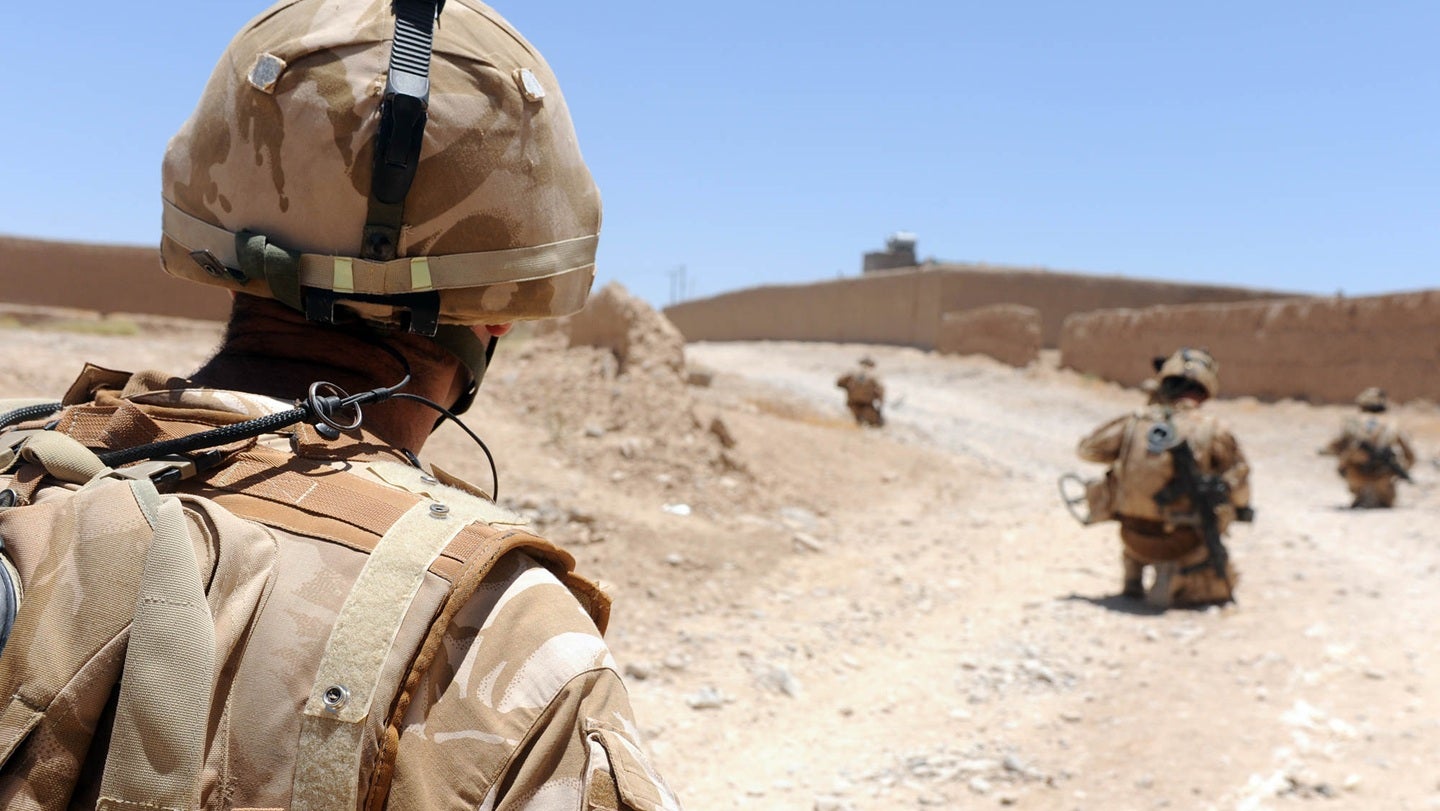
On the ground, an attack like the one in Mandera often follows a simple logic. An initial contact fixes the patrol or draws in reinforcements. The escape route then becomes the real target. The IED against the armored vehicle suggests that the assailants knew the likely route of arrival, or at a minimum the movement habits of local units. Even if the explosion did not cause casualties, it set the tempo.
Al-Shabaab does not need to conquer Mandera to impact Kenyan security. It is enough for them to maintain a constant cost on patrols, local leaders, teachers, police convoys, and the roads that connect villages to administrative centers. In January, the Kenyan police had already reported in the neighboring county of Garissa the death of a local leader and a teacher in an attack attributed to the militants. The civilian target is not secondary: it cuts the state's presence where the state is already scarce.
I have seen the same mechanics in the Sahel, under different names and in another landscape. When a regular force holds the cities but does not control the tracks, the adversary does not always seek the decisive battle. They attack the links that allow the administration to breathe: the routes, the relays, the informants, the isolated vehicles. In Mandera as in the Malian Gourma, real control is not measured only by the flag on the police station.
Why Mandera matters in 2026
Kenya is not just a peripheral victim of the Somali conflict. It is a military actor engaged for years against al-Shabaab, and its northeastern border has become a friction zone between internal defense and regional projection. The pressure on Mandera reminds us that the Somali war overflows when operations around Jubaland and southern Somalia do not close off the retreat corridors.
- Mandera offers cross-border tracks that are difficult to monitor continuously.
- Local units must cover long distances with little margin for reaction.
- IEDs reduce the advantage of armor and slow down reinforcements.
- Attacks against civilian authorities weaken human intelligence.
The Kenyan difficulty is therefore less about firepower than continuity. A patrol may win the exchange of the day and lose the battle of the route if it has to take the same track tomorrow without air surveillance, reliable demining, and community relays. It is thankless, not very spectacular, but this is where this type of war is won or lost.
Al-Shabaab tests the Kenyan tolerance threshold
Al-Shabaab knows that Nairobi must arbitrate between several priorities: internal security, budget cost, cooperation with Mogadishu, local political pressure, and fatigue from a prolonged war. Killing five officers in Mandera does not have the strategic effect of an attack in Nairobi, but the objective is different. The group shows that it can still choose the location, strike a specialized unit, and force the police to disperse their resources.
This dispersion is exactly what mature jihadist movements seek. They do not always strike where they want to govern. They strike where the state must respond, because every response consumes fuel, flight hours, EOD teams, risk premiums, and political credibility. When these attacks are repeated, the local population begins to count not the press releases, but the days when the road remains passable.
Mandera is not a new front. It is worse for Nairobi: it is an old front that refuses to close.
The immediate operational risk
The next danger is not necessarily a large offensive. It is more likely that al-Shabaab will attempt a short series of harassment actions around the Mandera-Lafey-Elwak routes, with mines, gunfire against patrols, and pressure on administrative relays. After a successful attack, groups often seek to trap the reaction phase: evacuation, pursuit, return to base.
The Kenyan response will therefore need to avoid the predictable convoy reflex. It is necessary to vary the routes, control the water points, protect local informants, and treat every false alarm as a possible fixation maneuver. In these areas, the enemy does not win because it is stronger. It wins when it knows what time the reinforcements will pass.
Al-Shabaab killed five police officers in an ambush at Wantey Dam, Mandera, on Tuesday around noon. An IED targeted a reinforcement team, destroying an armored vehicle but causing no further casualties. This attack underscores the ongoing security challenges in the region, as Al-Shabaab continues to exploit vulnerabilities in Kenyan security operations.
- Five police officers were killed by Al-Shabaab fighters in Mandera, Kenya.
- An IED destroyed an armored vehicle sent as reinforcement, but no additional casualties were reported.
- The attack occurred at Wantey Dam, a strategic location in a dry area near the Somali border.
- Al-Shabaab's tactics involve ambushes and targeting police reinforcements to disrupt security operations.
- The incident highlights ongoing security challenges in the region, particularly in Mandera.